

No sukkah to build, no seder to prepare, no matzah: Shavuot is the quietest of the three great Jewish festivals, and yet the synagogue stays lit all night, the Book of Ruth is read, and cheesecake is eaten. Why is this festival, with no object to hold, the one that marks the greatest scene in Jewish history, the revelation at Sinai? This article answers from the Torah, the Mishna, the Talmud, Maimonides, the Shulchan Arukh and the Zohar, separating what belongs to halakha (practiced law), to aggadah (moral reading), to Kabbalah and to history.
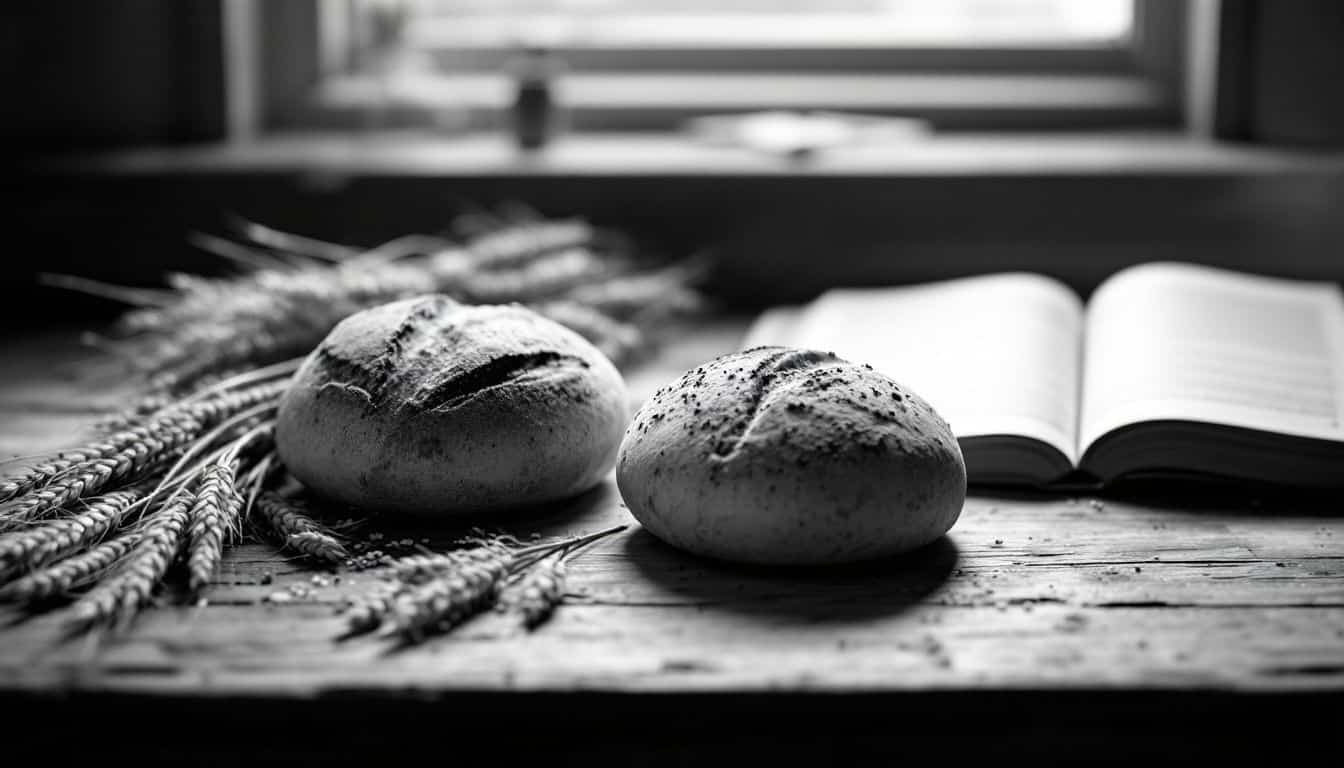
Shavuot (“weeks”) falls on the 6th of Sivan, fifty days after the start of the counting of the Omer, and lasts one day in Israel and two days elsewhere. In the Torah it is an agricultural festival: the festival of the first fruits of the wheat, when two leavened loaves are offered in the Temple (Vayikra [Leviticus] 23:15-21). The Torah mentions neither Sinai nor the giving of the Torah in connection with it. It was rabbinic tradition that tied the 6th of Sivan to the giving of the Torah (Shabbat 86b) and made it a day of joy (Pesachim 68b): the Rambam sees in it “the anniversary of the giving of the Torah,” whose anticipation the counting of the Omer expresses (Guide for the Perplexed III:43). The custom of staying awake all night, for its part, is late: it comes from the Zohar. We will distinguish each of these levels.
What Is Shavuot? Names, Date and Length
The Torah gives the festival several names. It is the “Festival of Weeks” (Chag HaShavuot, Shemot [Exodus] 34:22; Devarim [Deuteronomy] 16:10), the “Festival of the Harvest” (Chag HaKatzir, Shemot 23:16) and the “Day of the First Fruits” (Yom HaBikkurim, Bamidbar [Numbers] 28:26). The Sages also call it Atzeret, “closing assembly,” because it closes the season that opens at Pesach, just as Shemini Atzeret closes Sukkot (Pesachim 68b; Mishna Rosh Hashana 1:2). The English name “Pentecost” comes from the Greek pentekoste, “fiftieth”; the Christian Pentecost is a different festival, which does not commemorate the same event.
Its distinctive feature is that it has no date of its own in the Torah. Pesach, Rosh Hashana, Yom Kippur and Sukkot are fixed on “the fifteenth day,” “the first,” “the tenth.” Shavuot is the day that follows the seven complete weeks of the counting of the Omer: “You shall count fifty days” (Vayikra 23:16). The counting begins on the night of the 16th of Nisan (Rambam, Hilkhot Temidin u-Musafin 7:22; Sefer HaChinukh, mitzvah 306); the forty-ninth day therefore falls on the 5th of Sivan and the fiftieth on the 6th of Sivan. In Israel the festival lasts one day; outside Israel, where the second festival day was kept out of caution, it lasts two (Shulchan Arukh, Orach Chayim 496:1).
What the Torah Says: A Festival of Harvest and First Fruits
The central text is that of Leviticus, which describes the counting and the offering:
“You shall count until the day after the seventh Shabbat: fifty days; then you shall offer a new grain offering to the L-rd.”
(Vayikra 23:16) — עַ֣ד מִֽמׇּחֳרַ֤ת הַשַּׁבָּת֙ הַשְּׁבִיעִ֔ת תִּסְפְּר֖וּ חֲמִשִּׁ֣ים י֑וֹם
On that day, “from your dwellings you shall bring two loaves as a wave offering” to the Temple:
“You shall bring from your dwellings two loaves as a wave offering; they shall be of two tenths of an ephah of fine flour, they shall be baked leavened, as first fruits.”
(Vayikra 23:17) — מִמּוֹשְׁבֹ֨תֵיכֶ֜ם תָּבִ֣יאּוּ לֶ֣חֶם תְּנוּפָ֗ה שְׁ֚תַּיִם שְׁנֵ֣י עֶשְׂרֹנִ֔ים סֹ֣לֶת תִּהְיֶ֔ינָה חָמֵ֖ץ תֵּאָפֶ֑ינָה בִּכּוּרִ֖ים
Deuteronomy spells out the spirit of the festival: one counts seven weeks from the time the sickle is first put to the standing grain, then one celebrates the Festival of Weeks, rejoicing “you, your son and your daughter, your manservant and your maidservant, the Levite, the stranger, the orphan and the widow” (Devarim 16:9-12). In the middle of the description of the festival, Leviticus places a commandment that apparently has nothing to do with it: leaving the corner of the field and the fallen ears for the poor and the stranger (Vayikra 23:22), which foreshadows, as we will see, the Book of Ruth.
Note what the Torah does not say. It does not say that Sinai took place on that day, nor that the festival celebrates the giving of the Torah. The Book of Exodus says only that the children of Israel reached the wilderness of Sinai “in the third month after leaving Egypt, on that very day” (Shemot 19:1); the link with Shavuot is a deduction by the Sages, which we follow below. Rav Benizri also stresses this silence of the Bible (see further on).
The Counting, the Temple and the First Fruits
Counting from Pesach: The Debate with the Boethusians
The phrase “from the day after the Shabbat” (Vayikra 23:15) divided the Pharisees from their opponents. The Boethusians (close to the Sadducees) read it as the ordinary Shabbat: the barley offering, and therefore the counting, had to begin on a Sunday, and Shavuot too would fall on a Sunday. The Sages read “Shabbat” in the sense of “day of rest”: the first day of Pesach. The Talmud reports that the ceremony of harvesting the barley was held in public, with questions and answers repeated three times (“Is this the Shabbat? – Yes”), “because of the Boethusians”; it also relates that Rabban Yochanan ben Zakkai refuted them (Menachot 65a). A baraita sets against the Boethusian meaning an argument from the calendar, in the name of Rabbi Yose bar Yehuda: if one counted from the Shabbat of Creation, one would find sometimes fifty-one days, sometimes fifty-two, and so on up to fifty-six, whereas the verse says “fifty days” (Menachot 65b). Counting from the day after Pesach, whatever the day of the week, is the Pharisaic position, which became that of all rabbinic Judaism.
This debate is not merely a quarrel over reading. The Qumran texts and the Book of Jubilees followed a solar calendar of 364 days, in which Shavuot always fell on a Sunday, the 15th of the third month; the Book of Jubilees makes it the festival of the yearly renewal of the covenant (Jubilees 6:17). For these circles Shavuot was already the festival of the covenant, which rabbinic tradition would develop differently, through the giving of the Torah.
The First Fruits and the Two Loaves
The Mishna describes the ascent of the first fruits (bikkurim) to Jerusalem: the towns of one region gather, spend the night in the town square without entering the houses, and rise at dawn to the cry “Let us arise and go up to Zion, to the house of the L-rd our G-d” (Mishna Bikkurim 3:2). Those who are near bring fresh figs and grapes, those who are far dried figs and raisins; the ox walks at the head, “its horns gilded and a crown of olive on its head,” and the flute accompanies them until they near Jerusalem (Mishna Bikkurim 3:3). The two leavened loaves, for their part, are brought by the community (Vayikra 23:17).
The Mishna also links Shavuot to the judgment of the trees: “At four times of the year the world is judged: on Pesach for the grain, on Shavuot for the fruit of the tree, on Rosh Hashana all creatures pass before Him… and on Sukkot they are judged for water” (Mishna Rosh Hashana 1:2).
The Giving of the Torah: What the Sages Say
The 6th of Sivan
The Talmud establishes the date: “Our Rabbis taught: on the sixth day of the month the Ten Commandments were given to Israel. Rabbi Yose says: on the seventh” (Shabbat 86b), and the anonymous opinion is followed. It is this connection that makes Shavuot “the time of the giving of our Torah” (zman matan toratenu), in the words of the prayer (Shulchan Arukh, Orach Chayim 494:1). At the Torah reading, the account of Sinai is read that day (Shemot 19-20); the Mishna, for its part, prescribes for Shavuot the reading of the passage on the “seven weeks” (Mishna Megilla 3:5; Devarim 16:9-12), and it is the practice codified later that reads Sinai. The Shulchan Arukh fixes the reading for the first day: Exodus, beginning with “in the third month,” and as maftir “the day of the first fruits” (Bamidbar 28:26), with Ezekiel’s vision of the chariot as the haftara (Orach Chayim 494:1).
A Day “for You”
The Talmud draws from this a practical consequence, the most important one for the halakha of the festival: one must also rejoice on it with festive meals.
“Rabbi Elazar said: all agree about Shavuot that it must also be ‘for you’ (lakhem). What is the reason? It is the day on which the Torah was given.”
(Pesachim 68b) — אָמַר רַבִּי אֶלְעָזָר: הַכֹּל מוֹדִים בַּעֲצֶרֶת דְּבָעֵינַן נָמֵי לָכֶם. מַאי טַעְמָא? יוֹם שֶׁנִּיתְּנָה בּוֹ תּוֹרָה הוּא.
The Sages discuss, for each festival, whether the day is “entirely for G-d” or “half for G-d, half for you”; for Shavuot, no one disputes that it is also a day of festive meals. The Talmud reports that Rav Yosef used to say, on the day of Shavuot: “Prepare me a third-born calf,” and added: “But for this day, how many Yosefs are there in the marketplace?” (Pesachim 68b): without the Torah, he would be one man among many. Mar bar Ravina, who fasted all year, made an exception for Shavuot, Purim and the eve of Yom Kippur (ibid.).
The Rambam sees a fundamental explanation here: Shavuot is “the day of the giving of the Torah,” and the counting of the Omer, from the Exodus from Egypt to that day, expresses the longing of someone who counts the days and even the hours before seeing his dearest friend again (Guide for the Perplexed III:43). Sinai is the goal of the Exodus: “I bore you on eagles’ wings and brought you to Myself” (Shemot 19:4, cited there).
From the Biblical Text to the Readings of the Sages
The Torah itself gives the content of that day: “You shall be to Me a kingdom of priests and a holy nation” (Shemot 19:6); then the people’s commitment: “All that the L-rd has spoken we will do and we will hear” (Shemot 24:7, na’aseh ve-nishma). The Sages commented at length on this priority of “we will do” over “we will hear”:
“Rabbi Elazar said: when Israel put ‘we will do’ before ‘we will hear,’ a heavenly voice came out and said to them: who revealed to My children this secret, which the ministering angels use?”
(Shabbat 88a) — בְּשָׁעָה שֶׁהִקְדִּימוּ יִשְׂרָאֵל ״נַעֲשֶׂה״ לְ״נִשְׁמָע״ יָצְתָה בַּת קוֹל וְאָמְרָה לָהֶן: מִי גִּלָּה לְבָנַי רָז זֶה שֶׁמַּלְאֲכֵי הַשָּׁרֵת מִשְׁתַּמְּשִׁין בּוֹ?
The same passage contains a harsher reading, which the tradition did not hide: on “they stood at the foot of the mountain” (Shemot 19:17), Rav Avdimi bar Chama reads that G-d held the mountain over them like a barrel, saying: “If you accept the Torah, good; if not, there will be your grave.” Rav Acha bar Yaakov concludes that the acceptance was coerced, “this is a major objection (moda’a) to the Torah”; Rava answers that they accepted it again in the days of Ahasuerus, as it is written “the Jews confirmed and accepted” (Esther 9:27) (Shabbat 88a):
“G-d held the mountain over them like a barrel, and said to them: if you accept the Torah, good; if not, there will be your grave.”
(Shabbat 88a) — שֶׁכָּפָה הַקָּדוֹשׁ בָּרוּךְ הוּא עֲלֵיהֶם אֶת הָהָר כְּגִיגִית, וְאָמַר לָהֶם: אִם אַתֶּם מְקַבְּלִים הַתּוֹרָה מוּטָב, וְאִם לָאו — שָׁם תְּהֵא קְבוּרַתְכֶם.
This is aggadah: an image that expresses the gravity of the commitment, with no force of law. Another famous scene in the same tractate shows the angels protesting when Moshe ascends to receive the Torah: “What is one born of woman doing among us?”; they are answered that he has come to receive it (Shabbat 88b-89a).
The Night of Study: Origin and Meaning
The Midrash of the Sleepers
Staying awake on the night of Shavuot is neither a commandment of the Torah nor a Talmudic law. Its starting point is a midrash (Shir HaShirim Rabba 1:12), which comments on “while the king is at his table” with a parable: a king had announced that he would enter the province on a certain day; the inhabitants slept all night, and when the king arrived he found them asleep. Yet from above, G-d had come early, “on the third day, when morning came” (Shemot 19:16):
“Israel slept all that night, because the sleep of Shavuot is sweet and the night is short.”
(Shir HaShirim Rabba 1:12) — יָשְׁנוּ לָהֶם יִשְׂרָאֵל כָּל אוֹתוֹ הַלַּיְלָה, לְפִי שֶׁשֵּׁנָה שֶׁל עֲצֶרֶת עֲרֵבָה, וְהַלַּיְלָה קְצָרָה.
According to the midrash, shofars and trumpets had to be sounded to wake them: Moshe had to bring them out to meet the King (ibid.). Staying awake on this night today would therefore be a repair, a “tikkun.”
From the Zohar to Today’s Practice
The next step is the Zohar, which gives the vigil a meaning: “That is why the early pious ones (chasidei kadmae) did not sleep that night: they studied Torah, saying: Let us acquire for ourselves and for our children a holy inheritance in both worlds; that night the Community of Israel is crowned above them and comes to join the Holy King”:
“That is why the pious of old did not sleep that night, but occupied themselves with Torah.”
(Zohar, Emor, Sefaria 35) — וְעַל דָּא, חֲסִידֵי קַדְמָאֵי לָא הֲווֹ נָיְימֵי בְּהַאי לֵילְיָא, וַהֲווּ לָעָאן בְּאוֹרַיְיתָא,
The custom then spread to most communities. The Mishna Berura presents it thus: “It is said in the Zohar that the early pious ones stayed awake all night studying Torah, and most students have already taken up the practice”; it cites the Ari, according to whom one who does not sleep at all that night and studies “is promised that he will complete his year and that no harm will befall him,” and the reason given by the Magen Avraham “according to the plain sense”: Israel slept all night, and this must be repaired (Orach Chayim 494:1). The same commentary provides for delaying the evening prayer until nightfall, so that the forty-nine days of the counting are complete, and gives instructions for the morning blessings of those who stayed up (ibid.).
It is a custom, not an obligation; it is expressed through a tikkun, a collection of texts (excerpts from the Torah, Prophets, Writings, Mishna, and in some communities the Zohar) read or studied that night, or through classes in the synagogue. A person who cannot stay up is not at fault: one should consult one’s rabbi.
Ruth, Dairy, Greenery: The Customs of the Festival
Why Is Ruth Read?
The Book of Ruth is one of the “five scrolls” (Song of Songs, Ruth, Ecclesiastes, Lamentations, Esther), mentioned together in tractate Soferim (14:3). The custom of reading Ruth on Shavuot is reported by the Rema (Orach Chayim 490:9). Several reasons are given, which complement one another.
The first is the setting. Ruth arrives in Bethlehem “at the beginning of the barley harvest” (Ruth 1:22), and she gleans “until the end of the barley harvest and the wheat harvest” (Ruth 2:23): that is the period running from Pesach to Shavuot. The second is conversion: Ruth the Moabite chooses the Jewish people, as the children of Israel at Sinai accepted the Torah. The Talmud reconstructs the dialogue with Naomi, who warns her about the mitzvot: “We are commanded six hundred and thirteen mitzvot” – “your people shall be my people”; idolatry is forbidden to us – “your G-d shall be my G-d” (Yevamot 47b):
“Naomi said to her: we are commanded six hundred and thirteen mitzvot. She replied: ‘Your people shall be my people.’ She said to her: idolatry is forbidden to us. She replied: ‘Your G-d shall be my G-d.'”
(Yevamot 47b) — מִפַּקְדִינַן שֵׁשׁ מֵאוֹת וּשְׁלֹשׁ עֶשְׂרֵה מִצְוֹת — ״עַמֵּךְ עַמִּי״. אֲסִיר לַן עֲבוֹדָה זָרָה — ״וֵאלֹהַיִךְ אֱלֹהָי״.
The third is David. The Jerusalem Talmud reports that “David died on Shavuot” (Yerushalmi Chagiga 2:3):
“Rabbi Yose son of Rabbi Bun said: David died on Shavuot.”
(Yerushalmi Chagiga 2:3) — דָּוִד מֵת בָּעֲצֶרֶת.
and Ruth’s genealogy ends with him: Oved, father of Yishai, father of David (Ruth 4:17). Finally, there is the teaching of chesed. The Midrash reports, in the name of Rabbi Zeira:
“This scroll contains neither impurity nor purity, neither prohibition nor permission; why was it written? To teach you how great a reward is given to those who do kindness.”
(Ruth Rabba 2:14) — אָמַר רַבִּי זְעֵירָא, מְגִלָּה זוֹ אֵין בָּהּ לֹא טֻמְאָה, וְלֹא טָהֳרָה, וְלֹא אִסּוּר, וְלֹא הֶתֵּר, וְלָמָּה נִכְתְּבָה לְלַמֶּדְךָ כַּמָּה שָׂכָר טוֹב לְגוֹמְלֵי חֲסָדִים.
The Rema notes that the people are accustomed not to recite a blessing over the reading of these scrolls (Orach Chayim 490:9); tractate Soferim, for its part, provides for a blessing (14:3), hence practices that vary from community to community.
Dairy Foods
The custom of eating dairy foods on Shavuot is very widespread. The Rema reports it, and gives his own explanation (“it seems to me that…”):
“It is the custom everywhere to eat dairy dishes on the first day of Shavuot.”
(Rema, Orach Chayim 494:3) — ונוהגין בכל מקום לאכול מאכלי חלב ביום ראשון של שבועות
His reason is a parallel with the seder: just as at Pesach two dishes are taken in memory of the Paschal lamb and the festival offering, one eats a dairy dish and then a meat dish, and places on the table two loaves that recall the “two loaves” of the Temple (Orach Chayim 494:3). The Mishna Berura mentions another reason: at Sinai, the children of Israel, who had just received the laws of slaughter and kashrut, could not prepare meat on the spot, and ate dairy (Orach Chayim 494:12). The Song of Songs supplies the verse: “Honey and milk are under your tongue” (Shir HaShirim 4:11), in which the tradition reads an allusion to the Torah. These are reasons of custom, with no force of law.
Greenery, Trees and Akdamut
The Rema also reports the custom of strewing greenery in the synagogue and in homes, “in memory of the joy of the giving of the Torah” (Orach Chayim 494:3). The Mishna Berura gives two explanations: the mountain of Sinai had grass around it (it refers to Shemot 34:3), and it is also on Shavuot that one is judged for the fruit of the tree. It adds that the Vilna Gaon (the Gra) abolished the custom of setting up trees, because it is now a practice of the nations (Orach Chayim 494:10): an example of divergence between communities. In Ashkenazi communities, Akdamut, an Aramaic poem traditionally attributed to Rabbi Meir of Worms, is recited before the Torah reading; the custom does not belong to all communities.
What History Says
Ancient Judaism knew Shavuot in several guises. It was first a pilgrimage festival, which gathered pilgrims in Jerusalem with their first fruits (Mishna Bikkurim 3:2-3). It was then one of the festivals over which the movements clashed: Pharisees, Boethusians and Sadducees, and the Qumran community, whose calendar placed it on a Sunday (Menachot 65a-b; Jubilees 6:17). After the destruction of the Temple, it was no longer possible to bring the first fruits or the two loaves: the festival has since been lived mainly through the meaning the Sages already gave it, the giving of the Torah, which one studies. The historian notes the shift; the Talmud already gives its tone: “but for this day, how many Yosefs would there be in the marketplace” (Pesachim 68b).
What Rav Raphaël Benizri Teaches
Rav Raphaël Benizri devoted four lectures to Shavuot. Here is the essence, without adding anything.
- In “Shavuot: The Festival of Oaths,” he starts from the fact that Shavuot is the only festival with no outward sign: no matzah, no sukkah, no shofar. Marking it therefore requires a commitment of oneself. He connects “shavuot” with shevu’a, the oath, as at Be’er Sheva, where Avraham and Avimelekh swore, and sees on Shavuot two oaths that answer one another: G-d’s, never to exchange this people for another, and Israel’s, to remain attached to its Creator through the Torah. He notes that the counting of the Omer begins on the day after Pesach, whatever the day of the week: proof that the structure of Jewish time is our own. See the lecture: Shavuot: The Festival of Oaths.
- In “Shavuot: The Fiftieth Day, Outside the Count,” he recalls that Pesach celebrates the past, Sukkot the future and Shavuot the present, and that the festival has no fixed date in the Torah: it is only the fiftieth day. He observes that the Bible does not mention the Torah in connection with Shavuot: if it is attached to it, it is because the Sages said that the fiftieth day completes our creation. He develops the idea that the fiftieth day is not counted, because it goes beyond the limit (safar), and recalls that, according to the Mishna, one is judged on Shavuot for the fruit of the tree. See the lecture: Shavuot: The Fiftieth Day, Outside the Count.
- In “Shavuot: The Book of Ruth,” he seeks the link between Ruth and the festival, starting from Rabbi Zeira’s remark (the scroll was written only to teach chesed). From Elimelekh’s departure he deduces that the Torah was given to a collectivity and in a place that belongs to no one, which grounds its universality; he explains the exclusion of Moav by the refusal of bread, “the anti-chesed”; and he says that Ruth is read on Shavuot because it is David’s day. See the lecture: Shavuot: The Book of Ruth.
- In “Ruth, Eshet Chayil and Chesed,” he starts from the Eshet Chayil, sung on Friday evening, to show that Ruth is one of its three biblical evocations; he distinguishes two kinds of gleaning: that of the reaper who leaves ears behind through negligence, and that of the poor person who comes diligently to gather them. See the lecture: Ruth, Eshet Chayil and Chesed.
These readings belong to the Rav’s aggadah; they do not change the rules of the festival.
Common Misconceptions About Shavuot
“Shavuot is the festival of the giving of the Torah, it is written in the Torah.” The Torah sees in it the festival of the first fruits and of the wheat (Vayikra 23:15-21; Bamidbar 28:26). The connection with Sinai comes from the Sages (Shabbat 86b; Pesachim 68b): it is traditional and central, but it is not in the text.
“Staying up all night is an obligation.” It is a custom, drawn from the Zohar and spread by the Mishna Berura (Orach Chayim 494:1); it is practiced willingly, without making it a law.
“Dairy foods are the rule of the festival.” It is a custom (Rema, Orach Chayim 494:3). The Talmud asks rather for a festive meal “for you” (Pesachim 68b), and the Rema himself pairs milk with meat.
“Ruth is read because it is a harvest story.” Several reasons complement one another: the harvest, conversion, David, chesed (Ruth 1:22; Yevamot 47b; Yerushalmi Chagiga 2:3; Ruth Rabba 2:14).
Frequently Asked Questions About Shavuot
When Is Shavuot, and How Long Does It Last?
On the 6th of Sivan, fifty days after the start of the counting of the Omer (Vayikra 23:16). It lasts one day in Israel and two days outside Israel (Orach Chayim 496:1).
Why Is Shavuot Called “the Festival of Weeks”?
Because one counts “seven complete weeks” from Pesach (Vayikra 23:15; Devarim 16:9-10). The name is that of a count.
Why Is Shavuot Said to Be the Day of the Giving of the Torah?
Because the Talmud places the Ten Commandments on the 6th of Sivan (Shabbat 86b) and affirms that the festival must also be celebrated as a day of joy “because the Torah was given on it” (Pesachim 68b). The written Torah does not say so expressly.
Why Do People Stay Up All Night?
To repair Israel’s sleep on the night before the revelation (Shir HaShirim Rabba 1:12) and to follow the practice of the “early pious ones” of the Zohar (Zohar, Emor; Mishna Berura, Orach Chayim 494:1). It is a custom, not an obligation.
Why Are Dairy Foods Eaten?
Several reasons are given: the two loaves and the parallel with the two dishes of Pesach (Rema, Orach Chayim 494:3), the fact that after the giving of the Torah meat could not be prepared on the spot (Mishna Berura 494:12), the image of the Torah as honey and milk (Shir HaShirim 4:11).
What Does the Book of Ruth Mean on Shavuot?
The harvest (Ruth 1:22; 2:23), conversion (Yevamot 47b), King David (Yerushalmi Chagiga 2:3) and chesed (Ruth Rabba 2:14).
Further Reading
Shavuot follows seven weeks of counting. To continue, here are some readings on the site.
- What Is the Counting of the Omer and Lag BaOmer?
- What Is Pesach and How Does the Seder Work?
- What Is Sukkot? The Sukkah, the Lulav and the Etrog
- What Is the Torah?
- The Ten Commandments: Text, Meaning and Place in Judaism
- Who Is Jewish? And How Does One Become Jewish?
- How Does the Jewish Calendar Work?
- What Is the Talmud?
- Shavuot: The Giving of the Torah and the Book of Ruth
- Shavuot: The Giving of the Torah Explained in Video
- The Counting of the Omer: The 49 Days of Preparation
- Jewish Festivals: The Meaning of Each Festival in Video Lectures
- Glossary of Hebrew Words in Judaism
Sources and References (26)
- Shemot (Exodus) 19:1; 19:4; 19:6; 19:16-17; 23:16; 24:7; 34:3; 34:22
- Vayikra (Leviticus) 23:15-17; 23:22
- Bamidbar (Numbers) 28:26
- Devarim (Deuteronomy) 16:9-12
- Ruth 1:16-17; 1:22; 2:23; 4:17
- Shir HaShirim (Song of Songs) 4:11
- Esther 9:27
- Mishna Rosh Hashana 1:2
- Mishna Bikkurim 3:2-3
- Mishna Megilla 3:5
- Babylonian Talmud, Shabbat 86b; 88a; 88b-89a
- Babylonian Talmud, Pesachim 68b
- Babylonian Talmud, Menachot 65a; 65b
- Babylonian Talmud, Yevamot 47b
- Jerusalem Talmud, Chagiga 2:3
- Masekhet Soferim 14:3
- Shir HaShirim Rabba 1:12
- Ruth Rabba 2:14
- Zohar, Emor (Sefaria: Zohar, Emor 35)
- Rambam, Mishneh Torah, Hilkhot Temidin u-Musafin 7:22
- Rambam, Guide for the Perplexed III:43
- Sefer HaChinukh, mitzvah 306
- Shulchan Arukh, Orach Chayim 490:9; 494:1; 494:3; 496:1
- Mishna Berura, Orach Chayim 494:1; 494:10; 494:12
- Book of Jubilees 6:17; Qumran calendar (see TheTorah.com, “Shavuot: The Festival of Covenants”)
- Lectures by Rav Raphaël Benizri: Shavuot: The Festival of Oaths; Shavuot: The Fiftieth Day, Outside the Count; Shavuot: The Book of Ruth; Ruth, Eshet Chayil and Chesed
Article by the Pensées Juives editorial team. Passages attributed to Rav Raphaël Benizri are taken from his lectures published on this site.