
Every evening between Pesach and Shavuot, Jews stand, recite a blessing, and then announce aloud which day they have reached: “Today is seventeen days, which are two weeks and three days of the Omer.” During this time weddings are not held and haircuts are avoided, until the thirty-third day, when bonfires are lit in the night and thousands of pilgrims climb to Meron. Why count at all, and why does this mourning break off with a celebration?
In short: the counting of the Omer (Sefirat HaOmer) is a mitzvah (commandment) of the Torah: to count seven complete weeks, that is forty-nine days, starting from the day after the first day of Pesach, the day on which a sheaf of new barley, the “omer”, was brought to the Temple. The fiftieth day is Shavuot (Vayikra [Leviticus] 23:15-16). The Talmud teaches that one counts both the days and the weeks, at night, standing, and with a blessing. The Talmud also records that the disciples of Rabbi Akiva died “between Pesach and Shavuot” because they did not show respect to one another (Yevamot 62b): this is the reason for the customary mourning of this period. On the thirty-third day, Lag BaOmer (“Lag” is the number 33 in Hebrew), the Geonim handed down that the plague stopped; the kabbalistic tradition also celebrates on that day the hilula (the festive day, the “wedding day”) of Rabbi Shimon bar Yochai. This article distinguishes what is halakha (the law that is practiced), what is aggada and mussar (moral reading), what is kabbalah, and what history allows us to assert.
1. The Omer: a sheaf of barley on the day after Pesach
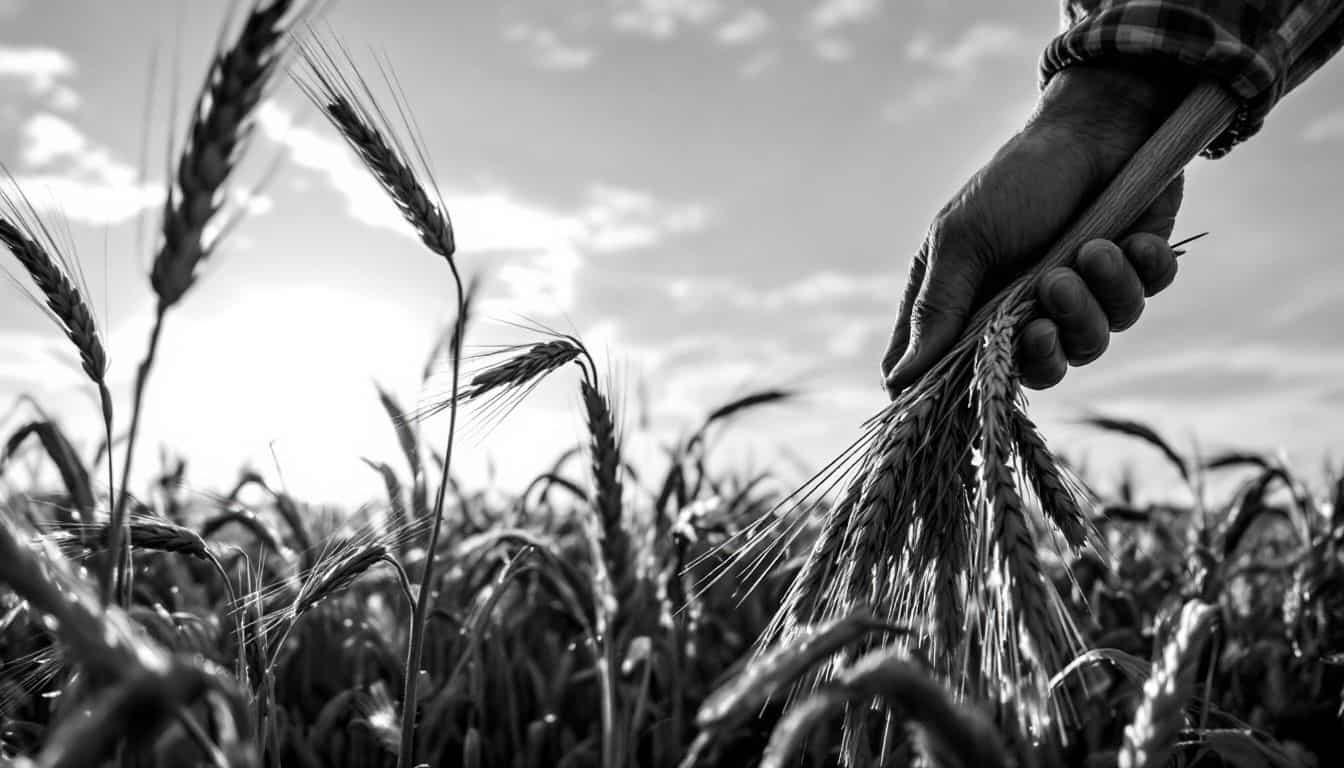
Before counting, one must know what is being counted. The word “omer” first designates a measure: “The omer is one tenth of an ephah” (Shemot [Exodus] 16:36), the daily ration of manna that each person received in the desert. It then designates a sheaf, the very first barley harvest of the year in the Land of Israel. The Torah commands: “When you enter the land that I give you and reap its harvest, you shall bring to the priest an omer, the first of your harvest. He shall wave the omer before the L-rd, that you may be accepted; on the day after the Shabbat the priest shall wave it” (Vayikra 23:9-11).
The text adds a prohibition that structures the whole agricultural spring: “You shall eat neither bread, nor parched grain, nor fresh ears, until this very day, until you have brought the offering of your G-d” (Vayikra 23:14). As long as the omer has not been offered, the new grain (in Hebrew chadash) is forbidden. The Shulchan Arukh draws from this the rule still in force: it is forbidden to eat chadash “until the beginning of the night of the 18th of Nisan, and in the Land of Israel until the beginning of the night of the 17th of Nisan” (Orach Chaim 489:10), even today, when the sheaf can no longer be offered. The practical applications of this rule are debated: in case of doubt, one asks a rabbi.
The Mishna describes the ceremony in detail (Mishna Menachot 10:3). Emissaries of the court go out on the eve of the festival and tie the stalks into sheaves while they are still attached to the ground; the neighboring villages gather “so that the harvest may be carried out with great pomp”. As night falls, the officiant asks: “Has the sun set?” and the crowd answers three times: “Yes.” The same ritual is followed for the sickle, for the basket, and, if it is Shabbat, for the question “Shall I reap on this Shabbat?” The Mishna specifies: “Its mitzvah is to be reaped at night; if it was reaped by day, it is valid; and it overrides Shabbat” (Menachot 10:9). Such a theatrical ceremony is explained by a doctrinal stake: the meaning of the phrase “the day after the Shabbat” (mimacharat haShabbat).
An ancient controversy: which “Shabbat” is meant?
The verse says that the omer is offered “on the day after the Shabbat”. The Boethusians, a Sadducean current, read it as the Sunday following the Shabbat of Pesach; Shavuot would then always fall on a Sunday. The Sages, for their part, understood “Shabbat” in the sense of “festival day”: the day after the first day of Pesach, whatever day of the week it is. The Talmud relates that it is to refute that reading that the Mishna insists on the ritual dialogue (“Why all this? Because of the Boethusians, who said: the reaping of the omer is not done at the close of the festival”, Menachot 65a). It also relates that Rabban Yochanan ben Zakkai took them to task:
“Rabban Yochanan ben Zakkai took them on and said to them: Fools, where do you get this from?”
(Menachot 65a) — ניטפל להם רבן יוחנן בן זכאי, ואמר להם: שוטים, מנין לכם?
The Talmud goes on to report the answer stammered by an old man, which Rabban Yochanan refutes with a verse. This episode is a reminder that the counting of the Omer is not a mere popular custom: its date is a point of the Oral Torah, defended by the Sages against a rival literal reading. To this day it is the Sages’ reading that fixes the calendar of Shavuot, always on the 6th of Sivan, whatever the day of the week.
2. What the Torah says: counting seven weeks
The commandment to count is itself formulated twice in the Torah. In Leviticus:
“You shall count for yourselves, from the day after the Shabbat, from the day you brought the omer of waving, seven weeks: they shall be complete. Until the day after the seventh week you shall count fifty days, and you shall offer a new offering to the L-rd.”
(Vayikra 23:15-16) — וּסְפַרְתֶּם לָכֶם מִמׇּחֳרַת הַשַּׁבָּת מִיּוֹם הֲבִיאֲכֶם אֶת־עֹמֶר הַתְּנוּפָה שֶׁבַע שַׁבָּתוֹת תְּמִימֹת תִּהְיֶינָה
And in Deuteronomy, with a different emphasis, that of the harvest: “You shall count seven weeks; from the time the sickle is first put to the standing grain, you shall begin to count seven weeks. And you shall keep the festival of Shavuot for the L-rd, your G-d” (Devarim [Deuteronomy] 16:9-10). Two nuances appear: Leviticus counts “days” (fifty), Deuteronomy “weeks” (seven), and the first insists on the adjective “complete” (temimot). The whole Talmud will rely on these three details.
It is worth noticing what the Torah does not say. It gives no date for Shavuot: the festival is not fixed by the monthly calendar but by the counting, that is, by a countdown that starts from Pesach. Shavuot is literally “the weeks”, the festival whose name is that of the count that leads to it. The Talmud also calls it Atzeret (“conclusion”), as in the passage of Menachot 65a cited above, which makes Shavuot the conclusion of Pesach, just as Shemini Atzeret is the conclusion of Sukkot.
3. The law of the counting: Talmud, Rambam, Shulchan Arukh
Counting at night, both days and weeks
The Talmud lays down two rules. First, one counts at night, so that the weeks are “complete”. A tannaitic teaching recorded in Menachot 66a reads the words “seven complete weeks” as an indication of time:
“When do you find seven complete weeks? When you begin to count from the evening.”
(Menachot 66a) — אימתי אתה מוצא שבע שבתות תמימות? בזמן שאתה מתחיל לימנות מבערב.
Second, one counts both days and weeks. Since the biblical text speaks of both, Abaye concludes:
“Abaye said: it is a mitzvah to count the days, and it is a mitzvah to count the weeks.”
(Menachot 66a) — אמר אביי: מצוה למימני יומי, ומצוה למימני שבועי.
The same passage records a practice of the time: the masters of the school of Rav Ashi counted days and weeks, but Ameimar counted only the days, saying:
“Ameimar counted the days and did not count the weeks; he said: it is only a remembrance of the Temple.”
(Menachot 66a) — אמימר מני יומי ולא מני שבועי, אמר: זכר למקדש הוא.
Ameimar’s remark opens a major question: is the counting of our day (with no Temple and no omer) a mitzvah of the Torah, or an institution of the Sages “in memory of the Temple”? The Rambam lists it among the mitzvot of the Torah that apply at all times and in all places (Hilchot Temidin UMusafin 7:22; see below). Other authorities, whom the Sefer HaChinuch reports (mitzvah 306), hold that the counting is from the Torah “in the time of the Temple, when there is an omer”, and of rabbinic institution elsewhere, even without an omer. In practice, the two opinions lead to the same actions (the Rama, who follows the view that the counting remains a Torah obligation, even prescribes interrupting a meal that was begun too late in order to count: Orach Chaim 489:4).
What Maimonides says
The Rambam devotes three paragraphs to the basic rules. The first:
“It is a positive mitzvah to count seven complete weeks from the day the omer is brought (…) And one counts from the beginning of the day; that is why one counts at night, from the night of the sixteenth of Nisan.”
(Mishneh Torah, Hilchot Temidin UMusafin 7:22) — מצות עשה לספר שבע שבתות תמימות מיום הבאת העמר
He adds that if one forgot to count at night, one counts by day, that one counts standing (but “if one counted sitting, one has fulfilled the obligation”), and that this mitzvah falls on “every man of Israel, in every place and at every time”, while women and slaves are exempt from it (7:23-24):
“Women and slaves are exempt from it.”
(Hilchot Temidin UMusafin 7:24) — ונשים ועבדים פטורין ממנה
This exemption of women is the one that applies to all time-bound positive mitzvot. The practice has long been divided: some women count without reciting the blessing, others with it; the custom of one’s community or rabbi prevails.
Today’s practice
The Shulchan Arukh devotes chapter 489 of Orach Chaim to practice. It teaches: one begins on the second night of Pesach, after the evening prayer; each person counts for himself, standing, after reciting the blessing (“…who has sanctified us with His commandments and commanded us to count the omer”); one states the days and then the weeks: “Today is one day of the omer (…), seven days, which are one week, (…), eight days, which are one week and one day”, and so on up to forty-nine (Orach Chaim 489:1).
The points that come up most often:
- The time. The counting is done at night. Someone who prays with the community before the stars appear counts with it without a blessing, and counts again with a blessing later in the night (489:3); those who are scrupulous wait for nightfall (489:2).
- Forgetting. Someone who forgot all night counts during the day, without a blessing (489:7), and continues on the following evenings with a blessing; someone who missed a whole day counts on the following days without a blessing (489:8). This strict rule is derived from the unitary nature of the mitzvah: if one day is missing, the series is broken. The Sefer HaChinuch (306) reports that some went even further (someone who misses a day could no longer count for the rest of the year), but that “our master” rejected this stringency; the practice follows the Shulchan Arukh. In case of doubt (“did I skip a day?”), one counts with a blessing (489:8).
- Shabbat and festivals. On the night of Shabbat or a festival, one counts after Kiddush at the synagogue; at the end of Shabbat, before Havdalah (489:9).
- The question “what is today’s count?” At nightfall, if someone asks us which day of the omer it is, we answer “yesterday it was so-and-so many” so as not to lose the possibility of counting afterwards with a blessing (489:4).
Ashkenazim and Sephardim do not count in exactly the same way in the details (wording, timing relative to the prayer, use of the weeks), and Hasidim have their own customs: the principle, however, is shared by all.
4. Why count? The meanings of the Omer
The plain meaning: longing for the day of the Torah
The most classical reason is given by the Sefer HaChinuch, which traces the path from Pesach to Shavuot. The people were not freed for the sake of freedom alone: “The whole essence of Israel is nothing but the Torah”; that is why they left Egypt, as G-d says to Moshe: “This shall be the sign for you that I have sent you: when you bring the people out of Egypt, you shall serve G-d on this mountain” (Shemot 3:12).
“And this is the essential point and the cause for which they were redeemed and left Egypt, in order to receive the Torah at Sinai.”
(Sefer HaChinuch, mitzvah 306) — והיא העקר והסבה שנגאלו ויצאו ממצרים, כדי שיקבלו התורה בסיני
It concludes that we count to show our longing for that day, like a slave who counts the days until his liberation:
“(…) to show in our soul the great desire for the precious day, for which our heart yearns ‘as a slave pants for the shadow’, and he constantly counts when the much-desired time will come when he will go out to freedom.”
(Sefer HaChinuch, mitzvah 306) — להראות בנפשנו החפץ הגדול אל היום הנכבד הנכסף ללבנו כעבד ישאף צל, וימנה תמיד מתי יבוא העת הנכסף אליו שיצא לחרות
This sentence sheds light on a peculiarity of the formula: we do not say “so many days remain” but “so many days have passed”. The Sefer HaChinuch explains this formula by the same longing: at the outset, one does not want to evoke the large number of days that separate us from the festival. The verse quoted for the slave is Iyov (Job) 7:2.
From this it also derives the explanation of the starting point: we do not count from the first day of Pesach itself, since that day is entirely devoted to remembering the great miracle of the Exodus from Egypt; the counting therefore begins the next day, with the offering of the omer (Sefer HaChinuch, mitzvah 306).
A moral reading: counting in order to take account of oneself
The tradition of aggada and mussar adds that these seven weeks are work on oneself, for “it is not enough to have left Egypt”: one must become someone to whom the Torah can be entrusted. The mourning of Rabbi Akiva’s disciples, which we shall see, makes the counting a school of respect for others. One of the maxims of Pirkei Avot illustrates the same idea: when Rabban Yochanan ben Zakkai asks his disciples what is the right path to which a person should cling, Rabbi Elazar answers “a good heart” (lev tov), and the master declares: “I prefer the words of Elazar ben Arach to your words, for your words are included in his” (Pirkei Avot 2:9). We shall meet this “heart” again in Rav Benizri’s reading.
The kabbalistic reading: seven times seven
Kabbalah (the mystical tradition) sees in the forty-nine days a journey through the seven “attributes” (midot, or sefirot): kindness, strength, harmony, endurance, humility, connection, sovereignty. Each week is colored by one of them, and each day by the combination of two; the forty-nine days thus form forty-nine shades of character. This division, which the kabbalistic tradition developed mainly in Safed in the 16th century, is a spiritual reading, not a rule of halakha: it adds no obligation to the mitzvah, but gives each day a theme for self-examination. It appears neither in the Mishna nor in the Talmud; it has nevertheless deeply marked practice, especially Hasidic practice.
5. A time of restraint: the disciples of Rabbi Akiva
The Talmudic source
The mourning of the Omer period rests on a Talmudic account, in connection with the duty to have children and disciples even in old age. Rabbi Akiva is the example:
“It was said: Rabbi Akiva had twelve thousand pairs of disciples, from Gevat to Antipatris, and all of them died in a single period (perek), because they did not treat one another with respect.”
(Yevamot 62b) — אמרו: שנים עשר אלף זוגים תלמידים היו לו לרבי עקיבא מגבת עד אנטיפרס, וכולן מתו בפרק אחד, מפני שלא נהגו כבוד זה לזה.
And the Talmud adds, in the following line:
“It was taught: all of them died between Pesach and Atzeret (Shavuot). Rav Chama bar Abba, and some say Rabbi Chiya bar Avin, said: all of them died a bad death. Which one? Rav Nachman said: askara (a throat illness, perhaps diphtheria).”
(Yevamot 62b) — תנא, כולם מתו מפסח ועד עצרת. אמר רב חמא בר אבא ואיתימא רבי חייא בר אבין: כולם מתו מיתה רעה. מאי היא? אמר רב נחמן: אסכרה.
The world remained desolate of Torah, the Talmud continues, until Rabbi Akiva joined “our masters of the South” and taught them: Rabbi Meir, Rabbi Yehuda, Rabbi Yose, Rabbi Shimon and Rabbi Elazar ben Shammua, “and it was they who upheld the Torah at that time” (Yevamot 62b). Two points are worth noting. First, the Talmud speaks of “twelve thousand pairs”, which is summarized as twenty-four thousand disciples. Second, the Talmud says nothing about the thirty-third day: it does not mention Lag BaOmer, nor does it speak of any prohibitions to observe.
Prohibitions and customs
The law of mourning observances is thus a minhag (a custom), not a Talmudic rule, recorded by the Geonim and the Rishonim. The Shulchan Arukh summarizes it in four paragraphs (Orach Chaim 493):
“It is customary not to marry between Pesach and Shavuot, until the 33rd day of the Omer, because at that time the disciples of Rabbi Akiva died.”
(Shulchan Arukh, Orach Chaim 493:1) — נוהגים שלא לישא אשה בין פסח לעצרת עד ל”ג בעומר מפני שבאותו זמן מתו תלמידי ר’ עקיבא
“It is customary not to cut one’s hair until the 33rd day of the Omer, for it is said that then they stopped dying.”
(Shulchan Arukh, Orach Chaim 493:2) — נוהגים שלא להסתפר עד ל”ג לעומר שאומרים שאז פסקו מלמות
The rule and its limits are immediately apparent: betrothals and betrothal meals are permitted (493:1); someone who has already married “is not punished”; and the authorities distinguish according to the custom of each place. The Rama, the Ashkenazi gloss, specifies: “Among us, this is not followed: one cuts one’s hair on the day of the 33rd, and one rejoices a little, and one does not say Tachanun.” The Hebrew text:
“But in these countries they do not follow his words: rather, one cuts one’s hair on the day of the 33rd, increases joy somewhat, and does not say Tachanun (supplication).”
(Rama on Orach Chaim 493:2) — ובמדינות אלו אין נוהגין כדבריו אלא מסתפרין ביום ל”ג ומרבים בו קצת שמחה ואין אומרים בו תחנון
There are thus several ways of reckoning the mourning, and the Rama warns that customs should not be mixed within a single city (493:3). The Mishnah Berurah (Orach Chaim 493:14) sums up: everyone observes thirty-three days of mourning, but they do not place them in the same way. Some count them from the second day of Pesach to the 33rd day of the Omer, and prohibit nothing afterwards. Others subtract the first sixteen days and observe the mourning from Rosh Chodesh Iyar until Shavuot, partly permitting Lag BaOmer itself. Sephardim generally follow the Shulchan Arukh, with local variations, for example until the morning of the 34th day. This is why, to know when to cut one’s hair, marry or hold an event, the answer is: follow the custom of your community, and for a particular case consult a rabbi. The Mishnah Berurah (Orach Chaim 493:3) reports the custom of also forbidding dancing and round dances during this period; a very widespread custom extends this mourning to instrumental music.
One last custom, mentioned by the Shulchan Arukh, concerns women: women have the custom of not doing work (melakha) “from Pesach to Shavuot, from sunset on” (Orach Chaim 493:4). The Tur, who reports this custom, explains it thus: the disciples died around sunset and were buried after it, and the people then stopped work.
Bar Kokhba and the death of the disciples
History provides a context. Rabbi Akiva lived through the crushing of the Bar Kokhba revolt against Rome (132-135/136 CE), whose fortress of Betar fell in 135 (Jerusalem Talmud, Taanit 4:5). The same passage reports that when Rabbi Akiva saw Bar Kokhba (“Bar Koziba”), he said:
“Rabbi Akiva, when he saw Bar Koziba, would say: this is the King Messiah.”
(Jerusalem Talmud, Taanit 4:5) — רבי עקיבה כד הוה חמי בר כוזבה הוה אמר. דין הוא מלכא משיחא.
To which Rabbi Yochanan ben Torta replied: “Akiva, grass will grow on your cheeks and the son of David will still not have come.” The Talmud does not explicitly link the death of the disciples to the revolt; this is a reading of historians and of certain commentators, which Rav Benizri takes up (see below). The Talmud itself gives the moral cause: the lack of mutual respect.
6. Lag BaOmer: the 33rd day
What the sources say
“Lag” is a number: lamed (30) and gimel (3) make 33. The thirty-third day of the counting falls on the 18th of Iyar. What happens that day? The Talmud does not say. The first source to give the reason is of Gaonic origin; the Meiri (Rabbi Menachem HaMeiri, Provence, 13th century) writes it explicitly:
“(…) and the tradition is in the hands of the Geonim that on the 33rd day of the Omer, the dying stopped; and for this reason it is customary not to fast on that day, and also not to marry from Pesach until that time.”
(Meiri on Yevamot 62b) — וקבלה ביד הגאונים שביום ל”ג בעומר פסקה המיתה ונוהגים מתוך כך שלא להתענות בו וכן נוהגים מתוך כך שלא לישא אשה מפסח עד אותו זמן
The Tur (Orach Chaim 493) also reports the custom: “in some places, one cuts one’s hair from the 33rd day of the Omer, for it is said that then they stopped dying”, and he cites the opinion of Rabbi Yitzchak ibn Giat and of the Geonim, according to which the prohibition concerns marriage itself, not betrothal. Historians note that the earliest mentions of Lag BaOmer as the end of the plague are justifications of an already existing custom, that of permitting weddings and haircuts from this date.
Rabbi Shimon bar Yochai and the hilula
The second event of the 33rd day is the hilula (literally “celebration”) of Rabbi Shimon bar Yochai (Rashbi), a disciple of Rabbi Akiva, to whom tradition attributes the Zohar. Here a distinction is necessary.
- The tradition. It makes Lag BaOmer the day of his death, celebrated as a day of joy: the revelation of mystical wisdom, which is unveiled at the moment of his passing (this is the theme of the Idra Zuta, which records the master’s last moments). The death of a righteous person is seen as an ascent, not as a cause for mourning.
- The historian. He notes that the link between the 33rd day of the Omer and the death of Rabbi Shimon bar Yochai is not attested in ancient sources. According to the critical studies summarized in the online encyclopedia Wikipedia, one of the earliest attestations of this identification appears in an 18th-century work, the Hemdat Yamim (1731), and a pilgrimage to Meron is documented from the 16th century, in Safed. The state of research is debated, and we mention it as context, not as a judgment on the value of the tradition.
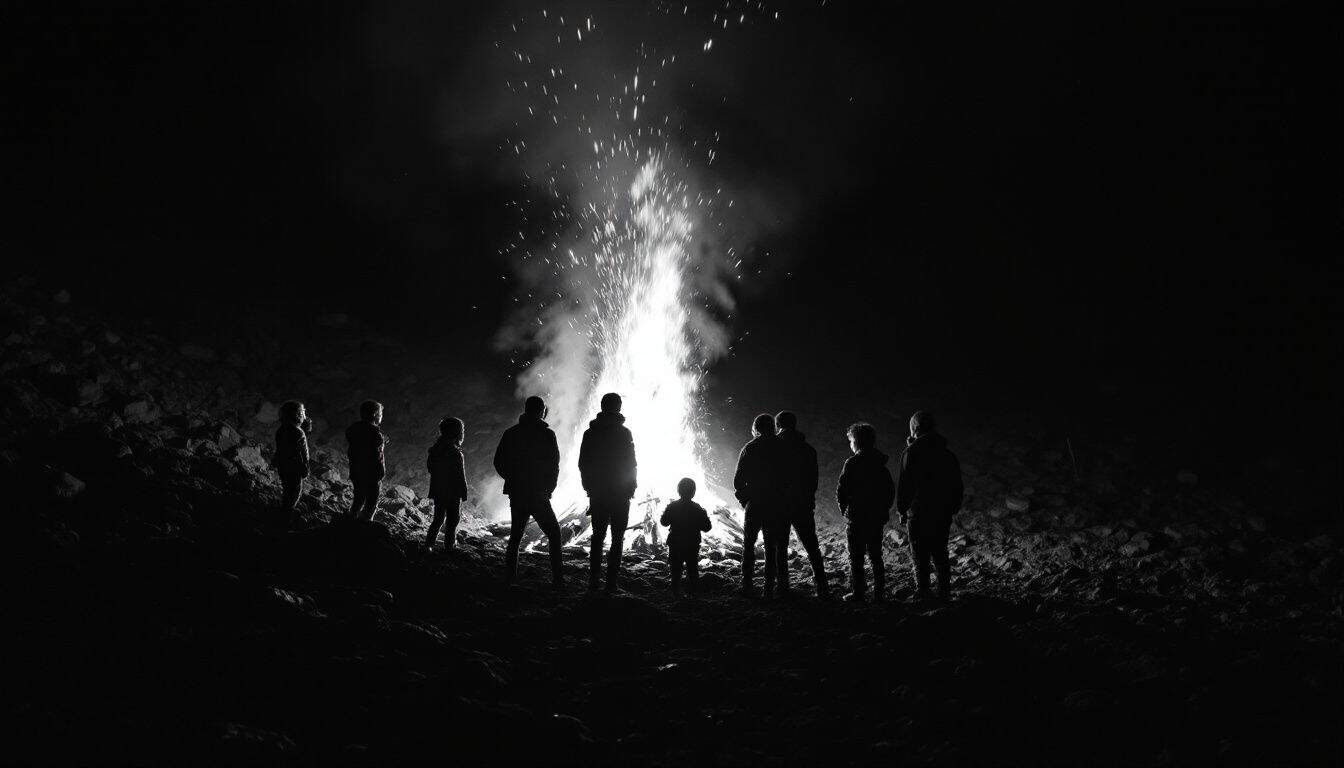
Today’s practice is well known: the ascent to Meron, in the Galilee, to the tomb of Rabbi Shimon bar Yochai, bonfires, songs, meals, and the first haircut of three-year-old boys (a widespread custom, but one that does not appear in the Shulchan Arukh). In the diaspora, people light bonfires, hold picnics and play games, and children play with a bow and arrows.
The bonfires and the bow
The explanation of the bonfires is given by kabbalah: they evoke the light that the Zohar makes appear around Rabbi Shimon bar Yochai, and more broadly the “light of the hidden Torah”. Others see in them a memory of Bar Kokhba’s signal fires. The children’s bow and arrow refer, in the same way, to the revolt, which the early Zionists made, in modern times, the symbol of this day (according to the same historical synthesis). Here too the spiritual tradition and the historical reading coexist without contradicting each other, but they should not be confused: the bow is a popular symbol, not a mitzvah.
These bonfires, which are at bottom a children’s game, nevertheless carry a biblical thread. Fire appears at the origin of the covenant: “When the sun had set and it was very dark, behold, a smoking furnace and a flaming torch passed between these pieces” (Bereshit [Genesis] 15:17), and on the altar: “A perpetual fire shall burn on the altar; it shall not go out” (Vayikra 6:6):
“A perpetual fire shall burn on the altar; it shall not go out.”
(Vayikra 6:6) — אֵשׁ תָּמִיד תּוּקַד עַל־הַמִּזְבֵּחַ לֹא תִכְבֶּה
It is precisely this thread that Rav Raphaël Benizri follows back in his lecture on Lag BaOmer.
7. What Rav Raphaël Benizri teaches
Rav Raphaël Benizri devoted two lectures to the Omer, published on this site with their transcription. Here is what can be said about them, attributing to him nothing other than what is found there.
The month of the Omer: counting in order to count oneself. The Rav starts from the plague that struck the disciples of Rabbi Akiva. They did not recognize one another: it is not, he specifies, a lack of love of one’s neighbor, but a failure to recognize the human dignity of each person, a refusal to admit difference, diversity, nuance in the current of thought that each one chooses. He recalls that the Midrash links the mitzvah of the Omer to the promise of the land, hence this conclusion: one cannot inherit a country without first having learned to make room for the other. He explains that we do not count the days of creation, but those of the constitution of the Jewish people and of its march toward the Land of Israel; that the omer is the measure of the manna, which links heavenly food to earthly food; that the word “sefira” is related to “sapir”, the sapphire: to count is to restore to the object its transparency, to purify its form. Finally he unfolds an arithmetic that leads to Lag BaOmer: “lev”, the heart, has the value of thirty-two; the thirty-third day is therefore the day on which one crosses the heart; “tov”, good, has the value of seventeen, exactly what remains until the forty-ninth day. He connects this with the answer of Rabbi Elazar ben Arach, the “lev tov” (Pirkei Avot 2:9).
Lag BaOmer: the bonfires and the light of the Zohar. The Rav ties to it the two events of the day, the end of the plague and the passing of Rabbi Shimon bar Yochai, which he presents as a hilula that is celebrated. He links the death of the disciples to the Bar Kokhba revolt, which they supported: an army divided by pride cannot stand. He traces the path of fire in the Torah, from the covenant between the pieces (Bereshit 15:17) to the perpetual fire of the altar and the western lamp of the menorah, and he explains the bow (Bar Kokhba’s struggle for the land is not extinguished) and the flame lit at the head of a deceased person. He contrasts halakha, which is settled, with sod (the secret, the mystical dimension), which is renewed every day, and he reads in Rabbi Shimon’s teaching the mercy (rachamim) that tempers judgment.
The two lectures converge on one point: what is at stake in the Omer is respect for the other. Lectures to find: The month of the Omer: counting in order to count oneself and Lag BaOmer: the bonfires and the light of the Zohar.
8. Common misconceptions about the Omer and Lag BaOmer
“Lag BaOmer is a Torah festival like Purim or Chanukah.” No. It is not a festival instituted by the Sages. There is no mitzvah and no liturgy of its own: Tachanun is omitted and some mourning restrictions are relaxed, nothing more.
“The Talmud says that Rabbi Akiva’s disciples stopped dying on Lag BaOmer.” No. The Talmud (Yevamot 62b) says that they died between Pesach and Shavuot. The 33rd day is a tradition of the Geonim, reported by the Meiri and the Tur.
“Rabbi Akiva lost his disciples to an unexplained illness, with no fault involved.” The Talmud gives the moral cause (the lack of mutual respect) and the physical cause (askara). Both are in the text.
“Rashbi died on Lag BaOmer, it is written in the Talmud.” No: the Talmud does not mention it. It is a kabbalistic tradition, whose history is debated by scholars.
“During the Omer it is forbidden to cut one’s hair, since time immemorial.” It is a custom, not a law of the Talmud, and there are several ways of practicing it. The custom of each community is authoritative.
“The counting is a ritual for religious men.” It is a mitzvah of the Torah (according to the Rambam) that each person fulfills for himself; the counting is open to everyone, with the customary nuances for women mentioned above.
Frequently asked questions about the counting of the Omer and Lag BaOmer
When do we start counting?
On the second night of Pesach (the night of the 16th of Nisan), after the evening prayer (Shulchan Arukh, Orach Chaim 489:1). In the Land of Israel as in the diaspora, the counting begins on the same night, since it starts from the day after the first day of the festival.
What should I do if I forgot to count one night?
If one realizes it during the day, one counts without a blessing; if one forgot a whole day, one continues to count the following days, but without a blessing (Shulchan Arukh, Orach Chaim 489:7-8). A rabbi can clarify particular cases.
Why do we count standing?
The Rambam prescribes it (“one counts only standing”), and the Kesef Mishneh explains it by the words “standing grain” in the verse of Deuteronomy (Devarim 16:9); but if one counted sitting, one has fulfilled the obligation (Hilchot Temidin UMusafin 7:23).
Can one get married during the Omer?
The Shulchan Arukh writes: “until the 33rd day”, and the Rama permits it “from the 33rd day” (Orach Chaim 493:1); but some communities observe the mourning from Rosh Chodesh Iyar until Shavuot (Mishnah Berurah 493:14). The dates therefore vary, and one follows one’s community. Betrothals, without dancing, are permitted (493:1 and Mishnah Berurah 493:3).
Why do we light bonfires on Lag BaOmer?
Kabbalah sees in them the light of Rabbi Shimon bar Yochai; another reading evokes Bar Kokhba’s fires. It is not a mitzvah, but a custom that is widespread mainly in Israel.
Do women count the Omer?
The Rambam exempts them, as for every time-bound positive mitzvah (Hilchot Temidin UMusafin 7:24). Many women nevertheless count, and customs vary regarding the blessing.
Is Shavuot the end of the counting?
Yes: the fiftieth day is Shavuot, which is also the festival of the giving of the Torah. The “day of the giving” is thus the goal of the road that the Sefer HaChinuch describes as a slave’s longing for freedom.
Further reading
- The counting of the Omer: the 49 days of preparation
- Lag BaOmer: why do we celebrate the 33rd day of the Omer?
- The month of the Omer: counting in order to count oneself (lecture by Rav Benizri)
- Lag BaOmer: the bonfires and the light of the Zohar (lecture by Rav Benizri)
- Shavuot: the giving of the Torah and the Book of Ruth
- Pesach: the festival of freedom in 6 video lectures
- The great Jewish thinkers, from Rabbi Akiva to Rav Kook
- What is Shavuot?
- The Jewish calendar
- What is kabbalah?
- What is Pesach and the Seder?
- What is Jewish mourning?
Sources and references (19)
- Shemot (Exodus) 3:12; 16:36
- Vayikra (Leviticus) 6:6; 23:9-17
- Devarim (Deuteronomy) 16:9-10
- Bereshit (Genesis) 15:17
- Iyov (Job) 7:2
- Mishna Menachot 10:3; 10:9
- Mishna Pirkei Avot 2:9
- Babylonian Talmud, Menachot 65a; 66a
- Babylonian Talmud, Yevamot 62b
- Jerusalem Talmud, Taanit 4:5
- Meiri (Rabbi Menachem HaMeiri), Beit HaBechira on Yevamot 62b
- Rambam, Mishneh Torah, Hilchot Temidin UMusafin 7:22-24
- Sefer HaChinuch, mitzvah 306
- Tur, Orach Chaim 493
- Shulchan Arukh, Orach Chaim 489:1-10; 493:1-4 (with the glosses of the Rama)
- Mishnah Berurah, Orach Chaim 493:3; 493:14-15
- Zohar, Idra Zuta (on the death of Rabbi Shimon bar Yochai)
- Historical synthesis on the origins of Lag BaOmer: article “Lag BaOmer”, Wikipedia (references cited: Hemdat Yamim, 1731; the Meron pilgrimage in the 16th century; the Bar Kokhba revolt, 132-136)
- Lectures by Rav Raphaël Benizri: The month of the Omer: counting in order to count oneself; Lag BaOmer: the bonfires and the light of the Zohar
Article by the Pensées Juives editorial team. Passages attributed to Rav Raphaël Benizri are taken from his lectures published on this site.