
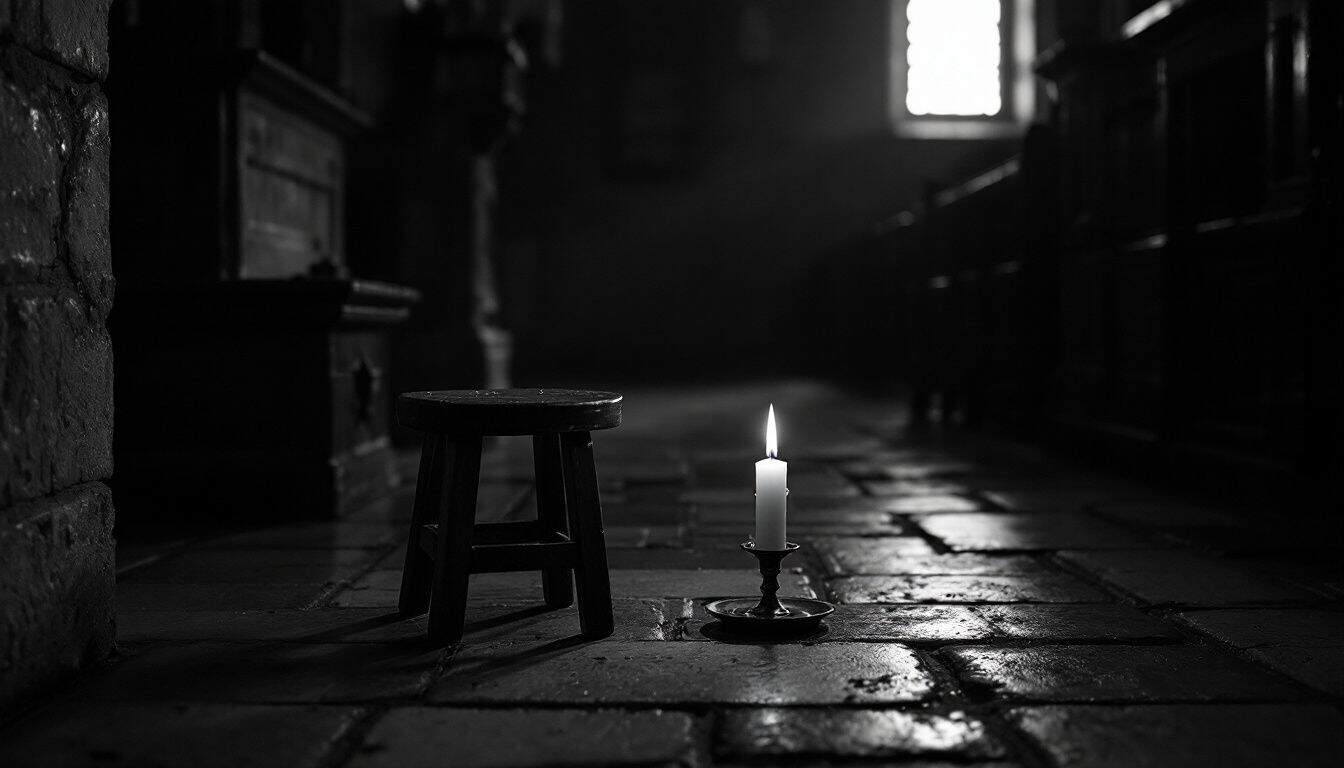
Once a year, in the heart of summer, synagogues are emptied of their lights. People sit on the floor or on low stools, read a book of lamentations by the light of a single candle, neither eat nor drink for twenty-five hours, and do not greet one another. This is Tisha B’Av, the “ninth of the month of Av,” the gravest day of mourning in the Jewish calendar. Why this day, and why, two thousand years after the events, keep mourning a Temple of which only stones remain? This article answers from the Mishna, the Talmud, Maimonides and the Shulchan Arukh, then sets the accounts beside the findings of historians and archaeology, distinguishing halakha (practiced law) from the moral or mystical reading.
Tisha B’Av (the 9th of Av) is the day on which, according to tradition, the Temple of Jerusalem was destroyed twice, by the Babylonians in 586 BCE, then by the Romans in 70 CE, and on which other national disasters occurred: the decree in the wilderness against the generation of the spies, the fall of Betar (135) and the plowing of Jerusalem (Mishna Taanit 4:6). It is a complete fast, from nightfall to the following nightfall, with five prohibitions as on Yom Kippur, preceded by three weeks of progressive mourning beginning on the 17th of Tammuz. The Sages give the moral cause: the first Temple fell because of grave sins, the second because of “baseless hatred” (sinat chinam). And they add a hope: it is said that the Mashiach (Messiah) was born on that day, and that “whoever mourns for Jerusalem will see its joy.”
1. What Does Tisha B’Av Commemorate? The Mishna
The source of the day is a passage of the Mishna, the basic text of the Oral Law, set down in writing around the year 200. The last chapter of tractate Taanit (“Fasts”) lists five disasters that occurred on the 17th of the month of Tammuz and five others on the 9th of the month of Av:
“On the ninth of Av, it was decreed against our fathers that they would not enter the land; the Temple was destroyed the first time and the second; Betar was captured; and the city was plowed. When Av begins, one diminishes joy.”
(Mishna Taanit 4:6) — בְּתִשְׁעָה בְאָב נִגְזַר עַל אֲבוֹתֵינוּ שֶׁלֹּא יִכָּנְסוּ לָאָרֶץ, וְחָרַב הַבַּיִת בָּרִאשׁוֹנָה וּבַשְּׁנִיָּה, וְנִלְכְּדָה בֵיתָר, וְנֶחְרְשָׁה הָעִיר. מִשֶּׁנִּכְנַס אָב, מְמַעֲטִין בְּשִׂמְחָה.
Five events, then, and first a point of method: for the tradition, a date can become “charged.” The Talmud puts it this way: “merit is rolled out on a day of merit, and guilt on a day of guilt” (Taanit 29a), meaning that good things tend to happen on a favorable day and misfortunes on a day already marked by misfortune. Maimonides takes up the list in his code (Mishneh Torah, Hilkhot Taanit 5:3) and adds that the fall of Betar was “a great calamity, like the destruction of the Temple,” because there a leader whom the greatest Sages had recognized was held to be the royal Messiah (we return to this below).
These five events span sixteen centuries: the wilderness (around the thirteenth century BCE, according to the traditional chronology), 586 BCE, 70 and 135 CE. This is not a list of miscellaneous incidents. What the Mishna says is that these events have one thing in common: the loss of the land, of Jerusalem and of the Temple, in other words the loss of the place where G-d’s presence dwelt among the people.
2. The First Disaster: The Spies and the “Weeping for Nothing”
Why does the list begin in the wilderness? Because, according to the Talmud, the date was fixed at the very first refusal of the Land. The episode is told in the Torah portion Shelach Lekha. Twelve spies (the meraglim) return from Canaan; ten of them describe an invincible land, and the text says: “All the congregation raised their voice and cried, and the people wept that night” (Bamidbar [Numbers] 14:1): וַתִּשָּׂא כׇּל־הָעֵדָה וַיִּתְּנוּ אֶת־קוֹלָם וַיִּבְכּוּ הָעָם בַּלַּיְלָה הַהוּא. The sentence falls: only Calev and Yehoshua, who had defended the land, will enter; the others will die in the wilderness, and their children will wander forty years, “a year for each day” of the scouting (Bamidbar 14:27-35). The Psalms keep the memory: “They despised the desirable land” (Tehillim [Psalms] 106:24), “to disperse their descendants among the nations” (106:27).
The Talmud makes the link with Tisha B’Av:
“Rabbi Yochanan said: that night was the night of the ninth of Av. The Holy One, blessed be He, said to them: You wept for nothing; I will establish for you a weeping for generations.”
(Taanit 29a) — אָמַר רַבָּה אָמַר רַבִּי יוֹחָנָן: אוֹתוֹ לַיְלָה לֵיל תִּשְׁעָה בְּאָב הָיָה. אָמַר לָהֶם הַקָּדוֹשׁ בָּרוּךְ הוּא: אַתֶּם בְּכִיתֶם בְּכִיָּה שֶׁל חִנָּם — וַאֲנִי קוֹבֵעַ לָכֶם בְּכִיָּה לְדוֹרוֹת.
Note what is said, and what is not. The written Torah does not give the date: it is a tradition of the Sages (the Gemara reconstructs it by counting the days from the erection of the Tabernacle, Taanit 29a). And the text speaks of “weeping for nothing”: the weeping of a people refusing its destiny, not tears of mourning. For the moral reading, this is where everything begins: whoever weeps without acting, or weeps in order not to act, prepares tears that will be shed for centuries.
3. The Destruction of the First Temple (586 BCE)
The Biblical Account
The first Temple, built by King Shlomo (Solomon) around the tenth century BCE, was destroyed by Nevuchadnetzar (Nebuchadnezzar), king of Babylon. The siege begins in the tenth month (this is the origin of the fast of the 10th of Tevet, II Kings 25:1). The walls are breached on the ninth of the fourth month: “On the ninth day of the month the famine grew severe in the city… and the city was breached” (II Kings 25:3-4). The Talmud specifies that the breach took place on the 9th of Tammuz for the first Temple and on the 17th of Tammuz for the second (Taanit 28b), which explains the date of the fast. A month later:
“In the fifth month, on the seventh day of the month – this was the nineteenth year of King Nevuchadnetzar, king of Babylon – Nevuzaradan, captain of the guard, servant of the king of Babylon, came to Jerusalem. He burned the house of the L-rd, the king’s house and all the houses of Jerusalem.”
(II Kings 25:8-9) — וּבַחֹדֶשׁ הַחֲמִישִׁי בְּשִׁבְעָה לַחֹדֶשׁ הִיא שְׁנַת תְּשַׁע־עֶשְׂרֵה שָׁנָה לַמֶּלֶךְ נְבֻכַדְנֶאצַּר מֶלֶךְ־בָּבֶל בָּא נְבוּזַרְאֲדָן רַב־טַבָּחִים עֶבֶד מֶלֶךְ־בָּבֶל יְרוּשָׁלִָם. וַיִּשְׂרֹף אֶת־בֵּית־יְהֹוָה וְאֶת־בֵּית הַמֶּלֶךְ.
But the book of Yirmiyahu (Jeremiah) places the event “on the tenth day of the month” (Yirmiyahu 52:12). Where, then, is the ninth? The Talmud reconciles the texts without an artificial ruling:
“It is impossible to say the seventh, since it is written the tenth; impossible to say the tenth, since it is written the seventh. What is to be done? On the seventh, gentiles entered the Sanctuary, ate in it and defiled it on the seventh and the eighth; and on the ninth, toward evening, they set fire to it, and it burned all through the day of the tenth.”
(Taanit 29a) — בְּשִׁבְעָה נִכְנְסוּ נׇכְרִים לַהֵיכָל, וְאָכְלוּ וְקִלְקְלוּ בּוֹ שְׁבִיעִי שְׁמִינִי. וּתְשִׁיעִי סָמוּךְ לַחֲשֵׁיכָה הֵצִיתוּ בּוֹ אֶת הָאוּר, וְהָיָה דּוֹלֵק וְהוֹלֵךְ כׇּל הַיּוֹם כּוּלּוֹ.
Rabbi Yochanan adds that he would have fixed the mourning on the tenth, “because most of the Temple burned then”; the Sages preferred the ninth, because “it is better to begin with the beginning of the misfortune” (same passage). This is why part of the mourning restrictions extends until midday of the tenth (Shulchan Arukh, Orach Chayim 558:1).
The population is deported to Babylonia (II Kings 25:11). The prophet Yirmiyahu announces that the exile will last “seventy years” (Yirmiyahu 29:10): the return from exile under Cyrus, then the completion of the second Temple some sixty years later, will answer it.
What History and Archaeology Say
The traditional date is 586 BCE; several historians prefer 587, depending on how the years of Nevuchadnetzar’s reign are counted. The finds confirm the violence of the conquest: in the City of David, excavations have uncovered layers of destruction by fire with charred beams and Babylonian-type arrowheads; on the western hill (Mount Zion), a team led by Shimon Gibson found in 2019 ashes, arrowheads and precious objects, which it connects with “every great man’s house” burned in II Kings 25:9. The Lachish letters, ostraca contemporary with the siege, show the last days of the army of Judah. These discoveries validate the general framework of the biblical account; obviously, they do not allow a day of the calendar to be fixed. Historians also point out that, since the Bible gives the seventh and Yirmiyahu the tenth, the ninth is a rabbinic tradition.
The destruction was not total: most of the population stayed in the land, and Babylonia became a major Jewish center for centuries, the one where the Babylonian Talmud would later be composed. This takes nothing away from the tragedy, but it helps to understand why the tradition speaks of an exile, not of a disappearance.
4. The Destruction of the Second Temple (70 CE) and What Followed
Seventy years of captivity later, the Temple is rebuilt, then enlarged in the time of King Herod. In 66, a revolt breaks out against Rome. The general Vespasian, then his son Titus, besiege Jerusalem. The historian Flavius Josephus, a witness to the siege, reports that the Temple was set on fire on the tenth day of the month of Loos (Av) and that this was “the very day on which it had formerly been burned by the king of Babylon” (The Jewish War VI, 4, 5). Josephus thus gives the tenth, like Yirmiyahu; the Talmud, for its part, holds the ninth as the start of the fire. According to some scholars, the 9th may even have been originally the date of the second destruction, later applied by collective memory to the first. For the tradition, this convergence of dates is precisely what the Mishna says: one and the same day bears both catastrophes.
The Talmud evokes the night of the fire with a sentence that has remained famous: the young priests, holding the keys of the Sanctuary, climb to the roof of the Temple and say: “Master of the universe! Since we have not merited to be faithful treasurers, let the keys be handed back to You.” They throw them toward heaven, “and a sort of hand appeared and received them,” and then they hurl themselves into the fire (Taanit 29a). This is an aggadic account, a moral reading and not a military chronicle; it expresses the sense of responsibility the Sages felt before the catastrophe.
What Archaeology Reveals
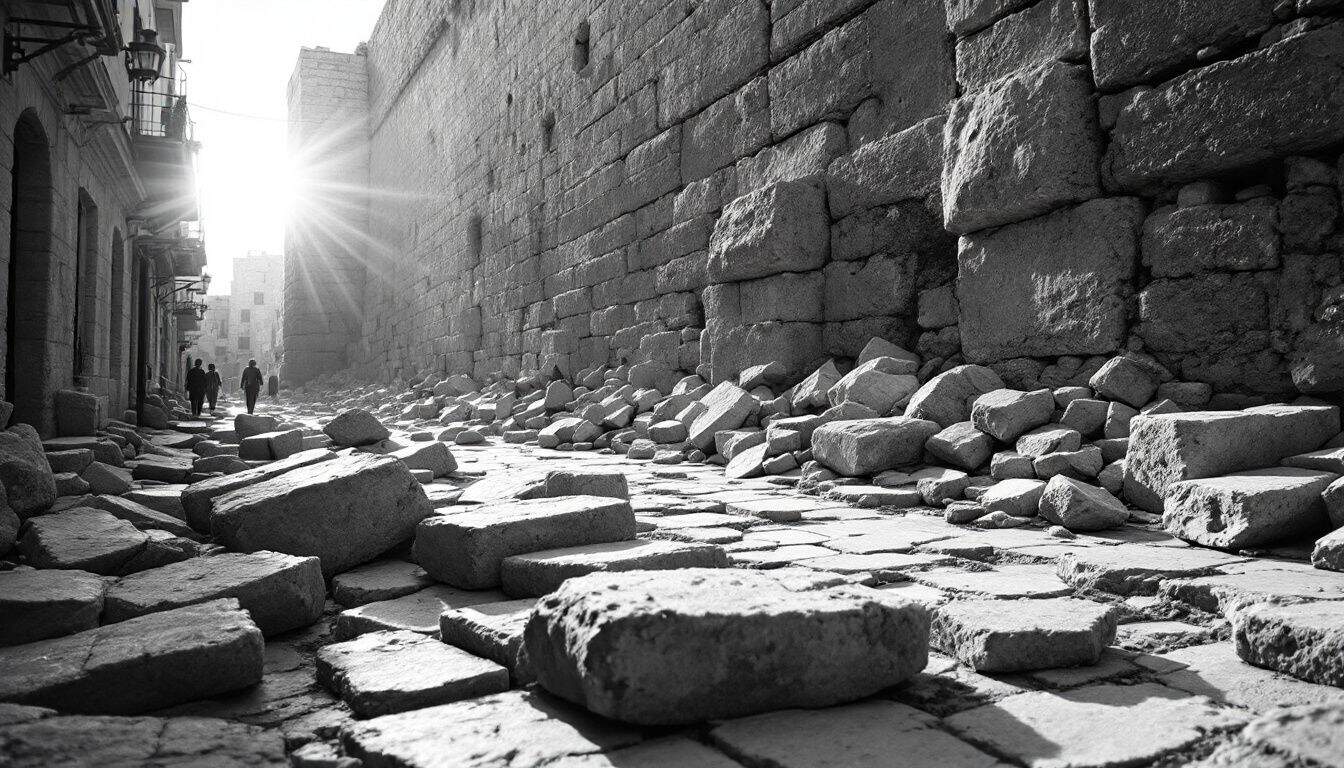
Unlike the first Temple, of which almost nothing remains on site, the second has left spectacular traces. At the foot of the western wall of the Temple Mount, near Robinson’s Arch, excavations found the Herodian-period street covered with heaps of large stones: these are blocks from the retaining walls that Roman soldiers threw down. In the Jewish Quarter of the Old City, the “Burnt House” yielded a thick layer of ash, kitchen utensils and human remains, vestiges of a home burned in 70. In the Upper City, layers of burning reach nearly two meters. Jewish tradition therefore invented nothing: the violence of the capture of Jerusalem is visible in the ground.
Betar, the Plowing and Aelia Capitolina
Two generations later, the emperor Hadrian decides to rebuild Jerusalem as a Roman colony under the name Aelia Capitolina, which provokes the Bar Kokhba revolt (132-135 according to historians; Cassius Dio, LXIX, 12). Betar, the insurgents’ last fortress, falls in 135. Maimonides recalls that Rabbi Akiva and the great Sages held Bar Kokhba to be the royal Messiah, and that his defeat “was a great calamity” (Hilkhot Taanit 5:3; see also Hilkhot Melakhim 11:3). As for the “plowing of the city,” the Talmud relates that the “wicked” Turnus Rufus (Tineius Rufus), a Roman officer, plowed the Temple and its surroundings, fulfilling the verse “Zion shall be plowed as a field” (Taanit 29a; Mikha [Micah] 3:12). According to Eusebius and other Christian sources, Jews were afterward forbidden to enter Aelia; later accounts mention an exception allowing them to come and weep over the ruins on Tisha B’Av, a detail whose historicity remains debated.
Jewish memory later attached other tragedies to this date. The edict expelling the Jews from England, for example, was promulgated on July 18, 1290 (Julian calendar), which corresponds to a 9th of Av; some historians see a deliberate choice in this. These associations belong to collective memory, not to halakha, which rests only on the Mishna’s list.
5. Why Was the Temple Destroyed?
The Sages ask the question bluntly. The Talmud asks, regarding the first Temple, which sins were at issue, and then regarding the second:
“Why was the first Temple destroyed? Because of three things that were in it: idolatry, forbidden relations and bloodshed. But the second Temple, when people were engaged in Torah, mitzvot and acts of kindness, why was it destroyed? Because there was baseless hatred in it. This teaches you that baseless hatred weighs as much as the three sins: idolatry, forbidden relations and bloodshed.”
(Yoma 9b) — אֲבָל מִקְדָּשׁ שֵׁנִי שֶׁהָיוּ עוֹסְקִין בְּתוֹרָה וּבְמִצְוֹת וּגְמִילוּת חֲסָדִים, מִפְּנֵי מָה חָרַב? מִפְּנֵי שֶׁהָיְתָה בּוֹ שִׂנְאַת חִנָּם. לְלַמֶּדְךָ שֶׁשְּׁקוּלָה שִׂנְאַת חִנָּם כְּנֶגֶד שָׁלֹשׁ עֲבֵירוֹת: עֲבוֹדָה זָרָה, גִּלּוּי עֲרָיוֹת, וּשְׁפִיכוּת דָּמִים.
Even this diagnosis is nuanced in the rest of the passage: the Talmud objects that in the time of the first Temple too there were people who “eat and drink together and pierce one another with the sword of their tongues” (Yoma 9b). The Temple was therefore not destroyed for a single cause. But the lesson is clear: a cultured, pious, charitable people can be lost simply by the way its members look at one another.
Kamtza and Bar Kamtza
The Talmud illustrates the thesis with a story (Gittin 55b-56a). A man of Jerusalem gives a feast and sends his servant to invite his friend Kamtza; by mistake, the servant invites Bar Kamtza, his enemy. The host finds him at his table and orders him to leave. Bar Kamtza begs him, offers to pay for his share, then for half the feast, then for the entire feast; he is thrown out. Sages were sitting there and said nothing. He then says to himself: “Since the Sages were sitting there and did not protest, it must suit them; I will go and denounce them to the emperor.” He convinces the emperor (the Talmud says: Nero) that the Jews are rebelling, and suggests that he send an offering to the Temple to see whether they accept it. On the way, Bar Kamtza makes a blemish on the animal’s lip (or eye), “a blemish for us, which is not one for them.” The Sages want to accept the offering “for the sake of peace with the government”; Rabbi Zecharya ben Avkulas objects: “People will say that blemished animals are offered on the altar.” Then it is proposed to kill Bar Kamtza so that he does not go and inform; Rabbi Zecharya objects again: “People will say that one who makes a blemish on a consecrated animal deserves death.” The Talmud concludes:
“Rabbi Yochanan said: the scrupulous humility of Rabbi Zecharya ben Avkulas destroyed our house, burned our Sanctuary and exiled us from our land.”
(Gittin 56a) — אָמַר רַבִּי יוֹחָנָן: עִנְוְותָנוּתוֹ שֶׁל רַבִּי זְכַרְיָה בֶּן אַבְקוּלָס, הֶחְרִיבָה אֶת בֵּיתֵנוּ, וְשָׂרְפָה אֶת הֵיכָלֵנוּ, וְהִגְלְתָנוּ מֵאַרְצֵנוּ.
The same text then tells of the siege by Vespasian and of the choice of Rabban Yochanan ben Zakkai who, having left the besieged city, asks the emperor for “Yavne and its sages” (Gittin 56b): what is saved from Jerusalem is study. This request is at the foundation of Judaism’s continuity after the destruction. The Kamtza story is an aggadah: a parable about the fault of silences, grudges and misplaced scruples, not a historical account. It explains why baseless hatred is, for the Sages, a political fault as much as a moral one.
6. The Four Fasts of the Destruction and the Three Weeks
The 9th of Av is the culmination of a series. The prophet Zecharya (Zechariah), at the return from exile, evokes four fasts:
“Thus says the L-rd of hosts: the fast of the fourth month, the fast of the fifth, the fast of the seventh and the fast of the tenth shall be for the house of Judah joy, gladness and happy festivals; but love truth and peace.”
(Zecharya 8:19) — כֹּה־אָמַר יְהֹוָה צְבָאוֹת צוֹם הָרְבִיעִי וְצוֹם הַחֲמִישִׁי וְצוֹם הַשְּׁבִיעִי וְצוֹם הָעֲשִׂירִי יִהְיֶה לְבֵית־יְהוּדָה לְשָׂשׂוֹן וּלְשִׂמְחָה וּלְמֹעֲדִים טוֹבִים וְהָאֱמֶת וְהַשָּׁלוֹם אֱהָבוּ.
Maimonides identifies them (Hilkhot Taanit 5:2-4): the fourth month is the 17th of Tammuz (walls breached); the fifth, the 9th of Av (Temple burned); the seventh, the 3rd of Tishrei (assassination of Gedalya, the governor left by Babylon); the tenth, the 10th of Tevet (start of the siege). The Shulchan Arukh makes it an obligation for all: “One is bound to fast on the 9th of Av, the 17th of Tammuz, the 3rd of Tishrei and the 10th of Tevet because of the painful events that occurred on them” (Orach Chayim 549:1).
A Talmudic Discussion: Obligatory or Optional Fast?
The verse of Zecharya speaks of both “fast” and “joy.” The Talmud (Rosh Hashana 18b) rules thus: when there is peace, these days become joy and gladness; in times of persecution, they are fasts; and in between, “those who wish fast, those who do not wish do not fast.” Why, then, is the 9th of Av always fasted? Rav Papa answers:
“The ninth of Av is different, since misfortunes were multiplied on it.”
(Rosh Hashana 18b) — שָׁאנֵי תִּשְׁעָה בְּאָב, הוֹאִיל וְהוּכְפְּלוּ בּוֹ צָרוֹת.
This discussion will be at the center of all modern questions about the fast (see below). Halakha rules: these days are obligatory for all, and “it is forbidden to break the fence” (Shulchan Arukh, Orach Chayim 550:1).
The Three Weeks (Bein HaMetzarim)
Between the 17th of Tammuz and the 9th of Av pass three weeks called Bein HaMetzarim, “between the straits.” The name comes from Eikha: “All her pursuers overtook her between the straits” (Eikha [Lamentations] 1:3). Mourning sets in by stages, according to a principle stated in the Mishna: “When Av begins, one diminishes joy” (Taanit 4:6), and the Talmud adds: “just as when Av begins one diminishes joy, when Adar begins one increases joy” (Taanit 29a).
Customs vary from community to community; one should consult one’s rabbi for one’s own custom. For guidance:
- From the 17th of Tammuz: no weddings are held (Rema, Orach Chayim 551:2); according to Ashkenazi custom, one no longer cuts one’s hair (Rema 551:4). One also avoids saying the blessing shehecheyanu over a new fruit or garment (551:17).
- From Rosh Chodesh Av: according to Ashkenazi custom, one no longer eats meat or drinks wine except on Shabbat and at a mitzvah meal; one no longer launders clothes, and reduces commerce and “joyful” construction work (Orach Chayim 551:2; 551:9; Mishna Berura 551:58). The Shulchan Arukh itself mentions only differing customs: some abstain “that week,” others from Rosh Chodesh, others from the 17th of Tammuz (551:9).
- The week in which the 9th of Av falls: for many Sephardim who follow the Shulchan Arukh, it is from this point that one abstains from meat, wine, haircuts and laundering (551:3-9). The Mishna already provides for it: “the week in which the ninth of Av falls, it is forbidden to cut hair and to launder clothes” (Taanit 4:7).
The three haftarot “of affliction” are read on the three Shabbatot that precede Tisha B’Av. The last, Shabbat Chazon (“vision”), takes its name from the first word of the book of Yeshayahu: “The vision of Yeshayahu” (Yeshayahu [Isaiah] 1:1). After the 9th of Av begin seven Shabbatot of consolation, the first of which, Shabbat Nachamu, owes its name to the haftara “Comfort, comfort My people” (Yeshayahu 40:1). The calendar thus has its pedagogy: mourning is never alone, it is followed by seven weeks that lead to Rosh Hashana.
7. How Tisha B’Av Is Observed: The Halakha
Here are the basic rules, in general terms; for particular cases, one should consult a rabbi.
The Eve and the Final Meal
On the afternoon of the 8th of Av, one eats the last meal before the fast, the seudah mafseket. “On the eve of the ninth of Av, one does not eat meat in the final meal, does not drink wine, and does not eat two cooked dishes” (Shulchan Arukh, Orach Chayim 552:1; Mishna Taanit 4:7). One eats mourning foods there: lentils with hard-boiled eggs (552:5), and whoever can contents himself with dry bread with salt and a jug of water (552:6; Rambam, Hilkhot Taanit 5:9, who sees in it the practice of the chasidim rishonim, the pious of old). The custom is to sit on the ground for this meal (552:7). When the fast is postponed to Sunday, one eats normally (552:10; see below).
The Five Prohibitions
The fast begins at sunset and ends at nightfall the next day, about twenty-five hours. The Talmudic baraita states the principle:
“All the mitzvot that apply to a mourner apply on the ninth of Av: it is forbidden to eat and drink, to anoint oneself, to wear sandals, and to have marital relations. And it is forbidden to read the Torah, the Prophets and the Writings, to study Mishna, Talmud, Midrash, halakhot and aggadot.”
(Taanit 30a) — כׇּל מִצְוֹת הַנּוֹהֲגוֹת בְּאָבֵל — נוֹהֲגוֹת בְּתִשְׁעָה בְּאָב; אָסוּר בַּאֲכִילָה וּבִשְׁתִיָּה, וּבְסִיכָה, וּבִנְעִילַת הַסַּנְדָּל, וּבְתַשְׁמִישׁ הַמִּטָּה. וְאָסוּר לִקְרוֹת בַּתּוֹרָה בַּנְּבִיאִים וּבַכְּתוּבִים, וְלִשְׁנוֹת בַּמִּשְׁנָה בַּתַּלְמוּד וּבַמִּדְרָשׁ וּבָהֲלָכוֹת וּבָאַגָּדוֹת.
The Shulchan Arukh holds five prohibitions, adding bathing: “On the ninth of Av it is forbidden to wash, to anoint oneself, to wear leather footwear and to have marital relations,” in addition to eating and drinking (Orach Chayim 554:1), and it gives as the reason for the prohibition of study: “The precepts of the L-rd are upright, they rejoice the heart” (Tehillim 19:9). One may, however, read what is sad: Iyov (Job), the dark passages of Yirmiyahu and the laws of mourning (554:1).
The Talmud gives the underlying idea: “Whoever eats and drinks on the ninth of Av, it is as if he ate and drank on Yom Kippur” (Taanit 30b, in the name of Rabban Shimon ben Gamliel). Pregnant and nursing women fast on the 9th of Av as on Yom Kippur (Orach Chayim 554:5), barring medical and rabbinic advice; halakha provides leniencies for the sick and for women who have just given birth, because “in case of illness the Sages did not impose their decree” (554:6). One should consult a rabbi and a doctor.
The Gestures of Mourning in the Synagogue
- One takes off one’s leather shoes before the evening service, sits on the floor or on a low stool, and the light is reduced to a candle that illuminates the reading of Eikha and the kinot, liturgical lamentations (Orach Chayim 559:3).
- One does not greet: “One does not ask after the peace of one’s neighbor on the ninth of Av; if someone greets out of ignorance, one answers him in a low voice and with gravity” (554:20).
- One wears neither tallit nor tefillin in the morning: the custom is to put them on at Mincha (the afternoon service), and to recite the blessings there (555:1); one wears the tallit katan without a blessing. Tachanun (supplications) is not said, because this day is called a “festival” (moed): “He has proclaimed against me an appointed time (moed)” (Eikha 1:15; Orach Chayim 559:4).
- At Mincha, one adds to the prayer the supplication Nachem, “Console, L-rd our G-d, the mourners of Zion” (557:1), because it was toward the end of the day that the fire took hold in the Temple.
- From midday, mourning eases; one may sit on a chair and resume certain activities. After the fast, one abstains from meat and wine during the night and the day of the tenth (Shulchan Arukh), or, according to the Ashkenazi custom of the Rema, until midday of the tenth (558:1).
When the 9th of Av Falls on Shabbat
Shabbat is incompatible with public mourning. When the 9th of Av falls on Shabbat, the fast is postponed to Sunday, the 10th (Rambam, Hilkhot Taanit 5:5; Shulchan Arukh, Orach Chayim 552:10). The final meal is then eaten without restriction, even “as at Shlomo’s table” (552:10; Hilkhot Taanit 5:8); when night comes, havdala is made over wine, without the blessing over the flame or the spices (556:1).
8. Halakha, Aggadah, Mussar: Three Levels of Reading
One must distinguish what is law, what is moral reading and what is mystical tradition, because Tisha B’Av uses all three.
Halakha is the law just seen: fast, prohibitions, prayers. Maimonides explains its meaning: these days exist to “awaken hearts to the paths of repentance” and so that it may be “a remembrance of our evil deeds and those of our fathers” (Hilkhot Taanit 5:1). The fast is therefore not an end in itself but a means; a fast without self-examination would miss its purpose.
Aggadah and mussar (narratives and moral teaching) add the meaning: the Temple is destroyed by baseless hatred, and rises again through love. The Talmud gives a criterion of reading: “Whoever mourns for Jerusalem will see its joy, and whoever does not mourn for Jerusalem will not see its joy” (Taanit 30b, citing Yeshayahu 66:10):
וַחֲכָמִים אוֹמְרִים: כׇּל הָעוֹשֶׂה מְלָאכָה בְּתִשְׁעָה בְּאָב וְאֵינוֹ מִתְאַבֵּל עַל יְרוּשָׁלַיִם — אֵינוֹ רוֹאֶה בְּשִׂמְחָתָהּ.
(Taanit 30b)
The same spirit can be read in a rule of daily life: one leaves a small square unpainted in one’s house, and a woman does not put on all her jewelry, “in memory of Jerusalem” (Bava Batra 60b: סָד אָדָם אֶת בֵּיתוֹ בְּסִיד, וּמְשַׁיֵּיר בּוֹ דָּבָר מוּעָט). The Talmud immediately adds a limit of common sense: “One does not impose on the community a decree that the majority cannot bear” (Bava Batra 60b):
אֵין גּוֹזְרִין גְּזֵירָה עַל הַצִּבּוּר אֶלָּא אִם כֵּן רוֹב צִבּוּר יְכוֹלִין לַעֲמוֹד בָּהּ.
(Bava Batra 60b)
In other words, the mourning for the Temple must remain humane: one does not give up all joy, but holds it in reserve.
The tradition of hope (aggadah and mysticism) places consolation at the very heart of mourning. The Jerusalem Talmud tells the story of a Jewish farmer whose ox begins to bellow. An Arab passing by says to him: “Unyoke your ox, for the Temple is destroyed.” The ox bellows again: “Yoke your ox, for the royal Mashiach is born.” The mother of the child, named Menachem (“comforter”), says: “I would like to strangle the enemies of Israel, for on the day he was born, the Temple was destroyed”; he answers: “We trust that by his steps it was destroyed, and by his steps it will be rebuilt” (Jerusalem Talmud, Berakhot 2:4):
אָמְרָא בְּעָיָיא אֲנָא מֵיחְנְקוּנֵיהּ סַנְאֵיהוֹן דְּיִשְׂרָאֵל דִּבְיוֹמָא דְאִיתְיַלִּיד אִיחְרוּב בֵּית מוּקְדְּשָׁא. אָמַר לָהּ רְחִיצֵיא אֲנָן דִּבְרַגְלֵיהּ חֲרֵיב וּבְרַגְלֵיהּ מִתְבְּנֵיי.
(Yerushalmi Berakhot 2:4)
The tradition, notably the usual reading of this text, places this birth on a 9th of Av; the text of Berakhot names only “the day he was born, the Temple was destroyed.” It is an aggadah, not a law, but it explains why, on the afternoon of the 9th of Av, one passes from lamentation to consolation (Nachem, Shabbat Nachamu).
The mystical reading sees in the destruction an exile of the Divine Presence together with the people, an idea already Talmudic: “wherever they were exiled, the Shekhina is with them” (Megilla 29a). Certain customs are attached to it, such as sleeping on the ground with a stone under one’s head (Shulchan Arukh, Orach Chayim 555:2, which speaks of “some who have the custom”). These customs are not shared by all communities.
Should We Still Fast Today?
The question returns every year: Jerusalem is rebuilt, a Jewish state exists. Why fast? The discussion is ancient: it is already in the Gemara on Zecharya 8:19 (Rosh Hashana 18b, above). Maimonides rules that these fasts will be abolished in the messianic era and transformed into festivals: “All these fasts will be abolished in the days of the Mashiach, and moreover: they will become days of festival, joy and gladness” (Hilkhot Taanit 5:19).
כָּל הַצּוֹמוֹת הָאֵלּוּ עֲתִידִים לִבָּטֵל לִימוֹת הַמָּשִׁיחַ. וְלֹא עוֹד אֶלָּא שֶׁהֵם עֲתִידִים לִהְיוֹת יוֹם טוֹב וִימֵי שָׂשׂוֹן וְשִׂמְחָה.
(Rambam, Hilkhot Taanit 5:19)
Practical halakha, among Ashkenazim, Sephardim and Chasidim, therefore maintains the fast as long as the Temple is not rebuilt, in Israel as in the Diaspora. This position rests on a very simple reason: what one mourns is the Temple, the presence of G-d in the midst of the people and peace among Israel; the rebuilding of the city has not restored it. Contemporary rabbis have discussed how to mark, within this framework, the return to Zion; we do not develop these debates, which belong to the decisors (poskim) of each community.
9. What Rav Raphaël Benizri Teaches
Rav Raphaël Benizri devoted a whole series of lectures to Tisha B’Av, in his cycle on the days of fasting. We retain here the main ideas, as they appear in his published lectures.
- The origin of the destruction is internal (lecture Tisha B’Av: The Origin of the Destruction). The Rav starts from the word morasha, “inheritance,” which according to him appears only twice in the Torah, for the Law and for the land: the two are linked by a charter. The people’s bond with its land, he explains, is that of husband to wife, and the poison of love is routine; when love is not renewed, the land “spits out” its inhabitants and the therapy is called exile. He rereads the two great sins of the wilderness: the golden calf, rejection of the Law, forgiven; the spies, rejection of the land, atoned for over forty years. On Kamtza and Bar Kamtza, he reads the names themselves: kometz, the handful, designates the man withdrawn into his small circle; the expelled man, on the contrary, asked for openness. The true scandal, he says, is the silence of the Sages who were present. He adds that exile is not a punishment in the sense of vengeance but a therapy, and that Judaism knows no “original sin.” See the lecture: Tisha B’Av: The Origin of the Destruction.
- Ruin begins with a division (lecture Tisha B’Av: The Destruction of the First Temple). After Shlomo, the kingdom splits between Israel and Yehuda, a tension he describes as ancient and which weakens resistance long before the armies do. The Rav connects the breaking of the first tablets of the Law with the necessity of the Oral Law, and evokes Yirmiyahu reading Eikha before King Yehoyakim, who burns the scroll (Yirmiyahu 36). He explains that the first exile ended after seventy years because its sins were reparable, whereas baseless hatred, which caused the second, has not found its end. See the lecture: Tisha B’Av: The Destruction of the First Temple.
- Eikha, a book for all dramas (lecture Tisha B’Av: The Book of Eikha). Commenting on the first chapter verse by verse, he notes that the text says ke’almana, “like a widow” and not “a widow”: the husband has left, but he will reappear, and G-d will not give a bill of divorce. The consolation of Eikha is not condolence: it is its own rebuilding and the refusal to lose the bond with Jerusalem. See the lecture: Tisha B’Av: The Book of Eikha.
- Why the Torah may not be studied that day (lecture Tisha B’Av: Overcoming Oneself). The Rav starts from this question to introduce the book of Iyov and the idea that rebuilding will not come from elsewhere: the Mashiach, born according to tradition on Tisha B’Av, depends on what each person is able to overcome within himself. See the lecture: Tisha B’Av: Overcoming Oneself.
For the whole series, including the fast as memory (“inscribing a remembrance in the body rather than in a speech”), see the page The Days of Fasting.
10. Common Misconceptions About Tisha B’Av
“Tisha B’Av is the day of all the misfortunes of Jewish history.” Not exactly. The Mishna’s list is precise and contains only five events; it is centuries of commentary and tradition that attached other misfortunes to it, with no force of law.
“People are mourning a building.” The Temple is the place where G-d’s Presence dwelt among the people, and Maimonides recalls that the fast aims to awaken repentance (Hilkhot Taanit 5:1). The meaning is therefore moral as much as commemorative.
“The Temple was destroyed on a 9th of Av, period.” The texts give the seventh (II Kings 25:8), the tenth (Yirmiyahu 52:12), and Josephus also gives the tenth for the second Temple. Jewish tradition knows this and says so itself (Taanit 29a): the ninth is the day the fire began.
“It is an optional fast, like some fasts.” No: the four fasts of the destruction are obligatory (Shulchan Arukh, Orach Chayim 549:1; 550:1), and the 9th of Av is the gravest: it lasts twenty-five hours, carries five prohibitions as on Yom Kippur, and even pregnant or nursing women must in principle fast (Rema, 550:1; 554:5).
“Torah cannot be studied that day because it is forbidden as a matter of principle.” The reason given is that “the precepts of the L-rd rejoice the heart” (Tehillim 19:9); one therefore studies subjects of mourning (Orach Chayim 554:1).
Frequently Asked Questions About Tisha B’Av
When Is Tisha B’Av, and How Long Does the Fast Last?
On the 9th of the month of Av (July or August). The fast begins at sunset the day before and ends at nightfall the next day (Shulchan Arukh, Orach Chayim 553:2). In 5787, it begins on Wednesday evening, August 11, 2027 and ends on Thursday, August 12 at nightfall. When the 9th of Av falls on Shabbat, it is postponed to Sunday (Hilkhot Taanit 5:5).
Why Is Eikha Read?
Eikha (“How!”, Lamentations) is the book attributed to Yirmiyahu, who mourns the destruction of the first Temple. It is read on the evening of Tisha B’Av, by candlelight, seated on the ground (Orach Chayim 559:3). The word echoes the call addressed to Adam after his sin, Ayeka, “where are you?” (Bereshit [Genesis] 3:9), in the reading that Rav Benizri proposes in his lectures.
Can One Fast If One Is Sick, Pregnant or Elderly?
A sick person who needs to eat is not obliged to fast, and a woman who has recently given birth is exempt for thirty days (Shulchan Arukh, Orach Chayim 554:6). A pregnant or nursing woman fasts in principle on the 9th of Av, as on Yom Kippur, barring serious difficulty (554:5; Rema 550:1). Each person should consult his or her rabbi and doctor.
Why Do People Not Greet One Another?
Greeting is a sign of joy, incompatible with mourning, and the Shulchan Arukh says: “One does not inquire after the peace of one’s neighbor on the ninth of Av” (554:20). If someone greets out of ignorance, one answers softly.
What Does One Eat Before and After the Fast?
Before: the final meal, sober, with mourning foods such as lentils and hard-boiled eggs (552:5). After: one breaks the fast, but abstains from meat and wine during the night and the day of the 10th, or until midday according to the Ashkenazi custom (558:1); customs vary from community to community.
Why Are the Three Weeks So Important?
This is the period when the history of the destruction is made present again: breach of the walls (17th of Tammuz), then the fire (9th of Av). The restrictions on joy are what the Mishna calls “diminishing joy” (Taanit 4:6). The precise customs (haircuts, music, weddings, meat) vary from community to community.
Can One Marry During the Three Weeks?
Generally not: the Shulchan Arukh forbids weddings from Rosh Chodesh Av until the fast (551:2), and Ashkenazim avoid them from the 17th of Tammuz (Rema 551:2). Engagements without a meal are permitted. For particular situations, one should consult a rabbi.
Further Reading
Tisha B’Av opens onto consolation: here are some readings to continue on the site.
- Why the 9th of Av Is a Day of Mourning: Tisha B’Av, the Destructions and Hope
- The Days of Fasting: Fasting, the Weapon of Memory
- The 10th of Tevet: The Fast That Opens the Destruction
- What Is the Beit HaMikdash, the Temple of Jerusalem?
- What Are the Korbanot, the Sacrifices?
- What Is the Messiah in Judaism?
- Mourning in Judaism: Shiva, Covered Mirrors, Burial
- What Is Lashon Hara, Gossip?
- Glossary of Hebrew Words in Judaism
Sources and References (27)
- Bamidbar (Numbers) 13:1-14:35; 14:1; 14:27-35
- Tehillim (Psalms) 19:9; 106:24-27
- Yeshayahu (Isaiah) 1:1; 40:1; 66:10
- Yirmiyahu (Jeremiah) 29:10; 36; 52:12-13
- Mikha (Micah) 3:12
- Zecharya (Zechariah) 8:19
- Eikha (Lamentations) 1:1-3; 1:15
- Bereshit (Genesis) 3:9
- II Kings 25:1; 25:3-4; 25:8-9; 25:11
- Mishna Taanit 4:6-7
- Babylonian Talmud, Taanit 28b; 29a; 30a; 30b
- Babylonian Talmud, Rosh Hashana 18b
- Babylonian Talmud, Yoma 9b
- Babylonian Talmud, Gittin 55b-56b
- Babylonian Talmud, Bava Batra 60b
- Jerusalem Talmud, Berakhot 2:4
- Rambam, Mishneh Torah, Hilkhot Taanit 5:1-9; 5:19
- Rambam, Mishneh Torah, Hilkhot Melakhim 11:3
- Shulchan Arukh, Orach Chayim 549:1; 550:1; 551:1-4; 551:9; 551:17; 552:1; 552:5-7; 552:10; 553:1-2; 554:1; 554:6; 554:19-20; 555:1-2; 556:1; 557:1; 558:1; 559:1; 559:3-4
- Mishna Berura, Orach Chayim 551:58-59
- Flavius Josephus, The Jewish War, VI, 4, 5 (VI, 250)
- Cassius Dio, Roman History, LXIX, 12
- Eusebius of Caesarea, Ecclesiastical History, IV, 6 (prohibition on Jews entering Jerusalem)
- Shimon Gibson et al., excavations on the western hill (Mount Zion), Jerusalem, 2019: Babylonian destruction layer (586 BCE)
- Zev Farber, “Tisha b’Av: On What Day Were the Jerusalem Temples Destroyed?”, TheTorah.com
- Edict of expulsion of the Jews from England, July 18, 1290
- Lectures by Rav Raphaël Benizri: Tisha B’Av: The Origin of the Destruction; Tisha B’Av: The Destruction of the First Temple; Tisha B’Av: The Book of Eikha; Tisha B’Av: Overcoming Oneself; The Days of Fasting
Article by the Pensées Juives editorial team. Passages attributed to Rav Raphaël Benizri are taken from his lectures published on this site.