
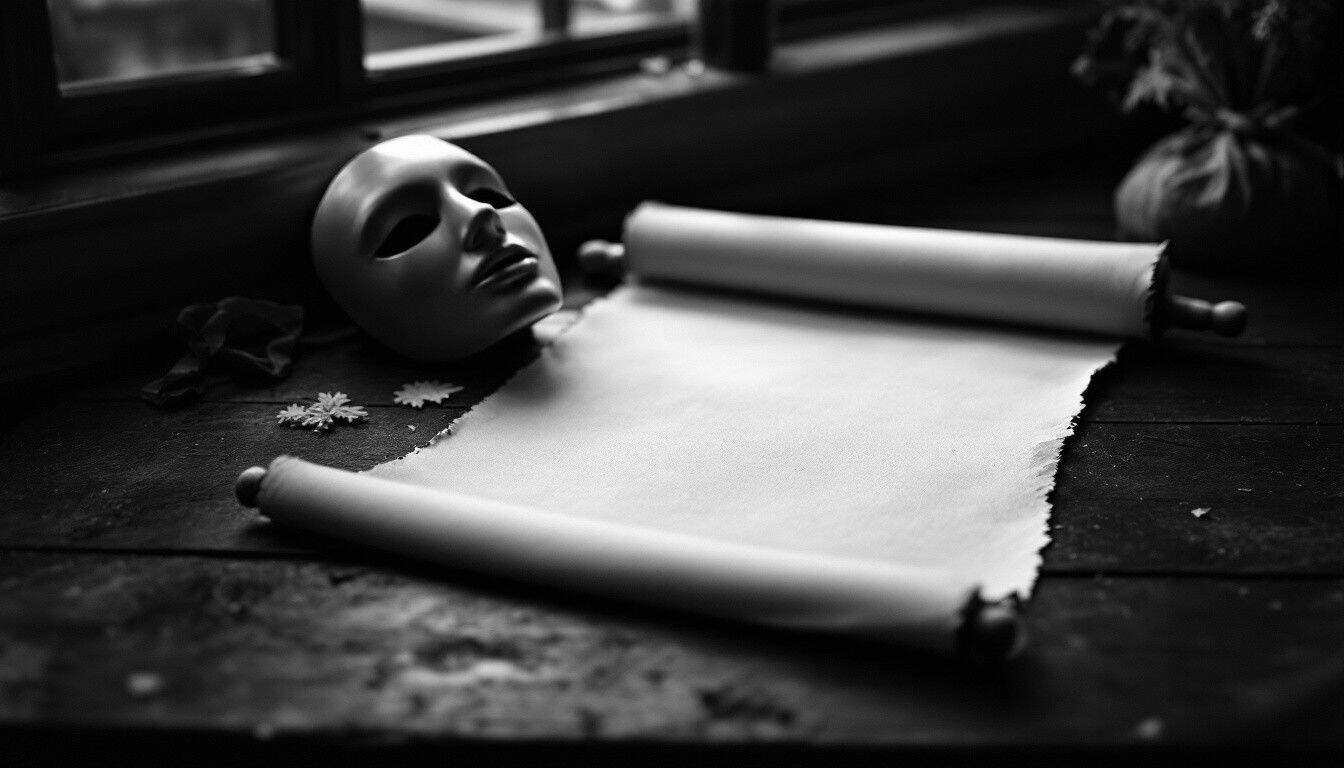
A festival on which a scroll is read with noise made at every mention of a name, where children and adults wear costumes, where people send each other food and give to the poor: this is Purim, on the 14th of the month of Adar. What exactly does the Megillah (the scroll) of Esther tell? Why do we wear costumes, and what does the law say about wine, joy and fasting? This article answers from the text of Esther, the Mishnah, the Talmud, Maimonides and the Shulchan Aruch, distinguishes halakha (the law that is practiced) from customs and spiritual readings, and honestly sets out what modern scholarship says about this singular book.
In short: Purim commemorates the salvation of the Jews of the Persian empire, threatened with extermination by Haman and saved thanks to Esther and Mordechai, on a date that the lot (pur) had designated for their destruction and which became, according to the book, a day “turned from mourning into festivity” (Esther 9:22). It is celebrated on the 14th of Adar (the 15th in cities surrounded by a wall since the time of Yehoshua, including Jerusalem). Four mitzvot structure it: reading the Megillah at night and in the morning, sending at least two foods to one person (mishloach manot), giving at least to two poor people (matanot la’evyonim), and holding a joyful feast (seudah). Costumes, noise during the reading and sweets are customs, not obligations. The book of Esther does not contain the Divine Name, and tradition reads in it the presence of a hidden G-d.
The story of the Megillah of Esther
The book opens with King Ahasuerus (Achashverosh), “who reigned from India to Cush over one hundred and twenty-seven provinces” (Esther 1:1). After a great feast, his queen Vashti refuses to appear and is removed; young women from all over the empire are gathered to choose a new queen.
In the capital, Shushan (Susa), lives “a Jewish man named Mordechai, son of Yair, son of Shimei, son of Kish, a Benjaminite” (Esther 2:5), exiled from Jerusalem with Yechonyah, king of Judah, whom Nebuchadnezzar had deported (Esther 2:6). He has adopted his cousin Hadassah, called Esther, who has lost both father and mother (Esther 2:7). Chosen as queen, Esther reveals neither her people nor her birth, for Mordechai had forbidden her to (Esther 2:10).
The king then promotes Haman, son of Hammedatha “the Agagite,” above all the other ministers (Esther 3:1). Mordechai refuses to kneel and bow down before him (Esther 3:2). Haman then decides to destroy the whole people of Mordechai, and he casts the pur, that is, the lot, to fix the day, which falls on the twelfth month, Adar (Esther 3:7). He presents his request to the king in these terms:
“There is a certain people, scattered and dispersed among the peoples, in all the provinces of your kingdom; their laws are different from those of every people, and the king’s laws they do not keep; it is not in the king’s interest to let them be.”
(Esther 3:8) — וַיֹּאמֶר הָמָן לַמֶּלֶךְ אֲחַשְׁוֵרוֹשׁ יֶשְׁנוֹ עַם־אֶחָד מְפֻזָּר וּמְפֹרָד בֵּין הָעַמִּים בְּכֹל מְדִינוֹת מַלְכוּתֶךָ וְדָתֵיהֶם שֹׁנוֹת מִכָּל־עָם וְאֶת־דָּתֵי הַמֶּלֶךְ אֵינָם עֹשִׂים וְלַמֶּלֶךְ אֵין־שֹׁוֶה לְהַנִּיחָם
Mordechai urges Esther to intervene. He addresses to her these words, which tradition has retained as a high point of the book:
“If you keep silent at this time, relief and deliverance will arise for the Jews from another place, and you and your father’s house will perish. And who knows whether it was not for a time like this that you attained the royal position?”
(Esther 4:14) — כִּי אִם־הַחֲרֵשׁ תַּחֲרִישִׁי בָּעֵת הַזֹּאת רֶוַח וְהַצָּלָה יַעֲמוֹד לַיְּהוּדִים מִמָּקוֹם אַחֵר וְאַתְּ וּבֵית־אָבִיךְ תֹּאבֵדוּ וּמִי יוֹדֵעַ אִם־לְעֵת כָּזֹאת הִגַּעַתְּ לַמַּלְכוּת
Esther asks that all the Jews of Shushan fast for three days on her behalf, then says she will go to the king “contrary to the law”: “and if I perish, I perish” (Esther 4:16). There follows the series of reversals: the night when the king’s sleep fled and the book of chronicles was read to him (Esther 6:1), Haman’s invitation to Esther’s feast, Haman hanged on the tree he had set up for Mordechai (Esther 7:10), Mordechai leaving the king’s presence in royal garments (Esther 8:15), “and for the Jews there was light, joy, gladness and honor” (Esther 8:16). The text sums it up thus: on the day when the enemies of the Jews hoped to overpower them, “it was reversed” (venahafoch hu, Esther 9:1).
Mordechai records these events and sends letters to all the Jews of the empire to institute an annual festival (Esther 9:20): days “of feasting and joy, of sending portions to one another and gifts to the poor,” in memory of the days when the Jews “had rest from their enemies” (Esther 9:22). The name of the festival comes from the lot: “Therefore they called these days Purim, after the name of pur” (Esther 9:26). And the text promises: “These days shall be remembered and observed in every generation, in every family, every province and every city; these days of Purim shall not cease from among the Jews, and their memory shall not perish from their descendants” (Esther 9:28).
Haman, Amalek and memory
Haman is described as an “Agagite” (Esther 3:1). For the Sages, the word refers to Agag, the king of Amalek whom King Shaul had captured alive although the order was to spare nothing (1 Shmuel 15:3; 15:8): the Talmud notes that Haman was descended from Agag because Shaul had not killed him on the spot (Megillah 13a). Haman is thus a descendant of Amalek, the people who had attacked Israel at Refidim after the exodus from Egypt. The Torah commands a double duty concerning it:
“Remember what Amalek did to you, on the way, when you came out of Egypt […] When the L-rd your G-d has given you rest from all your enemies around, in the land that the L-rd your G-d gives you as an inheritance to possess, you shall blot out the memory of Amalek from under the heavens. Do not forget!”
(Devarim 25:17-19) — זָכוֹר אֵת אֲשֶׁר־עָשָׂה לְךָ עֲמָלֵק בַּדֶּרֶךְ בְּצֵאתְכֶם מִמִּצְרָיִם … תִּמְחֶה אֶת־זֵכֶר עֲמָלֵק מִתַּחַת הַשָּׁמָיִם לֹא תִּשְׁכָּח
This is why, on the Shabbat before Purim, the passage of “Zachor” is read (Mishnah Megillah 3:4); and on the day of Purim itself, the Mishnah provides for the reading of “And Amalek came” (Shemot 17:8-16) (Mishnah Megillah 3:6). The war against Amalek is described as a war “from generation to generation” (Shemot 17:16).
An ancient custom follows from this: one makes noise at the name of Haman. The Rema explains: children used to draw the figure of Haman on wood or stones, or write his name, and strike them against each other to erase it, based on “you shall blot out the memory of Amalek” (Devarim 25:19) and “the name of the wicked shall rot” (Mishlei 10:7); hence the custom of making noise in the synagogue when the Megillah is read. And he adds: “One does not abolish any custom and one does not mock it, for it was not established for nothing” (Rema, Orach Chaim 690:17). The noise is therefore not an obligation, but a custom that itself has a meaning.
Rav Raphaël Benizri draws from this, in his lecture on Amalek, a more inward reading (see below): Amalek is engendered through our divisions and our resignations, and it is in the “rest from all your enemies” that memory fades.
A book without the Name: the hidden presence
In the book of Esther, the Divine Name does not appear. The Talmud makes it the starting point of a famous reading: where is Esther found in the Torah?
“Esther, where is she derived from in the Torah? ‘And I will surely hide (haster astir) My face on that day’ (Devarim 31:18). Mordechai, where is he derived from in the Torah? It is written ‘pure myrrh’ (mor deror, Shemot 30:23), which is translated in Aramaic ‘mira dachya.'”
(Babylonian Talmud, Chullin 139b) — אֶסְתֵּר מִן הַתּוֹרָה מִנַּיִן? ״וְאָנֹכִי הַסְתֵּר אַסְתִּיר״. מׇרְדֳּכַי מִן הַתּוֹרָה מִנַּיִן? דִּכְתִיב: ״מׇר דְּרוֹר״, וּמְתַרְגְּמִינַן: ״מֵירָא דַּכְיָא״.
The wordplay is double: “Esther” recalls the verb “to hide” (hester), and the name of Mordechai points to the pure myrrh of the anointing oil. The Talmud also gives, in tractate Megillah, several reasons for the name of Esther: according to Rabbi Yehuda, she was called Esther because she “hid her words,” as it is written that she did not reveal her people (Megillah 13a, citing Esther 2:20); according to Rabbi Nechemyah, it is her non-Hebrew name, for the nations called her after Istahar (Venus) because of her beauty; for Rabbi Meir, Esther is her true name and Hadassah comes from the righteous, called “myrtles” (Megillah 13a).
For Jewish thought, the book becomes that of a providence that acts without showing itself. No visible miracle, no voice, no prophecy: a queen dismissed, a young woman chosen, a plot overheard, a sleepless night. This discretion does not mean absence. Rav Benizri, in his lecture “Purim: The Megillah in the Present,” recalls that the name of G-d does not appear in the Megillah, not because He would be absent from it but because He is constantly present in it; at each use of “hamelech” (“the king”), except for the king who reigns from India to Cush, it is divine providence, present but invisible, that one can read.
The mitzvot of Purim
The book itself sets the program of the festival: “days of feasting and joy, of sending portions to one another and gifts to the poor”:
“…to make them days of feasting and joy, of sending portions to one another and gifts to the poor.”
(Esther 9:22) — לַעֲשׂוֹת אוֹתָם יְמֵי מִשְׁתֶּה וְשִׂמְחָה וּמִשְׁלֹחַ מָנוֹת אִישׁ לְרֵעֵהוּ וּמַתָּנוֹת לָאֶבְיֹנִים
Halakha draws four mitzvot from it, which the Shulchan Aruch and Maimonides detail. All are of rabbinic or late prophetic institution, but the Sages regard them as very important.
The reading of the Megillah
Maimonides opens his laws on the Megillah with this rule:
“The reading of the Megillah in its time is a positive mitzvah of our Sages. And it is known that it is an institution of the Prophets. All are obligated in its reading: men, women, converts and freed slaves, and children are trained to read it.”
(Rambam, Hilchot Megillah VeChanukah 1:1) — קְרִיאַת הַמְּגִלָּה בִּזְמַנָּהּ מִצְוַת עֲשֵׂה מִדִּבְרֵי סוֹפְרִים. וְהַדְּבָרִים יְדוּעִים שֶׁהִיא תַּקָּנַת הַנְּבִיאִים. וְהַכּל חַיָּבִים בִּקְרִיאָתָהּ אֲנָשִׁים וְנָשִׁים וְגֵרִים וַעֲבָדִים מְשֻׁחְרָרִים
Women are obligated for a reason that the Talmud states expressly: “Rabbi Yehoshua ben Levi said: women are obligated in the reading of the Megillah, for they too were part of that miracle” (Megillah 4a). The reading takes place at night and by day, and it is good to read the whole Megillah (Rambam, Hilchot Megillah VeChanukah 1:3). It is so important that the Talmud requires suspending the Temple service and Torah study for it:
“The priests at their service, the Levites on their platform and the Israelites at their post, all interrupt their service and come to hear the reading of the Megillah. From here the school of Rabbi [Yehuda HaNasi] deduced that one interrupts Torah study to come and hear the reading of the Megillah.”
(Babylonian Talmud, Megillah 3a) — כֹּהֲנִים בַּעֲבוֹדָתָן, וּלְוִיִּם בְּדוּכָנָן, וְיִשְׂרָאֵל בְּמַעֲמָדָן — כּוּלָּן מְבַטְּלִין עֲבוֹדָתָן וּבָאִין לִשְׁמוֹעַ מִקְרָא מְגִילָּה. מִכָּאן סָמְכוּ שֶׁל בֵּית רַבִּי שֶׁמְּבַטְּלִין תַּלְמוּד תּוֹרָה וּבָאִין לִשְׁמוֹעַ מִקְרָא מְגִילָּה
The Shulchan Aruch notes that the Megillah is unrolled and read “like a letter, to publicize the miracle” (Orach Chaim 690:17); and, according to the Rema, the four verses of deliverance (“A Jewish man…,” “Mordechai went out…,” “For the Jews there was light…,” “For Mordechai the Jew…”) are said aloud before the reader repeats them.
Mishloach manot: sending portions
The verse says “sending portions to one another” (Esther 9:22; 9:19). Maimonides: “Everyone is obligated to send to his fellow two portions of meat, or two dishes, or two kinds of food, as it is said ‘sending portions, each to his fellow’: two portions to a single person. One who sends to many fellows is worthy of praise” (Hilchot Megillah VeChanukah 2:15). The Shulchan Aruch specifies that if one cannot afford it, one may exchange one’s meal with a friend’s, and the Rema adds that a woman is obligated in mishloach manot like a man and that one sends by day, not by night (Orach Chaim 695:4).
The meaning of the mitzvah is fraternity: it is required even of one who cannot afford it, hence the exchange. Rav Benizri reads in it the effort to integrate the other, the one in whom I do not recognize myself (see below).
Matanot la’evyonim: gifts to the poor
“Everyone is obligated to give at least two gifts to two poor people” (Shulchan Aruch, Orach Chaim 694:1). Maimonides specifies: “One does not sort: to anyone who holds out a hand, one gives.” And he adds what is no doubt the most famous sentence about the festival:
“It is better to be generous in gifts to the poor than to multiply one’s feast and one’s sending of portions to one’s friends. For there is no greater and more beautiful joy than to gladden the heart of the poor, the orphans, the widows and the strangers. One who gladdens the heart of these unfortunate people resembles the Divine Presence.”
(Rambam, Hilchot Megillah VeChanukah 2:17) — מוּטָב לָאָדָם לְהַרְבּוֹת בְּמַתְּנוֹת אֶבְיוֹנִים מִלְּהַרְבּוֹת בִּסְעֻדָּתוֹ וּבְשִׁלּוּחַ מָנוֹת לְרֵעָיו. שֶׁאֵין שָׁם שִׂמְחָה גְּדוֹלָה וּמְפֹאָרָה אֶלָּא לְשַׂמֵּחַ לֵב עֲנִיִּים וִיתוֹמִים וְאַלְמָנוֹת וְגֵרִים
The seudah (the feast) and wine
The feast is the third pillar. Maimonides: “One eats meat, prepares a pleasant meal according to one’s means, and drinks wine until one becomes drunk and falls asleep in one’s drunkenness” (Hilchot Megillah VeChanukah 2:15). This sentence rests on a passage of the Talmud:
“Rava said: one is obligated to get drunk on Purim until one cannot distinguish between ‘cursed be Haman’ and ‘blessed be Mordechai.'”
(Babylonian Talmud, Megillah 7b) — אָמַר רָבָא: מִיחַיַּיב אִינִישׁ לְבַסּוֹמֵי בְּפוּרַיָּא עַד דְּלָא יָדַע בֵּין אָרוּר הָמָן לְבָרוּךְ מָרְדֳּכַי.
The Talmud immediately continues with a story that sounds like a warning: Rabba and Rabbi Zeira shared the Purim feast together; they got drunk, and Rabba rose and slaughtered Rabbi Zeira. The next day, he begged for mercy and revived him. The following year, Rabba invited him again; Rabbi Zeira answered: “Miracles do not happen at every hour” (Megillah 7b). Tradition has not forgotten this warning. The Shulchan Aruch reports Rava’s rule, then the Rema, who expresses Ashkenazi practice, tempers it: “Some say that it is not necessary to get so drunk, but that it suffices to drink a little more than usual and to sleep; while sleeping, one no longer distinguishes between Haman and Mordechai. Whether one does more or less, as long as one’s heart is directed toward Heaven” (Orach Chaim 695:2). In practice, the halakhic authorities therefore strongly frame this obligation, and many advise moderation; for one who cannot drink or for whom wine is dangerous, consult a rabbi.
The same passage of the Rema specifies that the feast is held in the afternoon, after Minchah, and that it is good to study a little Torah before beginning, for “for the Jews there was light (orah) and joy” and the Sages read “orah is Torah” (Orach Chaim 695:2). One adds “Al HaNissim” in the Birkat HaMazon (Orach Chaim 695:3).
The Fast of Esther
On the eve of Purim, the 13th of Adar, one fasts: “One fasts on the 13th of Adar” (Shulchan Aruch, Orach Chaim 686:2), in memory of the fast of Esther and of the people before she presented herself to the king (Esther 4:16). But, the Rema specifies, this fast is not a strict obligation: one is exempt if pregnant or nursing, if ill, and in case of great pain. If Purim falls on a Sunday, one fasts on the preceding Thursday.
When? The 14th, the 15th and Shushan Purim
The Mishnah fixes the dates: “The Megillah is read on the 11th, 12th, 13th, 14th or 15th of Adar, no earlier and no later. Cities surrounded by a wall since the days of Yehoshua son of Nun read on the 15th; villages and large cities, on the 14th” (Mishnah Megillah 1:1). This is the origin of “Shushan Purim”: in the book, the Jews of Shushan fought one more day and celebrated on the 15th (Esther 9:13-18), and it is on this model that the Talmud fixes the 15th for cities fortified since antiquity (Megillah 2b). In Jerusalem, Purim is therefore celebrated on the 15th. In years with two months of Adar, Purim is celebrated in the second Adar; the 14th and 15th of the first Adar (Purim Katan) have only a limited status (Shulchan Aruch, Orach Chaim 697:1).

Masks and costumes
Wearing a costume is not a mitzvah of Purim. The mitzvot are the four above; costumes are a custom. The Rema mentions it as an already accepted practice and regulates its scope:
“As for the custom of wearing masks on Purim, and of a man wearing a woman’s garment and a woman a man’s garment, there is no prohibition, since the intention is only joy.”
(Rema on Shulchan Aruch, Orach Chaim 696:8) — מה שנהגו ללבוש פרצופים בפורים וגבר לובש שמלת אשה ואשה כלי גבר אין איסור בדבר מאחר שאין מכוונין אלא לשמחה בעלמא
The Rema adds “provided that one does nothing indecent, according to the leaders of the community”; some, he notes, forbid it, but custom follows the lenient opinion. Historians estimate that the custom of dressing up at Purim appeared among the Jews of Italy at the end of the 15th century, perhaps under the influence of the Roman carnival (Wikipedia, “Purim”); this dating is that of scholarship, not of halakha, and other customs of joy at Purim are certainly older.
The meaning that Jews have given to costumes is that of the book: everything in it is masked, and everything in it is reversed. The Talmud reads the name of Esther in the promise “I will hide My face” (Chullin 139b); Esther hides her identity (Esther 2:10); the text speaks of a “reversal” (venahafoch hu, Esther 9:1); Mordechai, at first in sackcloth, comes out from the king’s presence in purple and gold (Esther 4:1; 8:15). Rav Benizri draws from this, in his lecture on Amalek, a reading: the costumes of Purim are our costumes of the year; they are garments, not contemptible in themselves, but which become so when we label them in order to reject the other.
The book of Esther: canon, date, history
A book whose place the Sages debated
The Talmud reports a surprising discussion about the book’s entry into the canon. Rav Shmuel bar Yehuda relates:
“Esther sent word to the Sages: write me down for the generations! They sent word to her: you will arouse the jealousy of the nations against us. She sent word to them: I am already written in the book of chronicles of the kings of Media and Persia.”
(Babylonian Talmud, Megillah 7a) — אָמַר רַב שְׁמוּאֵל בַּר יְהוּדָה: שָׁלְחָה לָהֶם אֶסְתֵּר לַחֲכָמִים: קִבְעוּנִי לְדוֹרוֹת! שָׁלְחוּ לָהּ: קִנְאָה אַתְּ מְעוֹרֶרֶת עָלֵינוּ לְבֵין הָאוּמּוֹת. שָׁלְחָה לָהֶם: כְּבָר כְּתוּבָה אֲנִי עַל דִּבְרֵי הַיָּמִים לְמַלְכֵי מָדַי וּפָרָס.
In the same passage, Rav Yehuda reports in the name of Shmuel that Esther “does not defile the hands,” that is, that she does not have the status of a holy book by a technical criterion; the Gemara reconciles: she was spoken by divine inspiration to be read, not to be written (Megillah 7a). Several Sages affirm that Esther was spoken by divine inspiration, each drawing a verse from the book to prove it, among them Rabbi Eliezer (Esther 6:6) and Rabbi Akiva (Esther 2:15) (Megillah 7a).
At the end of this story, tradition made Esther a book apart. The Talmud notes that the prophets added nothing to the Torah, “except the reading of the Megillah” (Megillah 14a). And Maimonides writes: “All the books of the Prophets and all the Writings will be annulled in the days of the Messiah, with the exception of the Megillat Esther, which will remain like the five books of the Torah and like the laws of the Oral Torah, which will never be annulled. Even if all memory of misfortunes is abolished, the celebration of Purim will not be” (Hilchot Megillah VeChanukah 2:18, citing Esther 9:28).
What scholarship says
Jewish tradition holds the story to be historical. Academic scholarship generally reads it differently, and it is honest to say so. King Achashverosh is most often identified with Xerxes I, who reigned from 486 to 465 BCE; the Hebrew text is ordinarily dated to the 4th century BCE; and a large part of scholars see in it a “historical novella” intended to explain the origin of the festival, since no event of Xerxes’ life known from elsewhere is mentioned in the book (Wikipedia, “Book of Esther”). The names of Mordechai and Esther have been compared with those of the Babylonian deities Marduk and Ishtar, and the word pur comes from Akkadian. For Esther, this comparison already appears in the Talmud: Rabbi Nechemyah reports that the nations called her after Istahar (Venus) (Megillah 13a). Rav Benizri also refers to it: for him, these names show the openness of the Jews of the exile to the culture of their country, to the point of bearing the names of its idols.
The date of the text is also compared with the second book of Maccabees, which decides to celebrate the 13th of Adar, “the day before Mordechai’s day” (2 Maccabees 15:36). Finally, it has been noted that no fragment of the book of Esther has been found among the manuscripts of Qumran, which has given rise to various hypotheses about its status at the time. These questions of historical criticism do not affect the mitzvah: the festival is practiced in the same way in all communities.
Moral and spiritual readings
A second giving of the Torah
The Talmud reads in the verse “the Jews established and accepted” (Esther 9:27) a remarkable hint:
“Rava said: despite this [the mountain suspended over them at Sinai], they accepted it again in the days of Achashverosh, as it is written ‘the Jews established and accepted’: they established what they had already accepted.”
(Babylonian Talmud, Shabbat 88a) — אָמַר רָבָא: אַף עַל פִּי כֵן הֲדוּר קַבְּלוּהָ בִּימֵי אֲחַשְׁוֵרוֹשׁ, דִּכְתִיב: ״קִיְּמוּ וְקִבְּלוּ הַיְּהוּדִים״ — קִיְּימוּ מַה שֶּׁקִּיבְּלוּ כְּבָר.
According to this reading, Sinai was a gift under compulsion, and Purim a freely accepted gift. Rav Benizri takes it up: at Purim, the people freely adhere to the oral law that they had received under compulsion at Sinai.
A cause: the feast
The Talmud also asks why the Jews of that generation deserved to be threatened. The disciples of Rabbi Shimon bar Yochai answer: “Because they enjoyed the feast of that wicked man.” Rabbi Shimon then objects that, in that case, only those of Shushan should have been threatened; and he gives his own answer: “Because they bowed down to the idol” (Megillah 12a). Rav Benizri, in his lecture “Purim: The Festival Born in Exile,” takes up the question in his own way: the fault was eating from the utensils of the Temple, that is, taking part without scruple in a feast that by itself tells the degree of assimilation. In the lecture on Amalek, he specifies that the fault is not about food: the meal was kosher for one who wanted to eat kosher; the fault was to lend oneself to the atmosphere.
“Vayehi bimei”
The Talmud notes that the beginning of the book, “And it came to pass in the days of Achashverosh,” opens with a formula, “vayehi,” which the tradition of the Men of the Great Assembly always associates with distress (Megillah 10b). The story thus begins with an announcement of trial, and it is from this trial that the festival is born.
Purim and Kippur: the mystical reading
The tradition of Kabbalah has extended the wordplay. The Tikkunei Zohar writes that the Divine Presence “is called Purim after the name of Yom HaKippurim (‘Yom Ki-Purim’), for one will rejoice on that day, one will change sorrow into delight” (Tikkunei Zohar 57b): hence the often-cited idea that the name “Yom Ki-Purim” (“a day like Purim”) designates Kippur. This is a mystical reading; it has no halakhic value, but it shows how tradition was able to link the gravest day and the most joyful day of the year.
What Rav Raphaël Benizri teaches
Rav Benizri has devoted three published lectures to Purim; we summarize them without adding anything.
- In “Purim: The War Against Amalek,” he starts from Shabbat Zachor. Amalek is born of a poorly negotiated rejection: he is the son of Timna, who wanted to join the Jewish people without finding her place. He situates Amalek at Refidim (“rafu yedeihem,” “the hands grow slack”): Amalek attacks the one who stops along the way. Mordechai is “mor deror,” pure myrrh; Esther is the eclipse of the divine face. Purim contains all the festivals, and the “ad delo yada” is not drunkenness but transcendence: ceasing to label good and evil as two outside camps. The costumes of Purim are our costumes of the year, and mishloach manot as well as matanot la’evyonim are an effort to integrate the other. Joy is the essence of Purim: the first Jewish child is Yitzchak, the one who laughs. See the lecture: Purim: The War Against Amalek.
- In “Purim: The Festival Born in Exile,” he reads the first chapter of Esther as a document on exile: an empire of one hundred and twenty-seven provinces, a policy of unifying cultures, Jewish communities that have become full citizens. Purim is the festival of the absence of revelation: the name of Esther comes from “sater,” to hide. He notes that Achashverosh does not have the title “hamelech” in the first verse, that the Megillah is an “open letter” addressed to the communities of Israel, and that resistance always passes through the feminine. See the lecture: Purim: The Festival Born in Exile.
- In “Purim: The Megillah in the Present,” he reads the Megillah as the secret of Jewish history among the nations. Amalek arises when one stops along the way; it is we who engender him through our divisions. The name of Hashem does not appear in it because He is constantly present in it. Purim will never disappear (“lo yasuf“), and Esther, according to him, has not said her last word: the Megillah remains unrolled. See the lecture: Purim: The Megillah in the Present.
Common misconceptions about Purim
“Purim is the Jewish carnival”
No, or not only. Costumes are a late custom, which may have been influenced by the carnival (Wikipedia), but the festival rests on precise mitzvot (Esther 9:22) and on the reading of a book. The classical reading sees in it a reminder that the hand of G-d acts behind a face that does not show it (Chullin 139b); Rav Benizri reads in it the laying bare of our taste for labels.
“One must get drunk on Purim”
Rava’s sentence exists (Megillah 7b), and Maimonides takes it up (Hilchot Megillah VeChanukah 2:15). But the Rema tempers it and the Talmud itself has it followed by the story of Rabba and Rabbi Zeira. It should be added that in practice many advocate drinking a little more than usual and sleeping, “as long as one’s heart is directed toward Heaven” (Rema, Orach Chaim 695:2). For any question of health or conduct, consult a rabbi.
“The book of Esther does not speak of G-d, so it is not a religious book”
The Talmud reads in it, on the contrary, the text of hidden providence (Chullin 139b), and Maimonides makes it the only book, with the Torah, that will not be annulled in messianic times (Hilchot Megillah VeChanukah 2:18).
“Purim is a day of vengeance”
The book describes a defense against a decree of extermination (Esther 9:1-2), and the day is made of joy, sharing and gifts to the poor (Esther 9:22). Rav Benizri reads in it a transcending of the labels that separate good from evil, not a hatred.
“One can work that day”
Work is permitted, but Maimonides recalls the warning of the Sages: “Whoever does work on the day of Purim will never see a sign of blessing” (Hilchot Megillah VeChanukah 2:14).
Frequently asked questions about Purim
What is Purim in one sentence?
It is the festival of the 14th of Adar that commemorates the salvation of the Jews of the Persian empire threatened by Haman, which is celebrated by reading the Megillah of Esther, sending portions, giving to the poor and holding a feast (Esther 9:22).
Why the name “Purim”?
The text explains it: “after the name of pur,” the lot that Haman had cast to fix the day (Esther 3:7; 9:26). Purim is the plural of pur.
Why do we make noise when the name of Haman is pronounced?
It is a custom, based on “you shall blot out the memory of Amalek” (Devarim 25:19): one wants to erase his name (Rema, Orach Chaim 690:17).
Do women read the Megillah?
They are obligated, “for they too were part of that miracle” (Megillah 4a). They are also obligated in mishloach manot and matanot la’evyonim (Rema, Orach Chaim 695:4).
When does Purim take place, and what is Shushan Purim?
On the 14th of Adar, and the 15th for cities surrounded by a wall since the time of Yehoshua, including Jerusalem (Mishnah Megillah 1:1). In years with two Adars, it is celebrated in the second.
Does one have to fast on Purim?
No: one does not fast on the day of Purim, except for a fast on account of a dream (Rema, Orach Chaim 695:2). The Fast of Esther is on the 13th of Adar, the eve of Purim, and it is not obligatory for one who is pregnant, nursing or ill (Rema, Orach Chaim 686:2).
Do we have to wear a costume?
No, it is not a mitzvah; it is a custom, permitted by the Rema provided that one does nothing indecent (Orach Chaim 696:8). For particular cases (clothes of the other sex, hurtful costumes), consult a rabbi.
Further reading
Purim is a festival of joy that does not forget the gravity of its story. To continue, here are a few readings on the site.
- Purim: the festival of joy explained in video
- Why do we dress up on Purim? Meaning and mitzvot
- What Is Chanukah and Why Do We Light Candles for Eight Days?
- What Is Pesach and How Does the Seder Work?
- What Is Shavuot and Why Do We Stay Up All Night?
- The Jewish calendar: months, years, festivals
- What Is the Tanakh? Torah, Prophets and Writings
- Jewish festivals: the meaning of each festival in video lectures
- Glossary of Hebrew words in Judaism
Sources and references (16)
- Shemot 17:8-16; 30:23
- Devarim 25:17-19; 31:18
- 1 Shmuel (1 Samuel) 15:3; 15:8
- Mishlei (Proverbs) 10:7
- Esther 1:1; 2:5-7; 2:10; 2:15; 2:20; 3:1-2; 3:7-8; 4:1; 4:14; 4:16; 6:1; 6:6; 7:10; 8:15-16; 9:1; 9:13-22; 9:26-28
- 2 Maccabees 15:36 (NRSVUE translation)
- Mishnah Megillah 1:1; 3:4; 3:6
- Babylonian Talmud, Shabbat 88a
- Babylonian Talmud, Megillah 2b; 3a; 4a; 7a; 7b; 10b; 12a; 13a; 14a
- Babylonian Talmud, Chullin 139b
- Tikkunei Zohar 57b
- Rambam, Mishneh Torah, Hilchot Megillah VeChanukah 1:1; 1:3; 2:14-18
- Shulchan Aruch, Orach Chaim 686:2; 690:17; 694:1; 695:2-4; 696:8; 697:1
- BiblePlaces.com, “Why No Esther in Dead Sea Scrolls?” (absence of Esther at Qumran)
- Wikipedia, “Book of Esther” and “Purim” (dating, identification of Achashverosh, etymologies, origin of costumes)
- Lectures of Rav Raphaël Benizri: Purim: The War Against Amalek; Purim: The Festival Born in Exile; Purim: The Megillah in the Present
Article by the Pensées Juives editorial team. Passages attributed to Rav Raphaël Benizri are taken from his lectures published on this site.