
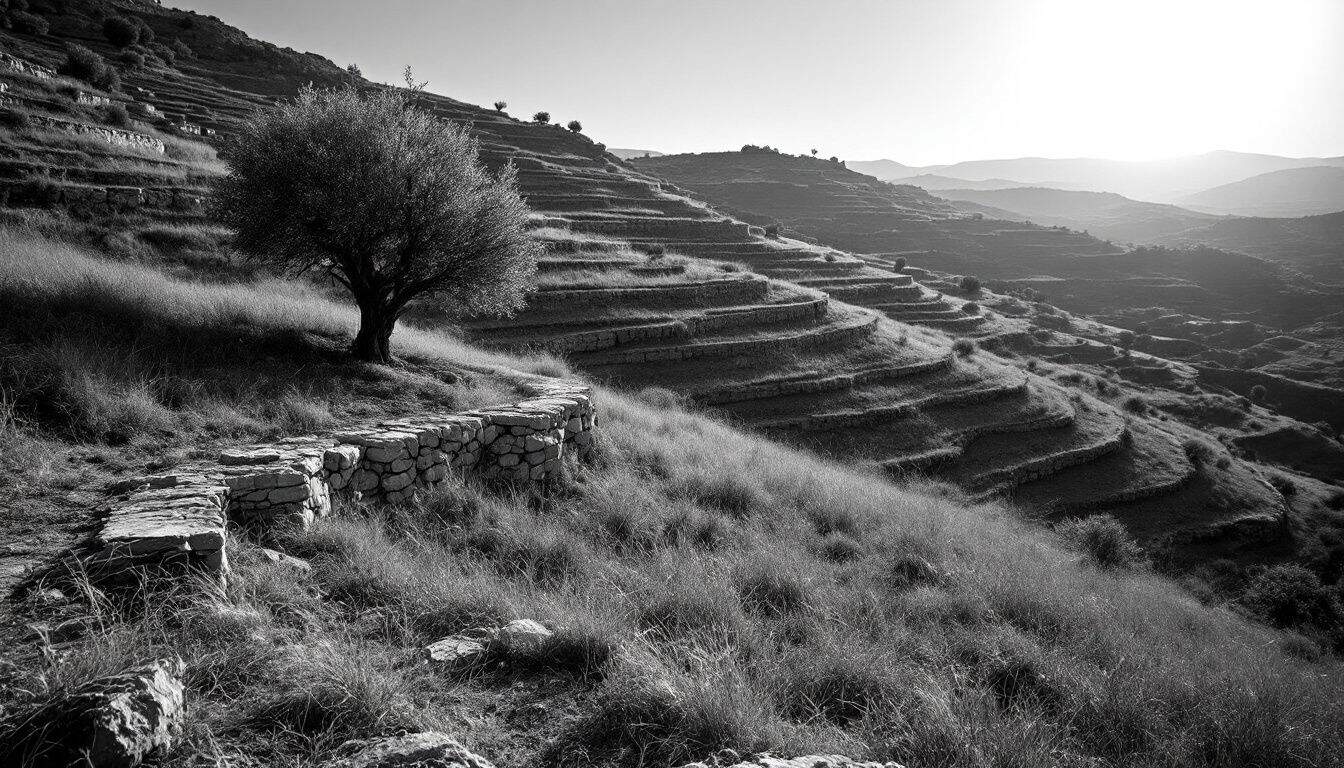
Every seven years, in the Land of Israel, the fields are neither plowed nor sown, debts are released, and whatever grows by itself belongs to everyone. Every fifty years, according to the Torah, the land returns to its original owners and Hebrew slaves are freed. These two institutions, shemitta (“release,” the sabbatical year) and the yovel (the Jubilee), form one of the most singular economic and spiritual systems of the Torah. This article presents them on the basis of the texts, distinguishes what is practical law from what is a moral or mystical reading, and says what remains of them today.
In short: shemitta is the seventh year of the agricultural cycle in the Land of Israel. The Torah forbids working the land (sowing, pruning, reaping and harvesting in the ordinary way), declares the spontaneous produce of the soil common property, and prescribes the release of debts (Vayikra [Leviticus] 25:1-7; Shemot [Exodus] 23:10-11; Devarim [Deuteronomy] 15:1-3). The yovel, the fiftieth year, adds the return of land to the original families and the freeing of Hebrew slaves (Vayikra 25:8-55). The yovel has not applied for a very long time; shemitta, for its part, is observed today in Israel, with lively debates about how to do so, and the release of debts has been circumvented since Hillel by a document called the prozbul. The next shemitta year begins on Rosh Hashana 5789, in the autumn of 2028.
1. What the Torah says: a Shabbat for the land
The foundational text is at the beginning of the parasha Behar. It opens with a surprising mention: “The L-rd spoke to Moshe on Mount Sinai” (Vayikra 25:1). Rashi notes the question the Sages ask: “What does shemitta have to do with Mount Sinai? Were not all the mitzvot stated at Sinai?” And he answers that just as shemitta was given with all its general rules and its details at Sinai, so it is for all the other mitzvot (Rashi on Vayikra 25:1, based on the Torat Kohanim). The text is therefore not a mere agricultural regulation: it is set forth as a model of how the whole Torah was received.
“When you come into the land that I give you, the land shall keep a Shabbat to the L-rd. Six years you shall sow your field, and six years you shall prune your vineyard and gather in its produce. But in the seventh year there shall be a Shabbat of complete rest for the land, a Shabbat to the L-rd: you shall not sow your field, and you shall not prune your vineyard.”
(Vayikra 25:2-4) — דַּבֵּ֞ר אֶל־בְּנֵ֤י יִשְׂרָאֵל֙ וְאָמַרְתָּ֣ אֲלֵהֶ֔ם כִּ֤י תָבֹ֙אוּ֙ אֶל־הָאָ֔רֶץ אֲשֶׁ֥ר אֲנִ֖י נֹתֵ֣ן לָכֶ֑ם וְשָׁבְתָ֣ה הָאָ֔רֶץ שַׁבָּ֖ת לַה׳ שֵׁ֤שׁ שָׁנִים֙ תִּזְרַ֣ע שָׂדֶ֔ךָ וְשֵׁ֥שׁ שָׁנִ֖ים תִּזְמֹ֣ר כַּרְמֶ֑ךָ וְאָסַפְתָּ֖ אֶת־תְּבוּאָתָֽהּ׃ וּבַשָּׁנָ֣ה הַשְּׁבִיעִ֗ת שַׁבַּ֤ת שַׁבָּתוֹן֙ יִהְיֶ֣ה לָאָ֔רֶץ שַׁבָּ֖ת לַה׳ שָֽׂדְךָ֙ לֹ֣א תִזְרָ֔ע וְכַרְמְךָ֖ לֹ֥א תִזְמֹֽר׃
Three elements emerge from these verses.
- A Shabbat “to G-d” (Shabbat laHashem). Rashi explains: “in the name of G-d, as is said of the Shabbat of creation” (Rashi on Vayikra 25:2). The Ramban (Nachmanides) notes that the formula applies to shemitta and not to the festivals, and sees in it a “great secret” to which we will return.
- A precise prohibition. The Torah forbids sowing, pruning the vine, reaping what has grown by itself (the “aftergrowth”) and gathering the grapes of the unpruned vine (Vayikra 25:4-5). The Rambam sums up: one who works the land or the trees that year “nullifies a positive mitzvah and transgresses a prohibition” (Rambam, Hilchot Shemitta VeYovel 1:1).
- An allocation of the produce: to everyone. “The Shabbat of the land shall be food for you, for you, your servant, your maidservant, your hired worker and your resident alien (…); and for your livestock and for the wild animals in your land, all its produce shall be food” (Vayikra 25:6-7).
The book of Shemot gives a more social version of the same rule:
“But the seventh year you shall let it rest and lie fallow; the poor of your people shall eat, and what they leave the beast of the field shall eat. So you shall do with your vineyard and your olive grove.”
(Shemot 23:11) — וְהַשְּׁבִיעִ֞ת תִּשְׁמְטֶ֣נָּה וּנְטַשְׁתָּ֗הּ וְאָֽכְלוּ֙ אֶבְיֹנֵ֣י עַמֶּ֔ךָ וְיִתְרָ֕ם תֹּאכַ֖ל חַיַּ֣ת הַשָּׂדֶ֑ה כֵּֽן־תַּעֲשֶׂ֥ה לְכַרְמְךָ֖ לְזֵיתֶֽךָ׃
The Sages draw from this a rule of law: the owner must make his fruit “ownerless” (hefker). The Rambam writes that one who closes off his vineyard, fences his field or brings all his harvest into his house “nullifies a positive mitzvah”; he must abandon everything, and everyone is equal before these fruits (Rambam, Hilchot Shemitta VeYovel 4:24).
The promise of the sixth year
The Torah anticipates the objection: “And if you say: what shall we eat in the seventh year, since we do not sow or gather in our produce?” It answers with a promise of blessing:
“I will command My blessing upon you in the sixth year, and it will produce the crop of three years. You will sow in the eighth year and eat from the old crop; until the ninth year, until its crop comes in, you will eat the old.”
(Vayikra 25:21-22) — וְצִוִּ֤יתִי אֶת־בִּרְכָתִי֙ לָכֶ֔ם בַּשָּׁנָ֖ה הַשִּׁשִּׁ֑ית וְעָשָׂת֙ אֶת־הַתְּבוּאָ֔ה לִשְׁלֹ֖שׁ הַשָּׁנִֽים׃ וּזְרַעְתֶּ֗ם אֵ֚ת הַשָּׁנָ֣ה הַשְּׁמִינִ֔ת וַאֲכַלְתֶּ֖ם מִן־הַתְּבוּאָ֣ה יָשָׁ֑ן עַ֣ד ׀ הַשָּׁנָ֣ה הַתְּשִׁיעִ֗ת עַד־בּוֹא֙ תְּב֣וּאָתָ֔הּ תֹּאכְל֖וּ יָשָֽׁן׃
The Torah thus explicitly promises an economic blessing in exchange for observance; this is what makes shemitta a test of trust (bitachon), as we will see.
The release of debts (shemittat kesafim)
The book of Devarim adds a second aspect: the abandonment of debts.
“At the end of seven years you shall make a release (shemitta). And this is the manner of the release: every creditor shall release what he has lent to his neighbor; he shall not press his neighbor or his brother, for a release has been proclaimed for the L-rd.”
(Devarim 15:1-2) — מִקֵּ֥ץ שֶֽׁבַע־שָׁנִ֖ים תַּעֲשֶׂ֥ה שְׁמִטָּֽה׃ וְזֶה֮ דְּבַ֣ר הַשְּׁמִטָּה֒ שָׁמ֗וֹט כׇּל־בַּ֙עַל֙ מַשֵּׁ֣ה יָד֔וֹ אֲשֶׁ֥ר יַשֶּׁ֖ה בְּרֵעֵ֑הוּ לֹֽא־יִגֹּ֤שׂ אֶת־רֵעֵ֙הוּ֙ וְאֶת־אָחִ֔יו כִּֽי־קָרָ֥א שְׁמִטָּ֖ה לַה׳
The Rambam specifies that one who claims a debt that has come due through shemitta transgresses the prohibition “he shall not press his neighbor” (Rambam, Hilchot Shemitta VeYovel 9:1). We will see below that this release is, today, neutralized by the prozbul.
Hakhel: the public reading of the Torah
The end of the seventh year carries a third institution, less well known. At the festival of Sukkot following shemitta, the king read passages of Deuteronomy before the whole assembled people:
“Moshe commanded them: at the end of seven years, at the time of the year of release, at the Festival of Sukkot, when all Israel comes to appear before the L-rd your G-d in the place that He will choose, you shall read this Torah before all Israel, in their hearing.”
(Devarim 31:10-11) — וַיְצַ֥ו מֹשֶׁ֖ה אוֹתָ֣ם לֵאמֹ֑ר מִקֵּ֣ץ ׀ שֶׁ֣בַע שָׁנִ֗ים בְּמֹעֵ֛ד שְׁנַ֥ת הַשְּׁמִטָּ֖ה בְּחַ֥ג הַסֻּכּֽוֹת׃ בְּב֣וֹא כׇל־יִשְׂרָאֵ֗ל לֵֽרָאוֹת֙ אֶת־פְּנֵי֙ ה׳ אֱלֹהֶ֔יךָ בַּמָּק֖וֹם אֲשֶׁ֣ר יִבְחָ֑ר תִּקְרָ֞א אֶת־הַתּוֹרָ֥ה הַזֹּ֛את נֶ֥גֶד כׇּל־יִשְׂרָאֵ֖ל בְּאׇזְנֵיהֶֽם׃
This is the mitzvah of hakhel (“assemble”). According to the Mishna, the king read these passages from a wooden platform set up in the Temple, on the day after the first festival of Sukkot following the seventh year (Mishna Sota 7:8; Rambam, Hilchot Chagiga 3:1-3). The sabbatical year is therefore not only a time of rest for the land, but also a time of study and of renewal of the covenant. This mitzvah presupposes the Temple and is not practiced today.
2. The yovel, the Jubilee: “You shall proclaim liberty”
After seven cycles of shemitta, the Torah adds a fiftieth year:
“You shall count seven Shabbats of years, seven times seven years (…) forty-nine years. You shall sound the shofar of teruah in the seventh month, on the tenth day of the month; on the day of Yom Kippur you shall sound the shofar throughout your land. You shall sanctify the fiftieth year and proclaim liberty (dror) in the land for all its inhabitants: it shall be a yovel for you; each of you shall return to his property and each of you shall return to his family.”
(Vayikra 25:8-10) — וְסָפַרְתָּ֣ לְךָ֗ שֶׁ֚בַע שַׁבְּתֹ֣ת שָׁנִ֔ים שֶׁ֥בַע שָׁנִ֖ים שֶׁ֣בַע פְּעָמִ֑ים וְהָי֣וּ לְךָ֗ יְמֵי֙ שֶׁ֚בַע שַׁבְּתֹ֣ת הַשָּׁנִ֔ים תֵּ֥שַׁע וְאַרְבָּעִ֖ים שָׁנָֽה׃ וְהַֽעֲבַרְתָּ֞ שׁוֹפַ֤ר תְּרוּעָה֙ בַּחֹ֣דֶשׁ הַשְּׁבִעִ֔י בֶּעָשׂ֖וֹר לַחֹ֑דֶשׁ בְּיוֹם֙ הַכִּפֻּרִ֔ים תַּעֲבִ֥ירוּ שׁוֹפָ֖ר בְּכׇל־אַרְצְכֶֽם׃ וְקִדַּשְׁתֶּ֗ם אֵ֣ת שְׁנַ֤ת הַחֲמִשִּׁים֙ שָׁנָ֔ה וּקְרָאתֶ֥ם דְּר֛וֹר בָּאָ֖רֶץ לְכׇל־יֹשְׁבֶ֑יהָ יוֹבֵ֥ל הִוא֙ תִּהְיֶ֣ה לָכֶ֔ם וְשַׁבְתֶּ֗ם אִ֚ישׁ אֶל־אֲחֻזָּת֔וֹ וְאִ֥ישׁ אֶל־מִשְׁפַּחְתּ֖וֹ תָּשֻֽׁבוּ׃
The word yovel evokes, according to the common explanation, the ram’s horn that is sounded; it gave English the word “jubilee.” Three mechanisms follow from it.
1. The return of land. “The land shall not be sold in perpetuity, for the land is Mine; you are but strangers and residents with Me” (Vayikra 25:23). What is called “selling a field” is in reality only the transfer of the produce until the next yovel: the buyer pays according to the number of years remaining (Vayikra 25:15-16). In the eyes of the Torah, the soil of Israel is not a commodity. 2. The freeing of Hebrew slaves. The Hebrew who sold himself because of debts “shall be with you as a hired worker, as a resident; until the year of the yovel he shall serve you; then he shall go out from you, he and his children with him, and return to his family” (Vayikra 25:39-41), for “they are My servants, whom I brought out of the land of Egypt; they shall not be sold as slaves are sold” (Vayikra 25:42). 3. A year of rest for the land, like shemitta: “The yovel shall be a holy year for you; you shall not sow” (Vayikra 25:11-12).
“And the land shall not be sold in perpetuity, for the land is Mine.”
(Vayikra 25:23) — וְהָאָ֗רֶץ לֹ֤א תִמָּכֵר֙ לִצְמִתֻ֔ת כִּי־לִ֖י הָאָ֑רֶץ כִּֽי־גֵרִ֧ים וְתוֹשָׁבִ֛ים אַתֶּ֖ם עִמָּדִֽי׃
The Torah makes the economic dimension of the yovel very concrete: the price of a field must reflect the number of harvests remaining before its return to the original owner (“it is the number of crops that he is selling you,” Vayikra 25:15-16). It also specifies that a house sold in a walled city can be redeemed for one year only, after which it belongs to the buyer even at the yovel (Vayikra 25:29-30), whereas the houses of the cities of the Levites remain redeemable in perpetuity (Vayikra 25:32-33). These details show that the text legislates for a specific agricultural society, not for an abstract ideal.
3. Why? The reasons for shemitta and the yovel
The tradition gives several levels of explanation, which must be distinguished.
The “plain” meaning: “the land is Mine”
The key verse is Vayikra 25:23. The Sefer HaChinukh (the “Book of Education,” a medieval work that explains each mitzvah) gives three moral lessons for shemitta. First, shemitta fixes in our minds that the world was created: one counts six years of work and a seventh of rest, like the six days of creation and the Shabbat; in this way we recall that “the land that yields its fruit each year does not do so by its own strength, for there is a master above it and above its master.” Second, abandoning the fruit trains generosity. Finally, it increases trust in G-d (Sefer HaChinukh, mitzvah 84).
“Therefore G-d, blessed be He, commanded to abandon everything the land produces in this year (…) so that man will remember that the land that gives him its fruit every year does not produce them by its own power, for there is a master over it and over its master.”
(Sefer HaChinukh, mitzvah 84) — ולכן צוה ברוך הוא להפקיר כל מה שתוציא הארץ בשנה זו מלבד השביתה בה כדי שיזכר האדם כי הארץ שמוציאה אליו הפרות בכל שנה ושנה לא בכחה וסגלתה תוציא אותם, כי יש אדון עליה ועל אדוניה
Regarding the yovel, the same work writes: “G-d wanted to make known to His people that everything is His and that everything will return to what He wishes”; and the count of the forty-nine years should also keep man from coveting his neighbor’s field (Sefer HaChinukh, mitzvah 330).
A matter of social justice
Shemitta and the yovel interrupt accumulation. Debt, the loss of ancestral land, slavery for debt: the cycle prevents these situations from becoming permanent. The Sefer HaChinukh teaches that the release of debts teaches “generosity and a good eye” (Sefer HaChinukh, mitzvah 477). This is also the reading of the book of Yirmeyahu: the prophet reproaches the inhabitants of Jerusalem for having sent their slaves away free and then taken them back, and recalls the covenant made at the exodus from Egypt:
“At the end of seven years, each of you shall send away his brother the Hebrew who has been sold to you (…); but your fathers did not listen to Me.”
(Yirmeyahu [Jeremiah] 34:14) — מִקֵּ֣ץ שֶׁ֣בַע שָׁנִ֡ים תְּֽשַׁלְּח֡וּ אִישׁ֩ אֶת־אָחִ֨יו הָעִבְרִ֜י אֲשֶֽׁר־יִמָּכֵ֣ר לְךָ֗ וַעֲבָֽדְךָ֙ שֵׁ֣שׁ שָׁנִ֔ים וְשִׁלַּחְתּ֥וֹ חׇפְשִׁ֖י מֵעִמָּ֑ךְ וְלֹֽא־שָׁמְע֤וּ אֲבֽוֹתֵיכֶם֙ אֵלַ֔י וְלֹ֥א הִטּ֖וּ אֶת־אׇזְנָֽם׃
A dimension of faith: the test of the seventh year
In the Mishna, shemitta appears among the causes of exile: “Exile comes into the world for idolatry, forbidden unions, bloodshed, and for not letting the land rest” (Pirkei Avot 5:9). The biblical text itself links the destruction to shemitta: “Then the land shall enjoy its Shabbats, all the days of the desolation” (Vayikra 26:34), and the book of Chronicles concludes that the exile in Babylon lasted seventy years “until the land had enjoyed its Shabbats” (Divrei Hayamim II [II Chronicles] 36:21).
“Then the land shall enjoy its Shabbats all the days of the desolation, while you are in the land of your enemies; then the land shall rest and enjoy its Shabbats.”
(Vayikra 26:34) — אָז֩ תִּרְצֶ֨ה הָאָ֜רֶץ אֶת־שַׁבְּתֹתֶ֗יהָ כֹּ֚ל יְמֵ֣י הׇשַּׁמָּ֔הֿ וְאַתֶּ֖ם בְּאֶ֣רֶץ אֹיְבֵיכֶ֑ם אָ֚ז תִּשְׁבַּ֣ת הָאָ֔רֶץ וְהִרְצָ֖ת אֶת־שַׁבְּתֹתֶֽיהָ׃
It would be wrong to make it the sole cause of the exile: the Mishna lists several.
4. How is shemitta observed?
This section describes the broad outlines of the halakha; for concrete cases (garden, buying fruit in Israel), consult a rabbi or the local rabbinate.
What is forbidden by the Torah. According to the Sefer HaChinukh, the agricultural labors forbidden by the Torah are: sowing, pruning, reaping and harvesting. Other labors (fertilizing, digging) are forbidden by the Sages, and some labors are permitted (Sefer HaChinukh, mitzvah 84). The Rambam also notes that it is forbidden to “strengthen the hands” of those who work the land that year, for example by selling them agricultural tools (Rambam, Hilchot Shemitta VeYovel 8:1).
The sanctity of the fruit (kedushat sheviit). The produce of the seventh year has a special status: it must not be wasted. The Mishna sets down “a great rule”: what is intended as human food may not be used to make a poultice for a person, still less for an animal (Mishna Sheviit 8:1). The fruit is eaten; it is neither destroyed nor sold as an ordinary commodity.
The release of debts. The Mishna says that shemitta releases loans, whether or not they are backed by a written document (Mishna Sheviit 10:1). It also provides for exceptions (a merchant’s running account, a worker’s wages as long as they have not been converted into a loan).
Only in the Land of Israel. “Shemitta applies only in the Land of Israel, for it is said: ‘when you come into the land'” (Rambam, Hilchot Shemitta VeYovel 4:25). The release of debts, on the other hand, applies everywhere (see below).
Hillel’s prozbul
At the turn of our era, Hillel the Elder observed that people were refusing to lend as shemitta approached, which violated another verse (“Beware lest there be a base thought in your heart (…),” Devarim 15:9). He then instituted the prozbul:
“The prozbul does not release the debt. It is one of the institutions of Hillel the Elder: when he saw that the people refrained from lending to one another and transgressed what is written in the Torah, ‘Beware (…),’ Hillel instituted the prozbul.”
(Mishna Sheviit 10:3) — פרוזבול, אינו משמט. זה אחד מן הדברים שהתקין הלל הזקן, כשראה שנמנעו העם מלהלוות זה את זה ועוברין על מה שכתוב בתורה (דברים טו) השמר לך פן יהיה דבר עם לבבך בליעל וגו’, התקין הלל לפרוזבול:
The formula is a declaration before a court: “I hereby hand over to you, the judges of this place, every debt that I have, so that I may collect it whenever I wish” (Mishna Sheviit 10:4). The debt is thus deemed to pass to the court, which is not subject to the release (Rambam, Hilchot Shemitta VeYovel 9:15). The Mishna in Gittin says that this institution was made “for the good order of the world” (mipnei tikkun haolam) (Mishna Gittin 4:3).
The Talmud poses the difficulty: how can a Sage annul a law of the Torah? Abaye’s answer: it concerns shemitta “in our day,” and one follows the opinion of Rabbi (Yehuda HaNasi), according to which the release of debts is of biblical rank only when the land itself is released (Gittin 36a):
“Rabbi says: ‘And this is the manner of the release: release…’ (Devarim 15:2): the verse speaks of two releases, that of the land and that of debts. When you release the land, you release debts; when you do not release the land, you do not release debts.”
(Gittin 36a) — דתניא, רבי אומר: ״וזה דבר השמיטה שמוט״ – בשתי שמיטות הכתוב מדבר: אחת שמיטת קרקע ואחת שמיטת כספים. בזמן שאתה משמט קרקע – אתה משמט כספים, בזמן שאי אתה משמט קרקע, אי אתה משמט כספים.
The Rambam draws the consequence: in our day, the release of debts is only rabbinic, and the prozbul acts upon it; it does not act upon a shemitta of biblical rank (Rambam, Hilchot Shemitta VeYovel 9:2; 9:16). The Shulchan Aruch puts it this way: “The release of debts applies according to the Torah only when the yovel is observed; in our day, it applies everywhere according to the Sages” (Shulchan Aruch, Choshen Mishpat 67:1). It adds that the prozbul is drawn up before a competent court (Choshen Mishpat 67:18).
A divergence of custom appears here. The Rema (Rabbi Moshe Isserles, of Ashkenazi tradition) notes that, according to some, the release no longer applies at all today, and that it was on them that people relied in the Ashkenazi countries in order not to practice it; he also mentions the protest of the Rosh (Rabbeinu Asher) against this custom. He adds the calculation of the years: the years 5320 and 5327 were shemitta years (Choshen Mishpat 67:1, Rema). The very text of the Shulchan Aruch of Rabbi Yosef Karo (the reference for Sephardic practice), on the other hand, holds that the rabbinic release applies everywhere today, and this is why the prozbul remains in common use in many communities.
5. Is the yovel still in force?
No, at least not according to the dominant opinion. The Talmud reports a baraita: “Since the tribes of Reuven, Gad and half the tribe of Menashe were exiled, the yovelot have ceased, for it is said: ‘You shall proclaim liberty in the land for all its inhabitants,’ that is, when all its inhabitants are there, and not when some of them are in exile” (Arachin 32b).
“Since the tribes of Reuven, Gad and half the tribe of Menashe were exiled, the yovelot have ceased, for it is said: ‘for all its inhabitants,’ when all its inhabitants are there, and not when some of them are in exile.”
(Arachin 32b) — דתניא: משגלו שבט ראובן ושבט גד וחצי שבט המנשה בטלו יובלות, שנאמר: ״וקראתם דרור בארץ לכל ישביה״, בזמן שכל יושביה עליה, ולא בזמן שגלו מקצתן.
The Rambam repeats this rule (Rambam, Hilchot Shemitta VeYovel 10:8): the yovel is in force only when the tribes are in their place. In the Second Temple period, people nevertheless continued to count the yovel years, but only “to sanctify the shemittot”: Rav Nachman bar Yitzchak, on the same page of the Talmud, says that the yovelot were counted in order to sanctify the sabbatical years (Arachin 32b; Rambam, Hilchot Shemitta VeYovel 10:3). No yovel is therefore counted today. The text is nevertheless read as a promise: the Jubilee will be in force again only when all Israel is once again on its land, in the order of the tribes, which the Rambam calls the time when “all its inhabitants are there” (Rambam, Hilchot Shemitta VeYovel 10:8).
This discussion also fixes the current nature of shemitta. The Rambam writes that when the yovel is not in force, none of these laws applies, except the shemitta of the land in the Land of Israel; and the release of debts everywhere, but only by decision of the Sages (Rambam, Hilchot Shemitta VeYovel 10:9). Whether the shemitta of the land is still of biblical rank today or only rabbinic is debated among the authorities; we do not give the details here, and it is for a rabbi to decide a concrete case.
6. A little history
At the beginning. According to the Rambam, the counting of shemitta years began fourteen years after entering the land (seven years of conquest and seven of division): the first shemitta therefore fell in the twenty-first year after the entry, and the first yovel in the sixty-fourth (Rambam, Hilchot Shemitta VeYovel 10:2). He counts seventeen yovelot before the destruction of the First Temple (10:3).
On the return from Babylon. In the book of Nechemia, the inhabitants take on the commitment to give up the seventh year: “We will forgo the seventh year and every debt” (Nechemia [Nehemiah] 10:32).
“As for the peoples of the land who bring merchandise and any grain on the day of Shabbat to sell, we will not buy from them on Shabbat or on a holy day; and we will forgo the seventh year, and every claim of debt.”
(Nechemia 10:32) — וְעַמֵּ֣י הָאָ֡רֶץ הַֽמְבִיאִים֩ אֶת־הַמַּקָּח֨וֹת וְכׇל־שֶׁ֜בֶר בְּי֤וֹם הַשַּׁבָּת֙ לִמְכּ֔וֹר לֹא־נִקַּ֥ח מֵהֶ֛ם בַּשַּׁבָּ֖ת וּבְי֣וֹם קֹ֑דֶשׁ וְנִטֹּ֛שׁ אֶת־הַשָּׁנָ֥ה הַשְּׁבִיעִ֖ית וּמַשָּׁ֥א כׇל־יָֽד׃
In the Second Temple period. The first book of Maccabees reports that in 162 BCE the fortress of Beth-Zur had to surrender “because they had no provisions, for it was a sabbatical year,” and that the defenders of Jerusalem lacked supplies “because it was the seventh year” (1 Maccabees 6:49 and 53). The historian Flavius Josephus reports an edict of Julius Caesar exempting the Jews from tribute in the seventh year (Antiquities of the Jews XIV, 202-206), and he mentions Herod’s siege of Jerusalem in 37 BCE, conducted during a sabbatical year (Antiquities of the Jews XIV, 475). These texts show that shemitta had real military and fiscal effects.
After the destruction of the Temple. Under the weight of the Roman tax, the Sages relaxed the arrangements. The Talmud reports that Rabbi Yannai proclaimed: “Go out and sow in the seventh year because of the arnona” (Sanhedrin 26a), the arnona being a heavy tax on land.
“Rabbi Yannai proclaimed: ‘Go out and sow in the seventh year because of the arnona.'”
(Sanhedrin 26a) — כדמכריז רבי ינאי: ״פוקו וזרעו בשביעית משום ארנונא״
In modern Israel. When the first agricultural villages developed in Ottoman Palestine, the question of shemitta arose in all its acuteness: in 1889 (5649), several rabbis, including Rabbi Shmuel Mohilever and Rabbi Yitzchak Elchanan Spektor of Kovno, authorized the fictitious sale of the land to a non-Jew, the heter mechira (“permission of sale”). Rav Kook, rabbi of Jaffa and the settlements, renewed it in 1909 (5670) and set out its foundations in his Shabbat HaAretz. Rabbis of Jerusalem, including Rabbi Shmuel Salant, opposed it. Even today, the heter mechira is the subject of disagreement: some accept it, others set it aside and prefer other modes of observance (genuine fallow, produce from non-Jewish farmers, harvest managed by a rabbinic court, called otzar beit din). In recent years, shemitta was observed in 5775 (2014-2015) and 5782 (2021-2022). The next will be 5789 (2028-2029).
7. Moral, philosophical and mystical readings
Here one must distinguish halakha (practical law) from readings that do not modify it.
A reading of time (aggadah). The Talmud affirms: “The world will exist six thousand years, and one millennium in desolation” (Rav Kattina, Sanhedrin 97a). The structure of the seven days, the seven years and the seventh millennium is read as a single pattern.
“Rav Kattina said: the world will exist six thousand years, and one [millennium] will be desolate.”
(Sanhedrin 97a) — אמר רב קטינא: שית אלפי שני הוי עלמא, וחד חרוב
The Ramban and the “secret” of shemitta. In his commentary on Vayikra 25:2, Nachmanides writes that this passage awakens us to “a great secret among the secrets of the Torah”: the six days of creation are the days of the world, and the seventh is a Shabbat to G-d, “and the years allude to what will be in the duration of all the days of the world.” This is why, he adds, the Torah is more severe about shemitta than about other prohibitions and brings exile on account of it. He also cites the saying of Rav and Shmuel that “fifty gates of understanding (binah) were created in the world and all were given to Moshe except one” (Rosh Hashana 21b) and proposes, with caution (“perhaps”), to see in it an allusion to the seven shemittot: the yovel would be the gate of binah that was not transmitted (Ramban on Vayikra 25:2). This is a mystical reading, of the order of “secret” (sod): it has no effect on the law and must be read as such.
“The days allude to what He created in the work of Creation, and the years allude to what will be in the creation of all the days of the world.”
(Ramban on Vayikra 25:2) — והנה הימים רמז לאשר ברא במעשה בראשית, והשנים ירמזו לאשר יהיה בבריאת כל ימי עולם
What Rav Raphaël Benizri teaches
Rav Benizri has not devoted a lecture to shemitta as such, but he returns to it in several lectures, always from the angle of time and freedom. We report what is published, adding nothing.
- In his lecture on the year’s reckoning (Elul), he describes Jewish time as a time that has a beginning and a purpose: “In the week, it is Shabbat, the seventh day. It is shemitta in the cycle of years. It is the yovel, the Jubilee, in the fifty-year cycle,” up to the seventh millennium. Living “on the margins of this time” is, he says, the first definition of idolatry. See the lecture: Elul: The Year’s Reckoning.
- In his lecture on Yona and Yom Kippur, he recalls that at the end of the yovel, on Yom Kippur, every man is freed and the land is returned to its original owners, “since the land is never sold in perpetuity,” and he draws from this that liberation must begin with oneself, for one who remains enslaved to his conditioning has not come out of himself. See the lecture: Yom Kippur: The Book of Yona and Teshuva.
- In his lecture on the fiftieth day (Shavuot), he links the shofar of the Jubilee to the shofar of Sinai: “when the shemittot have been counted, seven times seven, we reach the fiftieth year: each one returns to his family, to his property, to his root,” and even one who wanted to remain a slave must go out at the yovel. See the lecture: Shavuot: The Fiftieth Day, Outside the Count.
- In his lecture on Mishpatim, he links the freeing of the Hebrew slave to the sabbatical cycle: “everything proceeds from the sabbatical cycle and everything is nourished by Shabbat; when the Shabbat of the seven years, seven times seven, reaches its fulfillment, the servant is freed.” See the lecture: Mishpatim: The Hebrew Slave and Freedom.
8. Common misconceptions about shemitta and the yovel
- “The sabbatical year is a vacation.” No: the soil rests, but the Torah asks above all for a change in one’s relationship to property and debt (Shemot 23:11; Devarim 15:2).
- “The yovel is still practiced.” No: since the exile of Reuven, Gad and Menashe, it no longer applies (Arachin 32b; Rambam, Hilchot Shemitta VeYovel 10:8).
- “Debts are wiped out every seven years, without exception.” In practice, Hillel’s prozbul preserves them (Mishna Sheviit 10:3-4). The release nevertheless remains a strong principle of the Torah.
- “The heter mechira is unanimous.” False: it has remained controversial since 1889 (see above).
9. Frequently asked questions about shemitta and the yovel
What is the next shemitta year?
Shemitta returns every seven years, and the Jewish year 5782 (2021-2022) was one; the next is 5789, which begins on Rosh Hashana in 2028 and ends in 2029. A Jewish year is a shemitta year when its number is a multiple of seven.
Does shemitta apply outside Israel?
Not for the working of the land (Rambam, Hilchot Shemitta VeYovel 4:25). The release of debts does apply everywhere, according to the Sages.
What is a prozbul, and should I make one?
It is a document drawn up before a rabbinic court that allows the lender to go on claiming his debts despite shemitta (Mishna Sheviit 10:3-4; Gittin 36a). Communities that follow the release of debts have it drawn up before the end of the sixth year. For your own case, consult a rabbi.
Can one eat the fruit of the seventh year?
Yes, but with precautions: it has sanctity (kedushat sheviit) and must not be wasted (Mishna Sheviit 8:1).
What is the heter mechira?
A fictitious sale of the soil to a non-Jew, introduced in 1889 by several rabbis to allow the agricultural settlements to survive. It is accepted by some and rejected by others.
Why does the yovel no longer apply?
Because it presupposes that all the inhabitants of the land are in their place, which has no longer been the case since the exile of certain tribes (Arachin 32b).
Is there a link between shemitta and Rosh Hashana?
Yes: the Mishna fixes the 1st of Tishrei as “the new year for years, for shemittot and for yovelot” (Rosh Hashana 1:1). Shemitta therefore begins on Rosh Hashana.
Further reading
To continue, here are a few readings on the site.
- Rosh Hashana: The Meaning of the Jewish New Year
- Yom Kippur: The Meaning of the Day of Atonement
- Tu BiShvat: Why a New Year for Trees?
- Parasha of the Week: 42 Video Lectures by Rav Benizri
- What Are Maaser (Tithe) and Terumah?
- What Is the Tanakh? Torah, Prophets and Writings
- The Jewish Calendar: Months, Years, Festivals
- Glossary of Hebrew Words in Judaism
Sources and references (22)
- Shemot [Exodus] 23:10-11
- Vayikra [Leviticus] 25:1-55 (notably 25:2-12; 25:15-16; 25:21-23; 25:29-33; 25:39-42); 26:34-35
- Devarim [Deuteronomy] 15:1-3; 15:9; 31:10-11
- Yirmeyahu [Jeremiah] 34:13-17
- Nechemia [Nehemiah] 10:32
- Divrei Hayamim II [II Chronicles] 36:20-21
- 1 Maccabees 6:49 and 53
- Mishna Sheviit 8:1; 10:1; 10:3-4
- Mishna Gittin 4:3
- Mishna Sota 7:8
- Mishna Rosh Hashana 1:1
- Mishna Pirkei Avot 5:9
- Babylonian Talmud, Gittin 36a; Arachin 32b; Sanhedrin 26a; Sanhedrin 97a; Rosh Hashana 21b
- Rashi on Vayikra 25:1 and 25:2
- Ramban on Vayikra 25:2
- Rambam, Mishneh Torah, Hilchot Chagiga 3:1-3
- Rambam, Mishneh Torah, Hilchot Shemitta VeYovel 1:1; 4:24-25; 8:1; 9:1-2; 9:15-16; 10:2-3; 10:8-9
- Sefer HaChinukh, mitzvot 84, 330, 477
- Shulchan Aruch, Choshen Mishpat 67:1 and 67:18 (with the gloss of the Rema)
- Josephus, Antiquities of the Jews XIV, 202-206 and 475
- Rav Avraham Yitzchak Hakohen Kook, Shabbat HaAretz
- Lectures by Rav Raphaël Benizri: Elul: The Year’s Reckoning; Yom Kippur: The Book of Yona and Teshuva; Shavuot: The Fiftieth Day, Outside the Count; Mishpatim: The Hebrew Slave and Freedom
Article by the Pensées Juives editorial team. Passages attributed to Rav Raphaël Benizri are taken from his lectures published on this site.