
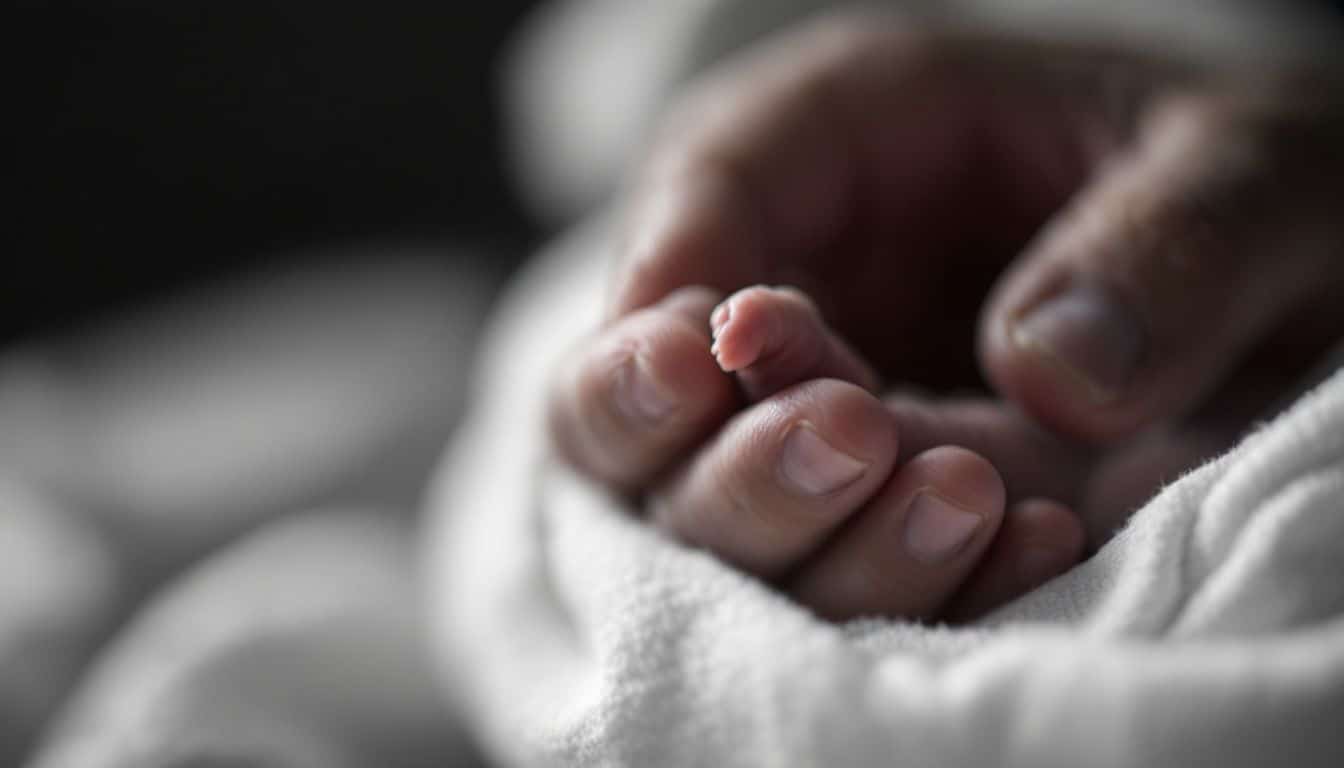
Thirty days after the birth of their first son, some Jewish parents gather their family, invite a kohen (a descendant of the priestly line of Aharon), hand him five silver coins, and the kohen gives the child back to them, “redeemed.” It is a short, very joyful ceremony, often followed by a meal: the pidyon haben (in Hebrew, “redemption of the son”). What is being redeemed, and from whom? Why must a son whom no one ever “pledged as security” be redeemed? This article answers from the Torah, the Mishnah, the Talmud, Maimonides and the Shulchan Aruch, separating the law that is actually practiced (halakha) from moral and mystical readings, and setting out Ashkenazi and Sephardi customs where they differ.
In short: the Torah declares every firstborn of Israel to be “Mine,” in memory of the night when the firstborn of Egypt were struck and those of Israel were spared (Shemot [Exodus] 13:2; 13:11-15). After the sin of the golden calf, the sanctity of the firstborn was transferred to the tribe of Levi, but the obligation to redeem each firstborn remains written in the Torah: the father gives a kohen five silver sela’im (Bamidbar [Numbers] 18:15-16), at the earliest on the 31st day of the child’s life. This mitzvah applies only to the first male child who “opens the womb” of his mother, born naturally, when neither the father nor the mother is a kohen or a Levi. It is in force everywhere and at all times, even without a Temple (Rambam, Hilchot Bikurim 11:6).
1. What the Torah says: from the night in Egypt to redemption
The first source is an instruction given at the time of the Exodus from Egypt: “Sanctify to Me every firstborn, the first issue of every womb among the children of Israel, of man and of beast: it is Mine” (Shemot 13:2). The firstborn of Israel become the property of G-d, and the Torah explains why a few verses later, when it anticipates the question of tomorrow’s child:
“When Pharaoh stubbornly refused to let us go, the L-rd slew every firstborn in the land of Egypt, from the firstborn of man to the firstborn of beast. Therefore I sacrifice to the L-rd every male that opens the womb, but every firstborn of my sons I redeem.”
(Shemot 13:15) — וַיְהִ֗י כִּֽי־הִקְשָׁ֣ה פַרְעֹה֮ לְשַׁלְּחֵ֒נוּ֒ וַיַּהֲרֹ֨ג ה׳ כׇּל־בְּכוֹר֙ בְּאֶ֣רֶץ מִצְרַ֔יִם מִבְּכֹ֥ר אָדָ֖ם וְעַד־בְּכ֣וֹר בְּהֵמָ֑ה עַל־כֵּן֩ אֲנִ֨י זֹבֵ֜חַ לַֽה׳ כׇּל־פֶּ֤טֶר רֶ֙חֶם֙ הַזְּכָרִ֔ים וְכׇל־בְּכ֥וֹר בָּנַ֖י אֶפְדֶּֽה׃
The text places two facts side by side: the firstborn of Egypt died, those of Israel were spared; the latter therefore belong to G-d. The text immediately lays down the rule of substitution: the pure animal that opens the womb is offered, the donkey’s foal is redeemed with a lamb (or, failing that, its neck is broken), and for man, “every firstborn of your sons you shall redeem” (Shemot 13:13; 34:20). The verb is the same as for the donkey: pdh, “to redeem.” It is truly a redemption and not a sacrifice: a son of Israel is never offered; he is “taken out” of the status of a consecrated possession.
The price and the age are fixed in the Book of Numbers:
“Their redemption money, from the age of one month you shall redeem, by your assessment: five shekels of silver, by the shekel of the sanctuary, which is twenty gerah.”
(Bamidbar 18:16) — וּפְדוּיָו֙ מִבֶּן־חֹ֣דֶשׁ תִּפְדֶּ֔ה בְּעֶ֨רְכְּךָ֔ כֶּ֛סֶף חֲמֵ֥שֶׁת שְׁקָלִ֖ים בְּשֶׁ֣קֶל הַקֹּ֑דֶשׁ עֶשְׂרִ֥ים גֵּרָ֖ה הֽוּא׃
The same chapter gives the context: sacred gifts, including the firstborn, belong to Aharon and his sons (Bamidbar 18:15). The “five shekels” also corresponds to the valuation (erech) of a boy from one month to five years in the list of valuations in Vayikra (Leviticus) 27:6. The Talmud derives from this a rule of liability: a father who set aside the redemption money and lost it remains responsible for it, by analogy between these two uses of the word “valuation” (Babylonian Talmud, Bekhorot 51b, in the name of Rabbi Shimon ben Lakish; Mishnah Bekhorot 8:8).
The Levites in place of the firstborn
The desert adds an episode. G-d says to Moshe: “Behold, I have taken the Levites from among the children of Israel in place of every firstborn that opens the womb” (Bamidbar 3:12), because “every firstborn is Mine: on the day that I struck every firstborn in the land of Egypt, I sanctified to Myself every firstborn in Israel” (Bamidbar 3:13; see also 8:16-18). The firstborn of one month and older are then counted: 22,273, while the Levites number 22,000 (Bamidbar 3:39; 3:43). For the 273 surplus firstborn, the Torah sets a redemption of five shekels per head (Bamidbar 3:46-47), that is 1,365 shekels given to Aharon and his sons (Bamidbar 3:50-51). This is the very first collective “pidyon haben” in history, and the model for individual redemption.
Why the Levites? Rashi explains, relying on the Mishnah (Zevachim 14:4): before the Tabernacle was erected, the sacred service was performed by the firstborn; but when they sinned with the golden calf they were disqualified, and the Levites, who had not taken part in the idolatry, were chosen in their place:
“For the service was performed by the firstborn; but when they sinned with the calf they were disqualified, and the Levites, who had not served idols, were chosen in their place.”
(Rashi on Bamidbar 3:12, referring to Zevachim 112) — לְפִי שֶׁהָיְתָה הָעֲבוֹדָה בַּבְּכוֹרוֹת, וּכְשֶׁחָטְאוּ בָעֵגֶל נִפְסְלוּ, וְהַלְוִיִּם שֶׁלֹּא עָבְדוּ עֲ”זָ נִבְחֲרוּ תַחְתֵּיהֶם
Rashi’s textual support is solid: the Mishnah states in so many words that “until the Tabernacle was erected, the high places were permitted and the service was performed by the firstborn; once it was erected, the high places were forbidden and the service was performed by the kohanim” (Mishnah Zevachim 14:4). This is a reading from tradition (aggadah, in the broad sense); the text of the Torah does not explicitly attribute the transfer to the golden calf. But it explains why, today, the Jewish firstborn is not an officiant: his sanctity has been “transferred,” and what remains is to redeem the child.
2. Who is concerned? The “peter rechem”
The mitzvah does not apply to “all first sons”: it follows precise criteria, which the Sages deduced from the expression “opening the womb” (peter rechem).
- A son. The verse says: “every firstborn of your sons you shall redeem” (Shemot 34:20). Daughters are not included: the Talmud derives this from the same verse, “your sons and not your daughters” (Babylonian Talmud, Kiddushin 29a).
- First of his mother, not of his father. The criterion is the opening of the womb. A son who is the firstborn of his father but not of his mother (the mother has already given birth) is not to be redeemed; and a man who has two wives must redeem the first son of each of them (Shulchan Aruch, Yoreh De’ah 305:17). Rabbeinu Bachya observes that, instead of saying only “firstborn,” the verse adds “opening the womb”; he sees in this the expression of the mother’s bond with her child, and compares the verse with “Can a woman forget her nursing child?” (Yeshayahu [Isaiah] 49:15), an image of G-d’s love for Israel (Rabbeinu Bachya on Shemot 13:2).
- An Israelite mother. The Torah speaks of the “firstborn of his Jewish mother” (Rambam, Hilchot Bikurim 11:1; Shulchan Aruch, Yoreh De’ah 305:1). Cases of conversion are treated separately: a woman who had already given birth before converting no longer has a “firstborn” in the legal sense (Rambam 11:14; Shulchan Aruch, Yoreh De’ah 305:21), whereas one who converts while pregnant and gives birth to her first child redeems him (Rambam 11:13; Shulchan Aruch 305:20).
- A natural birth. A son born by Caesarean section has not “come out of the womb”: he is not to be redeemed, and a son born afterwards by natural delivery is not either, because another preceded him (Rambam 11:16; Shulchan Aruch 305:24).
- Neither kohen nor Levi. Kohanim and Levites are exempt, and the exemption extends to the child of a mother who is the daughter of a kohen or a Levi, even if she is married to an Israelite: “the matter depends not on the father but on the mother” (Rambam 11:9-10; Shulchan Aruch 305:18). The Talmud derives it a fortiori: if the sanctity of the Levites canceled that of the firstborn of Israel in the desert, it also cancels that of their own firstborn (Babylonian Talmud, Bekhorot 4a, according to Rava).
Miscarriages and delicate situations
The Mishnah distinguishes the “firstborn for inheritance” (who takes a double share: Devarim [Deuteronomy] 21:17; Mishnah Bekhorot 8:9) from the “firstborn for the kohen.” After certain miscarriages, the next son is a firstborn for inheritance but not for redemption (Mishnah Bekhorot 8:1; Rambam 11:14; Shulchan Aruch 305:22-23). Everything depends on the nature of the embryo and the stage of the pregnancy: any miscarriage, any Caesarean delivery, any conversion or any doubt about the mother’s status must be put to a rabbi before the ceremony. Where there is doubt about the obligation, one is exempt, “for whoever wishes to take from another must bring proof” (Rambam 11:19; Shulchan Aruch 305:13).
3. When should the child be redeemed?
The Torah says “from the age of one month” (Bamidbar 18:16). The Rambam specifies: the obligation arises when the child has completed thirty days (Hilchot Bikurim 11:17). The ceremony therefore takes place, in principle, on the 31st day. The Shulchan Aruch adds that one must not delay: “and after thirty days, one redeems him immediately, so as not to postpone the mitzvah” (Yoreh De’ah 305:11).
The Mishnah gives two clear rules about the money in case of death: if the son dies within the thirty days, even if the money has already been paid, the kohen must return it; if he dies after the thirty days, the father must pay even if he had not done so (Mishnah Bekhorot 8:6; Rambam 11:17). If the father himself dies within the thirty days, the son is presumed not to have been redeemed; after thirty days, he is presumed to have been (Mishnah Bekhorot 8:6; Shulchan Aruch 305:14).
- Shabbat. One does not redeem on Shabbat: if the 31st day falls on a Shabbat, the ceremony is postponed to Sunday (Shulchan Aruch, Yoreh De’ah 305:11). As for Chol HaMoed (the intermediate days of Pesach and Sukkot), the gloss of the Rema reports one opinion that forbids the ceremony and others that permit it (Yoreh De’ah 305:11). In case of doubt, consult a rabbi.
- Counting the days. Thirty days must be completed, and the Mishnah treats the thirtieth day like the day before it (Mishnah Bekhorot 8:6): it is therefore only from the 31st day that the obligation applies. For a birth at nightfall, or doubt about the date, ask a rabbi to do the count.
- Too early? A redemption performed before thirty days, on the “starting now” basis, is not valid; if the father specifies that the redemption will take effect after thirty days, the son is redeemed, even if the money no longer exists (Babylonian Talmud, Bekhorot 49a; Rambam 11:18; Shulchan Aruch 305:13). The Rema reports a contrary opinion when the money no longer exists or has been returned to the father, and advises, as a precaution, to repeat the redemption.
4. The price: five sela’im
The price is five sela’im, that is five shekels of the sanctuary, or 120 ma’ah, or 30 dirhams of pure silver, according to the wording of the Shulchan Aruch (Yoreh De’ah 305:1). The Sages specify that these five sela’im are counted in Tyrian coinage (Mishnah Bekhorot 8:7), whose silver content was markedly higher than that of local currency. Today they are expressed as a weight of fine silver: the estimates cited range from 96 to 101 grams (note in the English translation by Rabbi Eliyahu Touger, Moznaim, on Rambam, Hilchot Bikurim 11:6). Authorities differ: rely on the rabbi of your community.
What may be given? The Mishnah does not allow just anything:
“One does not redeem with slaves, with promissory notes, with land, or with consecrated property.”
(Mishnah Bekhorot 8:8) — אֵין פּוֹדִין לֹא בַעֲבָדִים, וְלֹא בִשְׁטָרוֹת, וְלֹא בְקַרְקָעוֹת, וְלֹא בְהֶקְדֵּשׁוֹת.
Only silver or movable goods worth five sela’im are suitable, because these are things whose substance is value, like shekels (Rambam 11:6; Shulchan Aruch 305:3). An object of lesser value, accepted by the kohen as worth five sela’im, suffices, provided that it is genuinely worth that sum to someone (Rambam 11:7; Shulchan Aruch 305:5). The father may also divide the sum among several kohanim (Rambam 11:7; Shulchan Aruch 305:7).
A promissory note does not count as redemption: the father owes the sum, but his son is not redeemed (Mishnah Bekhorot 8:8; Rambam 11:7).
May the kohen return the money?
Yes, but on two conditions. The Rambam writes: “If the kohen wishes to return the redemption money to him, he may; but the other must not give it to him with the intention that he return it” (Hilchot Bikurim 11:8). A conditional gift is not a gift: the money must genuinely change owners. The Rema adds that the kohen should not make a habit of systematically returning the money, lest other kohanim be harmed (fathers would then give only to him); he may, however, give it to the poor (Shulchan Aruch, Yoreh De’ah 305:8). Whether the kohen keeps the sum, returns it or devotes it to charity is a matter of custom more than of law.
5. How the ceremony unfolds
What the sources say
The Rambam sums up the essentials: “One who redeems his son recites the blessing ‘… who has sanctified us with His commandments and commanded us concerning the redemption of the son,’ then he says the blessing ‘shehecheyanu’ again, and then he gives the redemption money to the kohen” (Hilchot Bikurim 11:5). The main text of the Shulchan Aruch keeps to these two blessings. It is the gloss of the Rema that adds the dialogue between the kohen and the father, specifying: “this is the custom in these lands”:
“Some say that the firstborn is brought before the kohen, and the kohen is informed that he is a firstborn, the first issue of the womb; and the kohen asks him: ‘Which do you prefer: your firstborn son, or the five sela’im that you are obligated to give for his redemption?’ And the father says: ‘I prefer my son, my firstborn, and here are the five sela’im of his redemption.’ And as he gives him the money, he recites the aforementioned blessings.”
(Shulchan Aruch, Yoreh De’ah 305:10, gloss of the Rema) — דמייתי ליה לבכור קמיה כהן ומודיע ליה שהוא בכור פטר רחם והכהן שואל אותו במאי בעית טפי בבנך בכורך או חמש סלעים דמחייבת לפדות בהן והאב אומר בבני בכורי והילך ה’ סלעים בפדיונו ובהדי שנותן לו המעות מברך ברכות הנזכרות
In the same passage, the Rema notes several customs: a (festive) meal is held; if wine is available, the kohen recites the blessing over the wine immediately after the redemption, in order to make the event public; the blessing “shehasimcha bi-me’ono” is not said; the father may not redeem his son through an agent, and the court does not redeem the child in the father’s absence; and if the father wanted to “leave the child with the kohen,” this does not exempt him from redeeming (Shulchan Aruch, Yoreh De’ah 305:10, gloss, citing among others the Rivash and the Maharai).
The kohen’s dialogue, which the Rema reports from the Tur and the Rosh, in the name of the Geonim, has a theatrical dimension: the kohen puts the father before a “choice” whose outcome is obvious. The scene says what the Torah means: the child belonged, and the father receives him.
What custom has added
- The tray. In many communities, the child is brought in on a tray adorned with jewelry, sometimes by women or by guests, and then handed to the father. This is a festive custom, not a requirement of the law.
- The sum. Five silver coins are generally presented (often specially minted). Which coins, and of what weight: follow the instructions of the community’s rabbi, because the estimates vary.
- The meal. The Rema already attested it (Shulchan Aruch, Yoreh De’ah 305:10): a mitzvah meal is held, with songs and words of Torah.
- The formulas. The dialogue described above is reported by the Ashkenazi gloss as a custom of the communities of Europe; it is very widespread today. The songs, the words of welcome and the order of the ceremony vary from one community to another, Ashkenazi, Sephardi or Eastern; follow the custom of your own. These differences do not touch the substantive rules.
The blessings
The father says two blessings: “al pidyon haben” (concerning the redemption of the son), then “shehecheyanu,” the blessing of gratitude for joyful occasions (Rambam 11:5; Shulchan Aruch, Yoreh De’ah 305:10). If an adult is redeeming himself, he says “lifdot habechor” (to redeem the firstborn), according to the Shulchan Aruch; the Rema notes that “al pidyon habechor” is also said (same passage).

6. The father, the mother, the daughter and the unredeemed adult
The Mishnah and the Talmud link redemption to a father’s obligations toward his son. A famous baraita lists them:
“A father is obligated toward his son to circumcise him, to redeem him, to teach him Torah, to marry him off, and to teach him a trade.”
(Babylonian Talmud, Kiddushin 29a) — הָאָב חַיָּיב בִּבְנוֹ לְמוּלוֹ, וְלִפְדוֹתוֹ, וּלְלַמְּדוֹ תּוֹרָה, וּלְהַשִּׂיאוֹ אִשָּׁה, וּלְלַמְּדוֹ אוּמָּנוּת.
And the Talmud goes on to say where each point is derived from; for redemption: “every firstborn of your sons you shall redeem” (Shemot 34:20). When the father has not done so, the son is obligated to redeem himself, from the repetition of the verb, “pado tifdeh” (Bamidbar 18:15; Kiddushin 29a). This is why an unredeemed adult can, even today, fulfill the mitzvah himself, and the Rambam adds that one who must redeem himself and redeem his son starts with himself (Hilchot Bikurim 11:2-3; Mishnah Bekhorot 8:6, where Rabbi Yehuda holds the opposite: “his son takes precedence over him”).
As for the mother, she is not obligated to redeem her son: “one who is obligated to redeem himself is obligated to redeem his son”; but a woman has no need to be redeemed (Babylonian Talmud, Kiddushin 29a; Rambam 11:2; Shulchan Aruch 305:2). Some commentators deduce from the wording “she is not obligated” that she may do so if she wishes, and it is said that this is the custom when the child has no father (notes of the Moznaim translation on Rambam 11:2). She is nonetheless the pivot of the law, since it is her status (firstborn of her womb, daughter of a kohen or of a Levi or not) that determines the obligation.
The Rema finally mentions an ancient custom, cited in the name of the Maharil: when the father has missed the mitzvah, one inscribes on a silver plaque that the child was not redeemed and hangs it around his neck, so that he will remember to redeem himself as an adult (Shulchan Aruch, Yoreh De’ah 305:15, gloss).
7. Why this mitzvah? Halakha, aggadah, mysticism
A distinction is needed here. The halakha we have just seen depends on no explanation: it is a decree of the Torah. The reasons (ta’amei hamitzvot) belong to aggadah, to ethics and to thought.
The plain meaning: the memory of Egypt. The Torah itself gives the reason: on the night of the tenth plague, the firstborn of Egypt died and those of Israel lived (Shemot 13:15; Bamidbar 3:13). The Sefer HaChinuch, which counts this mitzvah (no. 392) and refers for its “roots” to the mitzvah of sanctifying the firstborn (no. 18), reads in it a twofold lesson:
“The Name wished to give us the merit of performing a mitzvah with the beginning of His fruit, so that we would know that everything is His, and that man has nothing in the world except what the Name grants him in His kindness. (…) And also in memory of the great miracle that the Name performed for us with the firstborn of Egypt, whom He slew, saving us from them.”
(Sefer HaChinuch, mitzvah 18) — שֶׁרָצָה הַשֵּׁם יִתְבָּרַךְ לְזַכּוֹתֵנוּ לַעֲשׂוֹת מִצְוָה בְּרֵאשִׁית פִּרְיוֹ, לְמַעַן דַּעַת כִּי הַכֹּל שֶׁלּוֹ, וְאֵין לוֹ לְאָדָם דָּבָר בָּעוֹלָם רַק מָה שֶׁיְּחַלֵּק לָנוּ הַשֵּׁם יִתְבָּרַךְ בַּחֲסָדָיו. וְיָבִין זֶה בִּרְאוֹתוֹ, כִּי אַחַר שֶׁיָּגַע הָאָדָם כַּמָּה יְגִיעוֹת וְטָרַח כַּמָּה טְרָחִים בְּעוֹלָמוֹ, וְהִגִּיעַ לַזְּמַן שֶׁעָשָׂה פְּרִי, וְחָבִיב עָלָיו רֵאשִׁית פִּרְיוֹ כְּבָבַת עֵינוֹ, מִיָּד נוֹתְנוֹ להקב”ה וּמִתְרוֹקֵן רְשׁוּתוֹ מִמֶּנּוּ וּמַכְנִיסוֹ לִרְשׁוּת בּוֹרְאוֹ. וְעוֹד לְזֵכֶר הַנֵּס הַגָּדוֹל שֶׁעָשָׂה לָנוּ הַשֵּׁם יִתְבָּרַךְ בִּבְכוֹרֵי מִצְרַיִם, שֶׁהֲרָגָם וְהִצִּילָנוּ מִיָּדָם.
The firstborn is, above all, what one loves most and is tempted to regard as one’s own. Redemption teaches the opposite: the child was first given, he comes from G-d; and he is returned to his parents so that they may raise him.
Why only the mother? Rabbeinu Bachya remarks that the plague of the firstborn struck in Egypt the firstborn of the father as well as that of the mother, or even, failing that, the eldest of the household. Why, then, is the sanctity of the firstborn of Israel limited to the one who “opens the womb”? Because the mother’s firstborn is certain, whereas the father’s may be in doubt; and he also sees in it an image of G-d’s attachment to Israel, the prophet comparing this love to that of a mother: “Can a woman forget her nursing child? (…) I will not forget you” (Yeshayahu 49:15; Rabbeinu Bachya on Shemot 13:2, who also cites Tehillim [Psalms] 89:28: “I too will make him a firstborn”). This reading is homiletical: it illuminates the rule without founding it.
Kabbalah and Chassidut. Kabbalists and Chassidic masters have written a great deal about the firstborn and about redemption: the sanctity of the “beginning” of all things, the power of the first spark of the soul that the parents bring down, the repair of the sin of the firstborn. We cite no specific formulation of these here: these approaches are numerous, they depend on the school, and a reader who wants to know more should turn to a qualified teacher rather than to a popularization. They change nothing in the law.
8. A little history
In the desert and in the Temple. Originally, the sanctity of the firstborn is not expressed through a family ceremony: it is a priestly role. The firstborn of Israel serve as officiants until the Tabernacle is erected (Mishnah Zevachim 14:4), then the Levites replace them (Bamidbar 3:12; 8:16-18). The 273 “surplus” firstborn are redeemed (Bamidbar 3:46-51), and the Torah fixes a price and an age for later generations (Bamidbar 18:15-16).
In the time of the Temple. The Mishnah and the Talmud describe an already highly structured mitzvah. The Rambam reports a rule that only makes sense with a pilgrimage to Jerusalem: “One who must redeem his son when the time comes to go up on pilgrimage, and who does not have enough to do both, first redeems his son, then goes up” (Hilchot Bikurim 11:4). The Mishnah specifies that the five sela’im are counted in Tyrian coinage (Mishnah Bekhorot 8:7).
After the destruction of the Temple. The Rambam specifies: “this mitzvah applies in every place and at all times” (Hilchot Bikurim 11:6). It is one of the rare mitzvot linked to the kohanim that are still practiced, along with the blessing of the kohanim (birkat kohanim). The details of the ceremony were fixed in the Middle Ages, among the halakhic authorities whom the Rema cites (the Maharil, the Maharai, the Rivash).
Who is a kohen today? The mitzvah depends on a status transmitted from father to son. No test is required: one relies on family tradition. Population-genetics studies have been carried out on this subject: an article by Skorecki and colleagues, published in the journal Nature in 1997, found common markers in many men who say they are kohanim, and a study by Hammer et al. (Human Genetics, 2009) concludes that there are several distinct lineages. This work has no halakhic bearing: halakha does not rely on it, and a kohen’s status is not verified by genetics.
9. What Rav Raphaël Benizri teaches
Rav Raphaël Benizri has not devoted a lecture to the pidyon haben itself, but he returns several times to the theme of the firstborn in connection with Pesach and Elul, which sheds light on the mitzvah. His remarks are taken from oral lectures published on this site; we summarize them rather than quote them.
- The fast of the firstborn. In his lecture Pesach: Pe-Sach, the mouth that speaks, the Rav recalls that firstborn sons fast on the eve of Pesach, because they were spared not on account of their own merit but because G-d had committed Himself to the ancestors. He explains that the eldest daughters do not fast, although the plague concerned them too: the resistance in Egypt was the work of the women, and their merit covered them. (The fast itself is a custom, reported by the Shulchan Aruch: “The firstborn fast on the eve of Pesach,” Orach Chaim 470:1, which notes that the opinion subjecting daughters to it as well is not followed.)
- A child is not a possession. In Pesach: looking for the chametz within, the Rav reads the death of the firstborn of Egypt in light of what the first child represents: the one who moves the parents from the state of husband and wife to that of father and mother, and who brings with him an idea of possession. He recalls that Chava, for her first child, called him Kayin, from the root kanah, “to acquire,” then stresses that a child cannot be acquired: he is “a beyond of myself,” and not a photocopy of his parents. According to him, “there is always a Pesach taking place in the passage from father to child.” This is precisely the teaching of redemption: the first son is returned to his parents as a being in his own right.
- The firstborn and the title of father. In Elul: the role of man, the Rav points out that a man discovers fatherhood only with his first child: it is the firstborn who gives his parents the title of father and mother. And Israel itself is called “My son, My firstborn” (Shemot 4:22).
These are readings by the Rav, which connect to the sources of the pidyon haben without being rules.
10. Common misconceptions about the pidyon haben
“The child is bought from the kohen.” This needs nuance. The Rambam himself uses the legal language of acquisition: it is “as if the kohen had already acquired him, and we were buying him from him for five sela’im” (Sefer HaMitzvot, positive commandment 80). But this is a legal construct: the child is not a good to be haggled over. He is “G-d’s” from his first breath, and redemption acknowledges this fact by freeing him. The proof is that the kohen may return the money, under the conditions recalled above (Rambam 11:8; Shulchan Aruch 305:8).
“All first sons must be redeemed.” False: one must be the firstborn of one’s mother, born naturally, of an Israelite mother who is neither the daughter of a kohen nor the daughter of a Levi, and whose father is neither a kohen nor a Levi (see section 2).
“An eldest daughter too.” No (Kiddushin 29a). The birth of a daughter is welcomed with other naming ceremonies, which depend on the custom of the community.
“It is enough to give the child.” Not so either: even if the father wants to “leave” his son with the kohen, he must still redeem him (Shulchan Aruch, Yoreh De’ah 305:10, gloss).
“It’s a folk celebration.” It is a mitzvah of the Torah, counted among the 613 (Sefer HaChinuch, mitzvah 392; Rambam, Sefer HaMitzvot, positive commandment 80).
11. Frequently asked questions about the pidyon haben
At what age should a child be redeemed?
On the 31st day of his life, when thirty days are complete (Rambam, Hilchot Bikurim 11:17; Shulchan Aruch, Yoreh De’ah 305:11). If that day is a Shabbat, one waits until Sunday. For any special case (a festival, doubt about the date, a sick child), consult a rabbi.
How much money must be given?
Five sela’im of silver (Bamidbar 18:16), which today are assessed by weight of fine silver, on the order of 100 grams according to different opinions. One may give silver or movable goods worth that sum, but not land, slaves or promissory notes (Mishnah Bekhorot 8:8; Shulchan Aruch, Yoreh De’ah 305:3).
My husband is a kohen (or my mother is the daughter of a Levi): must we redeem?
No. Kohanim and Levites are exempt, and the exemption extends to a child whose mother is the daughter of a kohen or of a Levi (Rambam 11:9-10; Shulchan Aruch, Yoreh De’ah 305:18).
My wife gave birth by Caesarean section: what should we do?
A son born by Caesarean section is not redeemed (he did not come out of the womb), and the next one, born naturally, is not redeemed either (Rambam 11:16; Shulchan Aruch 305:24). But whether a son is the “firstborn of his mother” can be very technical: consult a rabbi.
If my parents did not do it, can I do it myself?
Yes: a man whose father did not perform the redemption must redeem himself once he is an adult (Kiddushin 29a; Rambam 11:2; Shulchan Aruch 305:15). It is done before a kohen, with the blessing “lifdot habechor” or “al pidyon habechor” according to custom (Shulchan Aruch 305:10). If both need redeeming (oneself and one’s son), one starts, according to the opinion adopted, with oneself (Rambam 11:3).
Is a minyan, a meal or guests required?
The sources we reviewed do not require a minyan. The meal is an ancient custom mentioned by the Rema (Shulchan Aruch, Yoreh De’ah 305:10); the kohen, with the wine, makes the mitzvah public. Customs vary from community to community.
Further reading
- Pesach: the festival of freedom in 6 video lectures
- Pesach: Pe-Sach, the mouth that speaks (Rav Benizri)
- Pesach: looking for the chametz within (Rav Benizri)
- Elul: the role of man (Rav Benizri)
- Glossary of Hebrew words in Judaism
- Kohen, Levi, Israel: who are they?
- Circumcision (brit milah)
- Pesach and the Seder
- The Beit HaMikdash, the Temple of Jerusalem
Sources and references (20)
- Shemot (Exodus) 4:22; 13:2; 13:11-15; 34:19-20
- Vayikra (Leviticus) 27:6
- Bamidbar (Numbers) 3:11-13; 3:39; 3:43; 3:44-51; 8:16-18; 18:15-16
- Devarim (Deuteronomy) 21:17
- Yeshayahu (Isaiah) 49:15
- Mishnah Bekhorot 8:1; 8:6; 8:7; 8:8; 8:9
- Mishnah Zevachim 14:4
- Babylonian Talmud, Kiddushin 29a
- Babylonian Talmud, Bekhorot 4a; 49a; 51b
- Rashi on Bamidbar 3:12
- Rabbeinu Bachya on Shemot 13:2
- Rambam, Mishneh Torah, Hilchot Bikurim 11:1-19
- Rambam, Sefer HaMitzvot, positive commandment 80
- Sefer HaChinuch, mitzvot 18 and 392
- Shulchan Aruch, Yoreh De’ah 305:1-31 (with the gloss of the Rema)
- Shulchan Aruch, Orach Chaim 470:1
- K. Skorecki et al., “Y chromosomes of Jewish priests,” Nature 385, 1997, p. 32
- M. F. Hammer et al., “Extended Y chromosome haplotypes resolve multiple and unique lineages of the Jewish priesthood,” Human Genetics 126, 2009, pp. 707-717
- Rambam, Mishneh Torah, English translation by Rabbi Eliyahu Touger (Moznaim), notes on Hilchot Bikurim 11:2 and 11:6 (consulted on Sefaria)
- Lectures by Rav Raphaël Benizri: Pesach: Pe-Sach, the mouth that speaks; Pesach: looking for the chametz within; Elul: the role of man
Article by the Pensées Juives editorial team. Passages attributed to Rav Raphaël Benizri are taken from his lectures published on this site.