
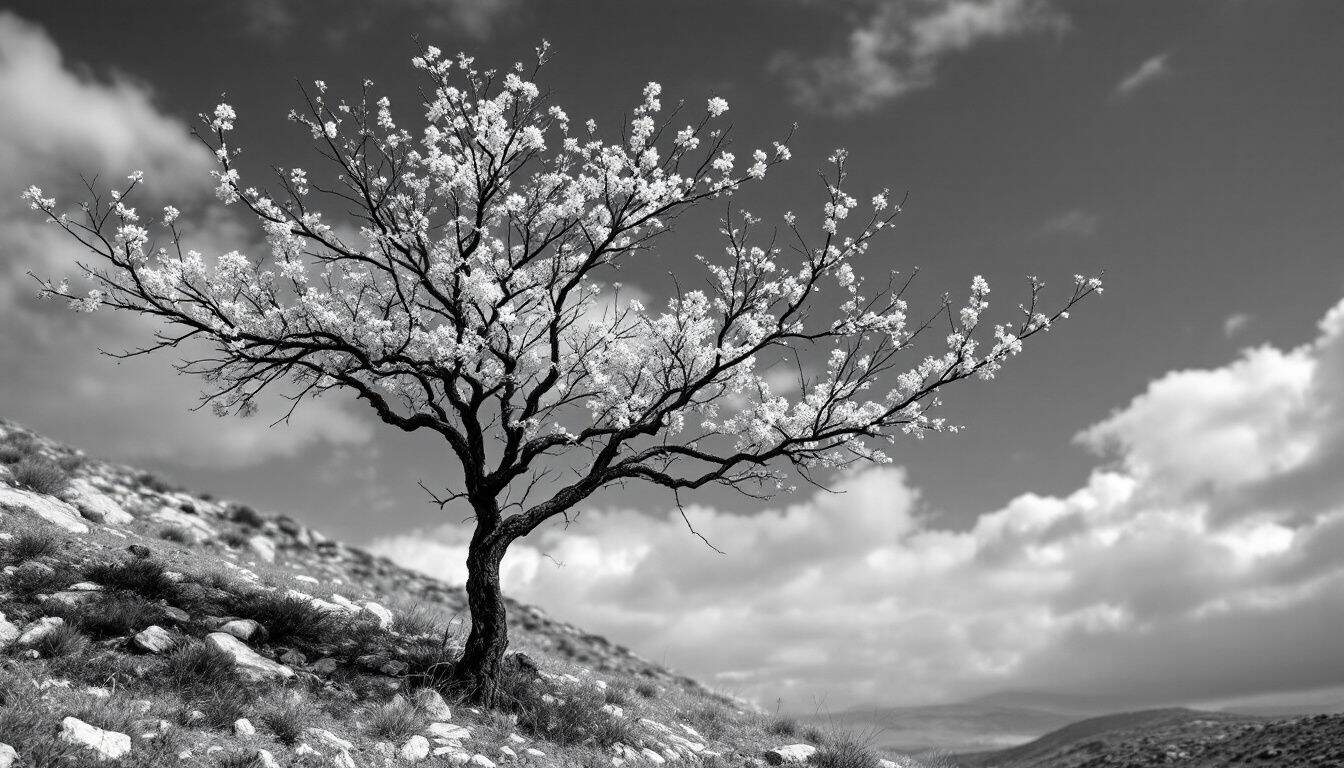
In the dead of winter, when the trees seem lifeless, the Jewish calendar wishes them a happy birthday. Families gather around dried and fresh fruit, a tree is sometimes planted, texts are read and glasses are raised. But where does this “New Year of the Trees” come from? Is it a festival of the Torah, an ecological holiday, an invention of the kabbalists, a Zionist planting day? The answer comes in four layers, and it is important not to confuse them: an agricultural rule of the Mishna, a moral reflection on the tree and the human being, a late mystical rite and a modern tradition. This article takes them up one by one, with their sources.
Tu BiShvat, the “fifteenth of the month of Shevat,” is one of the four “new years” (rashei shanim) of the Mishna (Rosh Hashana 1:1). Originally it is not a festival but a date of agricultural accounting: it fixes the start of the year for the fruit of the tree, which is needed to count the years of orla (the prohibition of the first three years), for the tithes and for shemitta (the sabbatical year). The Sages prescribe no meal, no fruit and no cups of wine for it. It is over the centuries that the date became a day of joy on which fruit is eaten, especially fruit of the Land of Israel; the printed kabbalistic seder dates from the eighteenth century; tree planting in Israel, from the nineteenth. All of this rests on an idea older than the festival itself: the human being is compared to a tree.
1. Four New Years: The Text of the Mishna
The only source of Tu BiShvat is a sentence of the Mishna, the basic text of the Oral Law, set down in writing around the year 200:
“There are four new years. The first of Nisan is the new year for kings and for festivals. The first of Elul is the new year for the tithe of animals; Rabbi Elazar and Rabbi Shimon say: the first of Tishrei. The first of Tishrei is the new year for years, for sabbatical years and jubilees, for planting and for vegetables. The first of Shevat is the new year for the tree, according to Beit Shammai; Beit Hillel say: the fifteenth of the month.”
(Mishna Rosh Hashana 1:1) — אַרְבָּעָה רָאשֵׁי שָׁנִים הֵם. בְּאֶחָד בְּנִיסָן רֹאשׁ הַשָּׁנָה לַמְּלָכִים וְלָרְגָלִים. בְּאֶחָד בֶּאֱלוּל רֹאשׁ הַשָּׁנָה לְמַעְשַׂר בְּהֵמָה. רַבִּי אֶלְעָזָר וְרַבִּי שִׁמְעוֹן אוֹמְרִים, בְּאֶחָד בְּתִשְׁרֵי. בְּאֶחָד בְּתִשְׁרֵי רֹאשׁ הַשָּׁנָה לַשָּׁנִים וְלַשְּׁמִטִּין וְלַיּוֹבְלוֹת, לַנְּטִיעָה וְלַיְרָקוֹת. בְּאֶחָד בִּשְׁבָט, רֹאשׁ הַשָּׁנָה לָאִילָן, כְּדִבְרֵי בֵית שַׁמַּאי. בֵּית הִלֵּל אוֹמְרִים, בַּחֲמִשָּׁה עָשָׂר בּוֹ.
Three remarks are in order. First, we see that the idea of a “year” is not one: the Jewish calendar counts several beginnings of the year, depending on what is being counted (kings, animals, years, trees). Second, the Mishna reports a disagreement: the school of Shammai fixed the start of the year of the trees on the first of Shevat, the school of Hillel on the fifteenth. Finally, in practice, the date adopted is that of Beit Hillel, the fifteenth, hence the name “Tu BiShvat”: “Tu” is the reading of the number fifteen written in Hebrew letters, tet and vav (9 + 6), following the custom of avoiding the spelling yod-heh (10 + 5), which forms a divine name. The Shulchan Arukh already writes “ט״ו בשבט” (Orach Chayim 131:6).
Note what the Mishna does not say: not a word about a festival, about fruit, about cups of wine. Rav Raphaël Benizri stresses this: it is “the only reference” of the ancient tradition, and everything else “came much later” (see below).
2. Why This Date? The Reasoning of the Talmud
The Talmud asks why the beginning of the waning winter was chosen. Rabbi Elazar answers in the name of Rabbi Oshaya, regarding the opinion of Beit Shammai:
“Because most of the year’s rains have fallen, and most of the season [of winter] is still to come.” The Talmud explains: “Even if most of the season is still to come, since most of the year’s rains have already fallen [the rain year is considered finished].”
(Rosh Hashana 14a) — הוֹאִיל וְיָצְאוּ רוֹב גִּשְׁמֵי שָׁנָה, וַעֲדַיִין רוֹב תְּקוּפָה מִבַּחוּץ.
The Talmud thus states the reasoning regarding the first of Shevat; the tradition applies it to the date of Beit Hillel, the fifteenth, a little later in the season. The principle is simple: the trees of the Land of Israel live on the water of the rainy season. When most of the rain has fallen, the fruits that begin to form belong, in law, to the new year. Rashi explains elsewhere that, for trees, the law follows the formation of the fruit (in Hebrew chanata, “fruit set”), because “all the growth of its fruits comes from the rising of the tree’s sap before the fruit forms” (Rashi on Rosh Hashana 14a). This is the source of the common image of the sap rising in mid-Shevat: in the Land of Israel, almond trees begin to bloom at this time. But this is not the text of the Mishna, which is strictly legal.
The case of the etrog, the citron, is a special case that the Talmud discusses: for the tithe, one follows the time of picking; for shemitta, that of fruit set (Rosh Hashana 15b).
3. A Date That Is First Legal: Orla, Tithes, Shemitta
Why was a date needed? Because several laws of the Torah count years of fruit. The most famous is orla, the prohibition of the first three years:
“When you come into the land and plant any tree for food, you shall regard its fruit as uncircumcised (orla); for three years it shall be uncircumcised to you, it shall not be eaten. In the fourth year all its fruit shall be holy, an offering of praise to the L-rd; and in the fifth year you may eat its fruit, so that it may increase its yield for you. I am the L-rd your G-d.”
(Vayikra [Leviticus] 19:23-25) — וְכִי־תָבֹאוּ אֶל־הָאָרֶץ וּנְטַעְתֶּם כׇּל־עֵץ מַאֲכָל וַעֲרַלְתֶּם עׇרְלָתוֹ אֶת־פִּרְיוֹ שָׁלֹשׁ שָׁנִים יִהְיֶה לָכֶם עֲרֵלִים לֹא יֵאָכֵל׃ וּבַשָּׁנָה הָרְבִיעִת יִהְיֶה כׇּל־פִּרְיוֹ קֹדֶשׁ הִלּוּלִים לַיהֹוָה׃ וּבַשָּׁנָה הַחֲמִישִׁת תֹּאכְלוּ אֶת־פִּרְיוֹ לְהוֹסִיף לָכֶם תְּבוּאָתוֹ אֲנִי יְהֹוָה אֱלֹהֵיכֶם׃
The first year is counted from the planting (Rashi on Vayikra 19:23, following the Sifra). In the fourth year, the fruit is “holy, praise”: like the second tithe, it is eaten in Jerusalem or redeemed (Rashi on Vayikra 19:24). It is in the fifth year that one draws a normal benefit from the tree. To know to which year a given fruit belongs, a date is needed; the fifteenth of Shevat plays this role. The same holds for the tithes, which cannot be taken from the fruit of one year for that of another, and for the fruit of shemitta, the sabbatical year: all these laws are attached to the formation of the fruit and to its year (Rosh Hashana 15b).
These laws concern first of all the Land of Israel. But orla is an exception: it applies outside the land as well, as a rule transmitted from Sinai (halakha le-Moshe mi-Sinai):
“New [grain] is forbidden by the Torah everywhere. And orla is a [transmitted] halakha.”
(Mishna Orla 3:9) — הֶחָדָשׁ, אָסוּר מִן הַתּוֹרָה בְּכָל מָקוֹם. וְהָעָרְלָה, הֲלָכָה.
The Shulchan Arukh puts it this way: “Orla applies everywhere and at all times; in the Land of Israel, it comes from the Torah; outside the land, it is a halakha transmitted to Moshe at Sinai” (Yoreh De’ah 294:8). In practice, this concerns mainly whoever plants a fruit tree: one counts its first three years. For concrete cases (a tree already planted, imported fruit), one should consult a rabbi.
4. “Man Is a Tree of the Field”: The Verse and Its Readings
The link between the tree and the human being is older than the date of Tu BiShvat. It comes from a verse of the Torah about war:
“When you besiege a city for many days to capture it, you shall not destroy its trees by wielding an axe against them: for you may eat of them, and you shall not cut them down. For is the tree of the field a man, that it should come before you in the siege?”
(Devarim [Deuteronomy] 20:19) — כִּי־תָצוּר אֶל־עִיר יָמִים רַבִּים לְהִלָּחֵם עָלֶיהָ לְתָפְשָׂהּ לֹא־תַשְׁחִית אֶת־עֵצָהּ לִנְדֹּחַ עָלָיו גַּרְזֶן כִּי מִמֶּנּוּ תֹאכֵל וְאֹתוֹ לֹא תִכְרֹת כִּי הָאָדָם עֵץ הַשָּׂדֶה לָבֹא מִפָּנֶיךָ בַּמָּצוֹר.
A very widespread misconception must be corrected here. One often quotes “for man is a tree of the field” as an assertion. But the end of the verse can be read as a question. This is how Rashi understands it: the word ki (“for”) has here the meaning of “perhaps” (dilma): is the tree of the field a man, that it could take refuge behind the ramparts and suffer hunger and thirst like the people of the city? Then why destroy it? (Rashi on Devarim 20:19). Modern Jewish translations render it likewise: “Is the tree of the field a man, to withdraw before you into the besieged city?” In other words, it is the difference between the tree and the human being that grounds the prohibition: the tree cannot flee, so it must not be struck.
The Sages nevertheless noted the comparison. The Talmud (Taanit 7a) reports Rabbi Yochanan, who reads the verse in question and then draws a lesson about study: “Is man a tree of the field? But it is written: ‘you may eat of them and you shall not cut them down,’ and it is written: ‘that one you shall destroy and cut down.’ How is this to be? If he is a worthy disciple of the wise, ‘you may eat of them and you shall not cut them down’; if not, ‘you shall destroy and cut down'”:
אֲמַר לֵיהּ: הָכִי אָמַר רַבִּי יוֹחָנָן — מַאי דִּכְתִיב: ״כִּי הָאָדָם עֵץ הַשָּׂדֶה״, וְכִי אָדָם עֵץ שָׂדֶה הוּא? אֶלָּא, מִשּׁוּם דִּכְתִיב: ״כִּי מִמֶּנּוּ תֹאכֵל וְאֹתוֹ לֹא תִכְרֹת״, וּכְתִיב: ״אֹתוֹ תַשְׁחִית וְכָרָתָּ״. הָא כֵּיצַד? אִם תַּלְמִיד חָכָם הָגוּן הוּא — ״מִמֶּנּוּ תֹאכֵל וְאֹתוֹ לֹא תִכְרֹת״, וְאִם לָאו — ״אֹתוֹ תַשְׁחִית וְכָרָתָּ״.
(Taanit 7a)
The same passage compares the words of Torah to a tree, following Proverbs: “It is a tree of life to those who grasp it” (Mishlei [Proverbs] 3:18). From this comes the metaphor: the human being, and especially the one who studies, is like a rooted tree, which gives its fruit in its season.
From the Tree to the Protection of Nature: Bal Tashchit
The verse forbids destroying fruit trees, even in the midst of war. Maimonides makes it a general rule: “One does not cut down fruit trees… and not only in a siege, but anywhere, whoever cuts down a fruit tree destructively is punished with lashes” (Hilkhot Melakhim 6:8); he specifies that it may be cut if it harms other trees, another’s field, or if the wood has great value. The prohibition of bal tashchit (“do not destroy”) then extends to everything that is destroyed needlessly: clothing, buildings, springs, food (Hilkhot Melakhim 6:10). It is readily seen as the Jewish source of an environmental ethic; without anachronism, one can say that the Torah and the Sages lay down a principle: the world is entrusted to the human being, not handed over to his destruction.
A midrash expresses it with a famous image:
“When the Holy One, blessed be He, created the first man, He took him and led him around all the trees of the Garden of Eden, and said to him: See how beautiful and praiseworthy My works are; everything I created, I created for you. Take care not to spoil or destroy My world, for if you spoil it, there will be no one after you to repair it.”
(Kohelet Rabba 7:13) — בְּשָׁעָה שֶׁבָּרָא הַקָּדוֹשׁ בָּרוּךְ הוּא אֶת אָדָם הָרִאשׁוֹן, נְטָלוֹ וְהֶחֱזִירוֹ עַל כָּל אִילָנֵי גַּן עֵדֶן, וְאָמַר לוֹ, רְאֵה מַעֲשַׂי כַּמָּה נָאִים וּמְשֻׁבָּחִין הֵן, וְכָל מַה שֶּׁבָּרָאתִי בִּשְׁבִילְךָ בָּרָאתִי, תֵּן דַּעְתְּךָ שֶׁלֹא תְקַלְקֵל וְתַחֲרִיב אֶת עוֹלָמִי, שֶׁאִם קִלְקַלְתָּ אֵין מִי שֶׁיְתַקֵּן אַחֲרֶיךָ.
And Pirkei DeRabbi Eliezer (34) adds a sentence that Rav Benizri cites: when one cuts down a tree that bears fruit, “the voice goes out from one end of the world to the other, and the voice is not heard” (בְּשָׁעָה שֶׁכּוֹרְתִין אֶת הָאִילָן שֶׁהוּא עוֹשֶׂה פְּרִי הַקּוֹל יוֹצֵא מִסּוֹף הָעוֹלָם וְעַד סוֹפוֹ וְאֵין הַקּוֹל נִשְׁמָע). This is a text of aggadah, of moral tradition, not a rule of law.
5. The Seven Species, the Blessings and the New Fruit
If Tu BiShvat became a day on which fruit is eaten, the tradition rests on a praise of the Land of Israel in the Torah:
“For the L-rd your G-d is bringing you into a good land… a land of wheat and barley, of vines, figs and pomegranates, a land of olive oil and honey.”
(Devarim 8:7-8) — אֶרֶץ חִטָּה וּשְׂעֹרָה וְגֶפֶן וּתְאֵנָה וְרִמּוֹן אֶרֶץ־זֵית שֶׁמֶן וּדְבָשׁ.
These are the “seven species” (shivat haminim), which are also those used for the first fruits brought to the Temple (Mishna Bikkurim 1:3). The “honey” is date honey (Bartenura on Bikkurim 1:3). The fruit of the tree has its own blessing: “Over the fruit of the tree, one says: Borei peri ha’etz” (Mishna Berakhot 6:1; Shulchan Arukh, Orach Chayim 202:1), and the Talmud lays down the general principle: “It is forbidden for a person to enjoy this world without a blessing” (Berakhot 35a). Over a fruit of the season eaten for the first time that year, one also says shehecheyanu (Orach Chayim 225:3).
Let us recall finally the only blessing that the Torah itself prescribes: the one after the meal, “You shall eat and be satisfied, and you shall bless the L-rd your G-d for the good land He has given you” (Devarim 8:10); the Talmud derives from it the obligation of the blessing after the meal from the Torah (Berakhot 21a). Rav Benizri sees in this the proof that eating is a mitzvah: one eats in order to integrate the elements of creation and raise them up, then gives thanks for the land.

6. How a Legal Date Became a Festival
No source in the Mishna or the Talmud prescribes a festival on Tu BiShvat. The stages of the transformation of this date are known in broad outline, although certain details remain debated.
A Day of Joy: No Supplications
The first trace is liturgical. The Shulchan Arukh, in the section on prayers, mentions that one does not fall on one’s face (that is, one does not say Tachanun, the supplications) on Tu BiShvat, as on Rosh Chodesh, Chanukah or Tu B’Av:
נהגו שלא ליפול על פניהם בט”ו באב ולא בט”ו בשבט ולא בר”ח…
(Shulchan Arukh, Orach Chayim 131:6)
In other words, it is a day of half-festival: one does not fast, one does not say supplications.
Eating Fruit: An Increasingly Widespread Custom
The Mishna Berura notes that, on the fifteenth of Shevat, “the Ashkenazim have the custom of multiplying on this date the kinds of fruit of the trees” (Orach Chayim 131:31). The idea is ancient, at least in spirit: the Jerusalem Talmud reports, in the name of Rav, that “a man will have to give an accounting for everything his eye saw and he did not eat,” and that Rabbi Elazar, out of scruple, saved money in order to taste, once a year, every kind of fruit:
עָתִיד אָדָם לִיתֵּן דִּין וְחֶשְׁבּוֹן עַל כָּל מַה שֶּׁרָאָת עֵינוֹ וְלֹא אָכַל. רִבִּי לָעְזָר חֲשַׁשׁ לְהָדָא שְׁמוּעָתָא וּמַצְמִית לֵיהּ פְּרִיטִין וַאֲכִיל בְּהוֹן מִכָּל מִילָּה חָדָא בְשַׁתָּא.
(Jerusalem Talmud, Kiddushin 4:12)
This text has no explicit connection with Tu BiShvat; it was the kabbalists who linked it to the date.
The Seder of the Kabbalists
The Tu BiShvat seder, with its classified fruits and its four cups of wine that pass from white to red, is set out in a small book entitled Peri Etz Hadar (“The Fruit of the Goodly Tree”). It was printed in Venice in 1728, without an author’s name, then included in the collection of mystical customs Chemdat Yamim. The booklet is attributed to the school of Rabbi Yitzchak Luria (the Ari, Safed, sixteenth century), but the author himself states, honestly, that this is not a custom of the Ari:
ומנהג טוב להולכים בתמים להרבות בפירות בעצם היום הזה ולומר דברי שירות ותשבחות עליהן כאשר הנהגתי לכל החברי׳ אשר עמדי. ועם כי בדברי כתבי הרב זל״הה לא נמצא מנהג זה מ״מ לדעתי תקון נפלא הוא בנגלה ובנסתר
(Peri Etz Hadar, introduction)
“And it is a good custom for those who walk in integrity to multiply fruits on this very day and to say over them words of songs and praises, as I have instituted for all the companions who are with me. And although in the writings of the Rav [the Ari] this custom is not found, in my opinion it is a wonderful tikkun [repair], in the revealed and in the hidden.” This is therefore an openly acknowledged initiative of a circle of kabbalists, who see in the fruit a way of “repairing” the world through blessing. The text also says that, although the fifteenth of Shevat falls during the weeks called Shovavim, a period of repentance, there is no fasting on that day “because it is the new year for the fruit of the tree.”
The work begins with an explanation of this intention: “My master used to say to aim, when eating these fruits, at the repair of the sin of Adam, who sinned through a fruit of the tree” (Peri Etz Hadar, 2). It then proposes readings from the Torah, the Prophets, the Writings and the Zohar, then, for each fruit (wheat, olive, dates, grape, fig, pomegranate, etrog, apple…), a passage of the Zohar to meditate on and an intention linked to the combinations of the four-letter Name, with four cups of wine, the first of which is entirely white. This seder is not practiced by all communities: many are content to eat fruit, say the blessings and read psalms. Certain Chasidic circles have the custom of keeping the Sukkot etrog to make jam of it on Tu BiShvat.
Planting Trees: A Modern Tradition
Planting a tree on Tu BiShvat is a recent practice, born of Jewish settlement in the Land of Israel. In 1890, the educator Zeev Yavetz led his students to plant trees at Zikhron Yaakov; the Jewish National Fund (founded in 1901) then made planting a symbol. Another symbolic date: the Constituent Assembly of Israel met for the first time in Jerusalem on February 14, 1949, which was a fifteenth of Shevat. These customs are modern traditions: they have no foundation in the Mishna, as Rav Benizri notes: “there is no mention whatsoever of an anniversary day of the planting of trees.”
7. Halakha, Aggadah, Kabbalah: Three Levels of Reading
To see clearly, let us distinguish.
Halakha (the law): the starting date of the year of the trees, with its consequences (orla, tithes, shemitta); no supplications; permission, even strongly encouraged, to eat fruit and to bless. No duty of festivity.
Aggadah and mussar (narratives and moral teaching): the tree is the portrait of the human being. The image is everywhere. The righteous person “is like a tree planted by streams of water, which yields its fruit in its season” (Tehillim [Psalms] 1:3): וְהָיָה כְּעֵץ שָׁתוּל עַל־פַּלְגֵי־מָיִם אֲשֶׁר פִּרְיוֹ יִתֵּן בְּעִתּוֹ. He “flourishes like the palm tree, grows like a cedar of Lebanon… even in old age he bears fruit, full of sap” (Tehillim 92:13-15). The person who trusts in G-d is “like a tree planted by the waters, that spreads out its roots by the stream… it never ceases to bear fruit” (Yirmiyahu [Jeremiah] 17:7-8). And Yeshayahu promises: “The days of My people shall be like the days of a tree” (Yeshayahu [Isaiah] 65:22): כִּי־כִימֵי הָעֵץ יְמֵי עַמִּי. The Torah itself is “a tree of life” (Mishlei 3:18).
The tree is also, from Creation on, an actor in the story. On the third day, G-d commands the earth to produce a “fruit-tree” (etz peri); the earth gives a “tree bearing fruit” (Bereshit [Genesis] 1:11-12). Rashi reads in this a first disobedience of the earth: G-d wanted the taste of the wood to be identical to that of the fruit, the earth did not do so; this is why, when Adam is cursed for his sin, the earth is punished with him (Rashi on Bereshit 1:11). And it is a tree that is at the heart of Adam’s trial: “Of every tree of the garden you may eat,” but of the tree of the knowledge of good and evil you shall not eat (Bereshit 2:16-17); after the sin, the human being is kept away from the tree of life (Bereshit 3:22-24).
Kabbalah (mystical tradition): the act of blessing and eating fruit is seen as a “tikkun,” a repair, which brings divine abundance down upon the world. This is the meaning of the seder of the Peri Etz Hadar. This reading belongs to a specific current of the tradition; the law is not tied to it.
8. What Rav Raphaël Benizri Teaches
Rav Raphaël Benizri devoted a lecture to Tu BiShvat (page Tu BiShvat: The New Year of the Trees). Here is what his published lectures say, without adding anything.
- The single source and the meaning of the festival. The Rav starts from the Mishna of the four new years. He recalls that it is the only reference, that it speaks neither of a festival, nor of fruit, nor of four cups, and that all of that came much later, “as history developed.” Tree planting is attached to it today, but there is no question of it in the source.
- Ecology, an ancient concern. He cites the midrash in which G-d has the human being tour His universe (Kohelet Rabba 7:13), the prohibition of bal tashchit, and the saying of the Sages according to which whoever attacks the life of a tree makes its cry heard from one end of the world to the other (Pirkei DeRabbi Eliezer 34).
- The tree, portrait of the human being. A vertical rooted in the earth, with branches in the four corners that one wants to bring back to a single trunk. He notes the detail of Creation: the earth was asked for a “fruit-tree,” entirely edible, and it gave a “tree bearing fruit,” with a little waste. This disobedience of the third day prefigures that of the human being, created on the sixth.
- Living in order to eat. Against the saying that one must eat in order to live and not live in order to eat, he reverses the formula: food makes it possible to integrate the elements of creation and raise them to the rank of the human. This is why the only blessing of biblical origin is the one that follows the meal (Devarim 8:10; Berakhot 21a).
- The categories of fruit. He explains that, according to the kabbalistic tradition, one eats fruits that are consumed with their skin, others whose pit is discarded, others whose shell must be removed – ten of each kind, corresponding to the four worlds: “as we are inclined to live from within and not from without,” the Torah asks us to integrate the outer world into ourselves and set aside what hinders.
- Orla and education. Three years without consuming the fruit, a fourth year in holiness, and only in the fifth does one benefit: likewise the child is first a receiver before becoming a giver.
- Ilan and etz. He remarks that the Mishna says rosh hashana la-ilan and not la-etz: the word ilan (אילן), numerical value 91, equals the sum of the four-letter Name (26) and the name Adonai (65), to say that the tree reminds the human being of his share of transcendence and his share of immanence.
- The tree of life. Adam is kept away from the tree of life not as a punishment, but so that he not live forever without being able to recover himself: having preferred knowledge to life, he will have to use knowledge to find the tree of life again.
- The messianic dimension. “If you are holding a sapling in your hand and someone tells you that the Messiah has come, do not let go of it: first plant your tree, then go and welcome him.” This saying of the Sages appears in Avot de-Rabbi Natan (version B, 31), where it is attributed to Rabban Yochanan ben Zakkai.
- A day without mourning. According to the Rav, because the day is a festive day, one does not recite vidui (confession) or deliver a eulogy on it, and one does not fast.
See the lecture: Tu BiShvat: The New Year of the Trees.
9. How Is Tu BiShvat Celebrated Today?
In general terms, here is what is done:
- Eating fruit, with its blessings: the fruits of the Land of Israel (the seven species) and others. Many are in the habit of eating a new fruit of the season, with shehecheyanu (Orach Chayim 225:3).
- Not saying Tachanun at the service (Orach Chayim 131:6).
- Holding a seder, according to the custom of one’s community: it may be the seder of the Peri Etz Hadar, or a simple fruit meal with texts about the tree, psalms and songs.
- Planting a tree, especially in Israel, or supporting a planting, according to modern custom.
- Committing to the environment, in the spirit of bal tashchit.
If one plants a fruit tree at home, one should take orla into account: for the first three years, one does not eat its fruit; for details, one should consult a rabbi.
10. Common Misconceptions About Tu BiShvat
“Tu BiShvat is a festival of the Torah.” No: the Torah does not speak of it. It is a date in the Mishna, which gradually became a day of joy.
“The Tu BiShvat seder goes back to the Ari.” The tradition attributes it to his school, but the book that contains it, printed in 1728, is anonymous, and its author acknowledges that the custom does not appear in the Ari’s writings (Peri Etz Hadar, introduction).
“‘Man is a tree of the field’: the Torah compares the human being to a tree.” The verse (Devarim 20:19) is read, according to Rashi, as a question: is the tree a man? The comparison is nonetheless taken up afterward by the Sages (Taanit 7a) and the Psalms.
“Tu BiShvat is the festival of ecology.” The idea of respecting nature is ancient and real (bal tashchit), but the date itself is first of all legal; the ecological dimension is a legitimate rereading of a principle of the Torah.
“Trees are planted because the Mishna asks for it.” The Mishna says nothing about planting. The custom dates from the nineteenth century, as Rav Benizri recalls.
Frequently Asked Questions About Tu BiShvat
When Is Tu BiShvat?
On the fifteenth of the month of Shevat, in January or February. Like every day of the Jewish calendar, it begins the evening before. In 5787, it falls on Saturday, January 23, 2027: the festival therefore coincides with Shabbat.
Why Is Fruit Eaten on Tu BiShvat?
Because the date is the new year for the fruit of the tree, and because the kabbalists made it a day of blessing over fruit, relying on the idea that one will have to give an accounting for what one saw and did not eat (Jerusalem Talmud, Kiddushin 4:12). No ancient text requires it: it is a custom (Mishna Berura, Orach Chayim 131:31).
Which Fruits Should Be Eaten?
No fruit is obligatory. One readily chooses the seven species of the Land of Israel: grape, fig, pomegranate, olive, date (the “honey” of the Torah); one adds fruits of the season. Over each, one says the blessing that suits it (Orach Chayim 202).
Must the Seder Be Held with Four Cups of Wine?
No, it is a custom of kabbalistic origin, printed in 1728 in the Peri Etz Hadar, which many communities do not follow. One can very well mark the date with a simple fruit meal and texts.
Does Orla Apply Outside Israel?
Yes, for planted fruit trees: the prohibition of the first three years applies everywhere, as a rule transmitted from Sinai (Mishna Orla 3:9; Shulchan Arukh, Yoreh De’ah 294:8). For concrete cases, one should consult a rabbi.
May One Fast or Say Supplications on Tu BiShvat?
No: Tachanun is not said (Orach Chayim 131:6), and Rav Benizri specifies that one does not recite vidui, deliver a eulogy or fast.
Must One Plant a Tree?
It is not an obligation, but a modern custom, born in the Land of Israel. It accords with a saying of the Sages: if one is holding a plant in one’s hand and the coming of the Messiah is announced, one plants first (Avot de-Rabbi Natan, version B, 31).
Further Reading
The tree is one of the most beautiful symbols of the Torah. Some readings to continue.
- Tu BiShvat: Why a New Year of the Trees?
- Tu BiShvat: The New Year of the Trees, a Lecture by Rav Benizri
- What Are Shemitta and Yovel?
- What Are Ma’aser and Terumah?
- Rosh Hashana and the Shofar: The Jewish New Year
- Sukkot: The Lulav and the Etrog
- Blessings and Birkat Hamazon
- Kabbalah
- The Jewish Calendar
- Glossary of Hebrew Words in Judaism
Sources and References (26)
- Bereshit (Genesis) 1:11-12; 2:16-17; 3:9; 3:22-24
- Vayikra (Leviticus) 19:23-25
- Devarim (Deuteronomy) 8:7-10; 20:19-20
- Tehillim (Psalms) 1:3; 92:13-15
- Mishlei (Proverbs) 3:18
- Yeshayahu (Isaiah) 65:22
- Yirmiyahu (Jeremiah) 17:7-8
- Mishna Rosh Hashana 1:1
- Mishna Orla 3:9
- Mishna Bikkurim 1:3; Bartenura on Bikkurim 1:3
- Mishna Berakhot 6:1
- Babylonian Talmud, Rosh Hashana 14a; 15b
- Babylonian Talmud, Berakhot 21a; 35a
- Babylonian Talmud, Taanit 7a
- Jerusalem Talmud, Kiddushin 4:12
- Rashi on Bereshit 1:11; on Vayikra 19:23-24; on Devarim 20:19; on Rosh Hashana 14a
- Kohelet Rabba 7:13
- Pirkei DeRabbi Eliezer 34
- Avot de-Rabbi Natan, version B, 31
- Rambam, Mishneh Torah, Hilkhot Melakhim 6:8; 6:10
- Shulchan Arukh, Orach Chayim 131:6; 202:1; 225:3
- Shulchan Arukh, Yoreh De’ah 294:8
- Mishna Berura, Orach Chayim 131:31
- Peri Etz Hadar (anonymous booklet, Venice, 1728), reprinted in Chemdat Yamim
- Zeev Yavetz and the plantings of Zikhron Yaakov (1890); Jewish National Fund (1901); first meeting of Israel’s Constituent Assembly, February 14, 1949
- Lecture by Rav Raphaël Benizri: Tu BiShvat: The New Year of the Trees
Article by the Pensées Juives editorial team. Passages attributed to Rav Raphaël Benizri are taken from his lectures published on this site.