
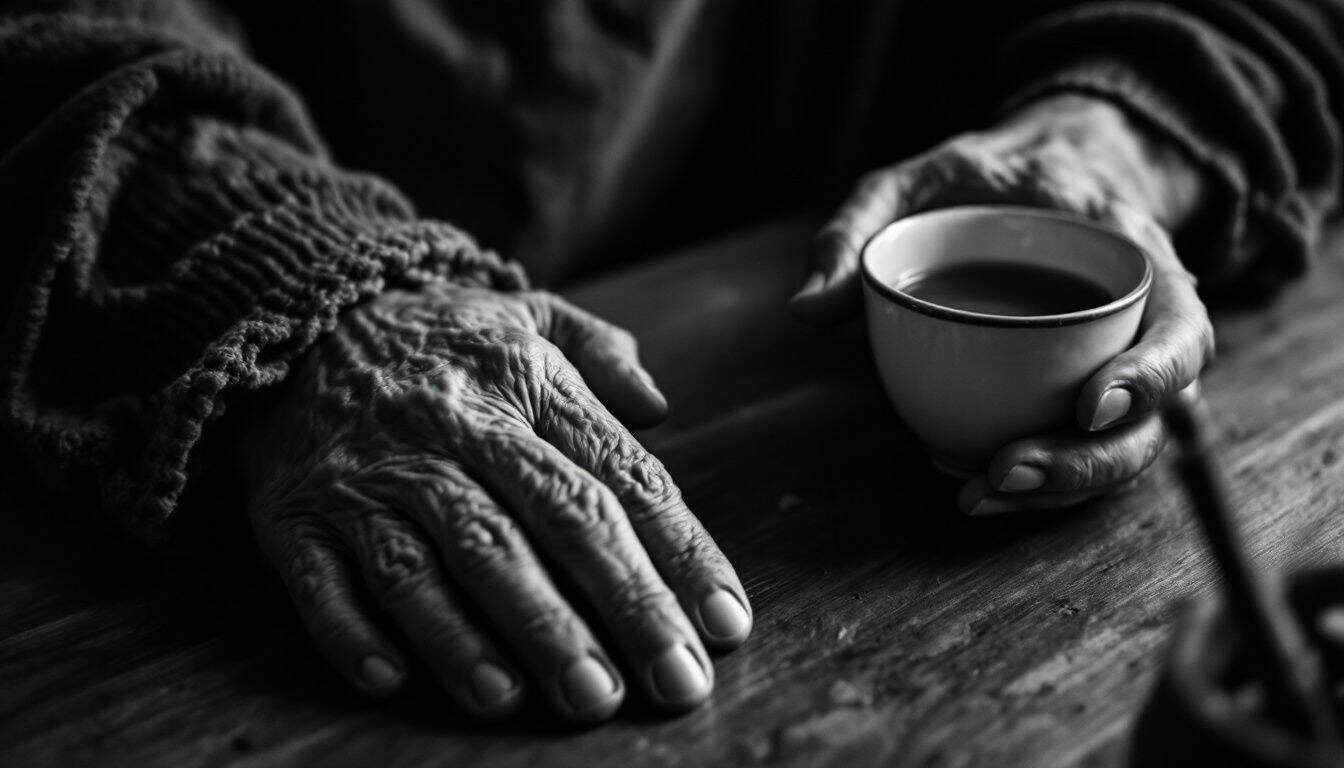
“Honor your father and your mother”: almost everyone knows these words, one of the Ten Commandments engraved on the Tablets of the Law. But what exactly do they ask? Must one always obey one’s parents? What about a father who orders a transgression of the Torah, a mother who is no longer in her right mind, a parent who has behaved badly? And why does the Talmud go so far as to compare this duty to the honor due to G-d Himself? This article answers from the Torah, the Mishna, the Gemara, Maimonides and the Shulchan Aruch, distinguishing halacha (the law that is practiced) from the moral and spiritual reading.
In short: “honoring parents” actually covers two distinct mitzvot (commandments). Kavod (honor) is a duty of action: feeding, clothing and accompanying one’s parents, speaking to them with respect. Mora (reverential awe) is a duty of restraint: not sitting in their place, not contradicting them, not calling them by their first name. Both bind men and women, during the parents’ lifetime and, in a different way, after their death. This duty has precise limits: one never obeys a parent who asks one to transgress the Torah, Torah study and the performance of an urgent mitzva can take precedence, and the parent himself must not make this yoke heavier on his children. The Talmud sees in it the point where duties toward people and duties toward G-d meet, because father and mother are G-d’s “partners” in bringing each person into the world.
1. What the written Torah says
The commandment first appears at Sinai, in the Ten Commandments:
“Honor your father and your mother, so that your days may be long on the land that Hashem your G-d gives you.”
(Shemot [Exodus] 20:12) — כַּבֵּד אֶת־אָבִיךָ וְאֶת־אִמֶּךָ לְמַעַן יַאֲרִכוּן יָמֶיךָ עַל הָאֲדָמָה אֲשֶׁר־ה׳ אֱלֹהֶיךָ נֹתֵן לָךְ
The version in Devarim adds two details: “as Hashem your G-d has commanded you” and “so that it may go well with you (yitav lach)” in the promised land (Devarim [Deuteronomy] 5:16). In both cases, the commandment comes with a promise: long life on the land.
The Torah also states the second aspect, awe, in the book of Vayikra, in the midst of the laws of holiness:
“Each of you shall revere his mother and his father, and keep My Sabbaths: I am Hashem your G-d.”
(Vayikra [Leviticus] 19:3) — אִישׁ אִמּוֹ וְאָבִיו תִּירָאוּ וְאֶת־שַׁבְּתֹתַי תִּשְׁמֹרוּ אֲנִי ה׳ אֱלֹהֵיכֶם
Note the order of the words. In the Ten Commandments, the father comes before the mother; in Vayikra, the mother comes before the father. Rashi, following the Talmud, explains: Scripture knows that a child fears his father more, hence the mention of the mother first for awe; and that a child honors his mother more, because she persuades him with gentle words, hence the mention of the father first for honor (Rashi on Vayikra 19:3, based on Kiddushin 30b-31a):
“Here it put the mother before the father, because it is revealed before Him that a son fears his father more than his mother; and for honor it put the father before the mother, because it is revealed before Him that a son honors his mother more than his father, since she persuades him with words.”
(Rashi on Vayikra 19:3) — אמו ואביו תיראו. כאן הקדים אם לאב, לפי שגלוי לפניו שהבן ירא את אביו יותר מאמו, ובכבוד הקדים אב לאם, לפי שגלוי לפניו שהבן מכבד את אמו יותר מאביו, מפני שמשדלתו בדברים
Maimonides draws the lesson: the two are placed on an equal footing, “to teach that both are equal, in awe as in honor” (Rambam, Mishneh Torah, Hilchot Mamrim 6:2).
The Torah also says, with remarkable severity, what must not be done. One who strikes his father or mother (Shemot 21:15), one who curses them (Shemot 21:17; Vayikra 20:9) incurs the death penalty, and the curse is among the maledictions proclaimed on Mount Eval: “Cursed be he who dishonors his father or his mother” (Devarim 27:16). These verses are the negative counterpart of honor; we will see below how far the oral tradition reduced their concrete application.
Finally, the Torah makes the parental bond the model of all transmission. The book of Proverbs, attributed to Shlomo (Solomon), constantly addresses a “my son” who receives the teaching of his parents:
“Listen, my son, to your father’s discipline, and do not forsake your mother’s teaching.”
(Mishlei [Proverbs] 1:8) — שְׁמַע בְּנִי מוּסַר אָבִיךָ וְאַל־תִּטֹּשׁ תּוֹרַת אִמֶּךָ
Genesis already offers examples. Shem and Yefet cover the nakedness of their father Noach by walking backward, faces turned away (Bereshit [Genesis] 9:23). The narrative notes that Yaakov “obeyed his father and his mother” before leaving for Padan-Aram (Bereshit 28:7). And the same book lays down the principle that, at the other end, reconciles filial duty with married life: “Therefore a man leaves his father and his mother and clings to his wife” (Bereshit 2:24). Leaving is not abandoning: we will come back to this with Rav Benizri.
2. Honor and awe: what the Gemara defines
The Babylonian Talmud devotes to this mitzva most of the end of the first chapter of tractate Kiddushin (30b-32a). This is where the classic definitions are set:
“What is awe, and what is honor? Awe: he does not stand in his place, does not sit in his place, does not contradict his words, does not decide against him. Honor: he feeds him and gives him drink, clothes him and covers him, brings him in and takes him out.”
(Kiddushin 31b) — איזהו מורא ואיזהו כיבוד? מורא – לא עומד במקומו, ולא יושב במקומו, ולא סותר את דבריו, ולא מכריעו. כיבוד – מאכיל ומשקה, מלביש ומכסה, מכניס ומוציא
Awe is therefore a posture: not occupying one’s father’s usual place (his chair at the table, his seat in the synagogue), not talking back to him, not ruling against him in a discussion. Honor is a service: food, clothing, help in getting around. The Shulchan Aruch specifies that one fulfills it “with a pleasant face”: the man who feeds his father fattened fowl every day but with a sour face is punished, whereas the one who makes his father grind at the mill, sparing him something harsher, while speaking to him gently, earns the World to Come (Shulchan Aruch, Yoreh De’ah 240:4, with the gloss of the Rema; based on Kiddushin 31a).
The Rambam develops awe in detail: one does not call one’s father by his first name, neither during his life nor after his death, but “Abba Mari,” “my father, my master”; one rises before him as before one’s teacher (Hilchot Mamrim 6:3). He adds a charming nuance: if the father bears a common name (Avraham, Yitzchak, Yaakov, Moshe…), one may call other people by that name in his absence; the precaution applies only to a rare name. The Shulchan Aruch adopts this rule (Yoreh De’ah 240:2).
Men and women are both subject to these two duties. The Mishna says that “all the mitzvot of the father incumbent upon the son” bind women as well as men (Mishna Kiddushin 1:7); the Gemara understands that this refers to the son’s duties toward his father, that is, honor and awe (Kiddushin 30b-31a; Rashi on Vayikra 19:3), whereas the father’s duties toward his son (circumcision, redemption, study, marriage) are incumbent on the father alone (Kiddushin 29a). The Talmud does, however, specify the case of the married woman: “a man has the means to fulfill it, but a woman does not have the means, because others have authority over her”; if she is divorced or widowed, the two are equal (Kiddushin 30b-31a; Rashi on Vayikra 19:3). In other words, the married woman is not exempt from respect, but her concrete obligations are limited by her duties toward her husband (Rambam, Hilchot Mamrim 6:6; Shulchan Aruch, Yoreh De’ah 240:17). The concrete interpretation varies from one family to another: consult a rabbi in difficult situations.
3. Three partners: why this duty is “like” the one toward G-d
The Talmud’s deepest passage on the subject draws honor of parents close to honor of G-d:
“It says: ‘Honor your father and your mother,’ and it says: ‘Honor Hashem with your wealth’ (Mishlei 3:9): Scripture has equated honor of father and mother with honor of G-d.”
(Kiddushin 30b) — השוה הכתוב כבוד אב ואם לכבוד המקום
And the Talmud explains why:
“The Sages taught: there are three partners in a person: the Holy One, blessed be He, his father and his mother. When a person honors his father and his mother, the Holy One, blessed be He, says: I consider it as if I dwelt among them and they honored Me.”
(Kiddushin 30b) — שלשה שותפין הן באדם: הקדוש ברוך הוא, ואביו, ואמו. בזמן שאדם מכבד את אביו ואת אמו אמר הקדוש ברוך הוא: מעלה אני עליהם כאילו דרתי ביניהם, וכבדוני
The following baraita adds, conversely: when a person grieves his parents, G-d says: “I was right not to dwell among them; had I dwelt among them, they would have grieved Me” (Kiddushin 31a). The idea is this: father and mother are not only benefactors; they take part, alongside G-d, in bringing each person into the world. The Talmud draws a comparison on every element: honor (“Honor…”), awe (“revere…,” compared with “you shall fear Hashem your G-d”) and even cursing (Kiddushin 30b). The Rambam sums up: “The commandment to honor father and mother is a great positive mitzva, as is awe. Scripture weighed them like the honor and awe of G-d” (Hilchot Mamrim 6:1).
The prophet Malachi already relies on this link when he reproaches the priests for their contempt:
“A son honors his father, and a servant his master. If I am a father, where is My honor? And if I am a master, where is My awe?”
(Malachi 1:6) — בֵּן יְכַבֵּד אָב וְעֶבֶד אֲדֹנָיו וְאִם־אָב אָנִי אַיֵּה כְבוֹדִי וְאִם־אֲדוֹנִים אָנִי אַיֵּה מוֹרָאִי
A passage of the Yerushalmi (Jerusalem Talmud) goes further still. Rabbi Shimon bar Yochai teaches there that Scripture gave honor of parents a weight greater than honor of G-d Himself: honoring G-d “with your wealth” (Mishlei 3:9) means setting aside gifts for the poor, terumah, tithes, building the sukka, taking the lulav, putting on tefillin, but “if you have, you are bound to all of these, and if you do not have, you are bound to none of them”; for honor of parents, on the other hand, “whether you have wealth or not, honor your father and your mother, even if you must go from door to door” (Yerushalmi, Pe’ah 1:1). The same passage compares this mitzva, said to be “the gravest of the grave,” with sending away the mother bird from the nest (Devarim 22:7), “the lightest of the light”: for both, Scripture promises “length of days” (Yerushalmi, Pe’ah 1:1).
This idea of partners is found in the teaching of Rav Benizri, which we summarize below: he notes that the commandment to honor parents appears on the first tablet of the Ten Commandments, the one concerning the relationship with G-d, and not on the second, the one concerning one’s fellow.
4. How far does respect go?
This is the question the Sages themselves ask: “How far does honor of father and mother go?” The Talmud’s answer is a story:
“Go and see what a certain non-Jew did in Ashkelon, and Dama ben Netina was his name.”
(Kiddushin 31a) — צאו וראו מה עשה נכרי אחד באשקלון, ודמא בן נתינה שמו
The Sages wanted to buy a piece of merchandise from him (stones for the High Priest’s ephod, in one version), with an enormous profit at stake. But the key to the chest was under the head of his sleeping father: he did not wake him, and lost the deal. The following year, G-d rewarded him: a red heifer was born in his herd, which Israel needed for purification. When the Sages came, he asked of them only the sum he had lost because of respect for his father (Kiddushin 31a). The Midrash also reports that his mother, whose mind was disturbed, struck him in front of his friends, and that he merely said: “That is enough, mother” (Devarim Rabba 1:15). The Yerushalmi specifies that he was a notable of Ashkelon (Yerushalmi, Pe’ah 1:1).
The Talmud immediately adds the lesson: if a non-Jew, who is not commanded, receives such a reward, how much more so one who is commanded (Kiddushin 31a, in the name of Rabbi Chanina). We will return to this in connection with the universality of respect.
The Gemara then gives extreme examples. Rabbi Eliezer answers the question “how far?”:
“Until his father takes his purse and throws it into the sea before his eyes, and he does not shame him.”
(Kiddushin 32a) — כדי שיטול ארנקי ויזרקנו לים בפניו ואינו מכלימו
The Rambam makes this a rule: even if the parent takes a purse of gold and throws it into the sea in front of his son, the son does not shame him, does not lose his temper at him, but “accepts the decree of Scripture and keeps silent.” As for awe: even if he is dressed in his finest clothes and sitting at the head of the assembly, if his father tears his garments, strikes him on the head and spits in his face, he does not shame him but keeps silent and fears the King of kings who commanded it so (Hilchot Mamrim 6:7; Shulchan Aruch, Yoreh De’ah 240:3 and 240:8). The Talmud reports that Rabbi Tarfon would bend his back so that his mother could climb on him into her bed, and that the Sages told him: “You have not yet reached half of honor: has she thrown your purse into the sea in front of you without your shaming her?” (Kiddushin 31b).
These texts are not recommendations of passivity: they describe an inner restraint, the refusal of humiliation. The Shulchan Aruch, with the gloss of the Rema, specifies: if the parent wants to throw his son’s purse into the sea before having done so, the son may stop him, since he is obliged to honor him only out of the father’s own property; but once the purse has been thrown, he may neither shame nor rebuke him, he may only sue him in court (Yoreh De’ah 240:8, Rema).
The Gemara does not forget the other side of the scale either. Rabba, in the name of Rav Yitzchak bar Shmuel bar Marta, teaches that “the study of Torah is greater than honor of father and mother”: during the fourteen years that Yaakov stayed in the house of Ever studying, he was not punished for being away from his father. The Gemara deduces that Yosef was separated from his father for twenty-two years, as Yaakov had been from his own father, thirty-six years minus the fourteen years spent with Ever (Megilla 16b-17a). This reading is aggada: it expresses the idea that distance from a father has a cost, without being practical law.
5. The limits of filial duty
Respect for parents is not absolute obedience. The Torah itself affirms this in the verse of Vayikra cited above: “Each of you shall revere his mother and his father, and keep My Sabbaths.” Rashi, following the Talmud, reads: “Although I have warned you to revere your father, if he tells you to desecrate the Sabbath, do not listen to him, and likewise for all the other mitzvot” (Rashi on Vayikra 19:3; Bava Metzia 32a). The Talmud adds: “You and your father are all bound to My honor.”
“One whose father said to him: ‘Make yourself impure,’ or: ‘Do not return [the lost object],’ shall not listen to him.”
(Bava Metzia 32a, citing the Mishna) — אם אמר לו אביו ״היטמא״, או שאמר לו ״אל תחזיר״ – לא ישמע לו
The Rambam generalizes: whether the father asks one to transgress a prohibition or to cancel a positive commandment, even a rabbinic one, one does not listen to him (Hilchot Mamrim 6:12; Shulchan Aruch, Yoreh De’ah 240:15):
“If his father tells him to transgress the words of the Torah… he shall not listen to him, for it is said: ‘Each of you shall revere his mother and his father, and keep My Sabbaths’: you are all bound to My honor.”
(Rambam, Hilchot Mamrim 6:12) — מי שאמר לו אביו לעבר על דברי תורה בין שאמר לו לעבר על מצות לא תעשה או לבטל מצות עשה אפלו של דבריהם. הרי זה לא ישמע לו שנאמר (ויקרא יט ג) “איש אמו ואביו תיראו ואת שבתתי תשמרו”. כלכם חיבין בכבודי
Other limits are stated by the halachic authorities:
- Torah study takes precedence over honor of parents (Shulchan Aruch, Yoreh De’ah 240:13). This is the teaching of Megilla 16b: Yaakov was not punished for the years of study spent with Ever.
- An urgent mitzva: if the father asks for a drink and a passing mitzva presents itself (burying the dead, for example), if others can perform it, one attends to the father; otherwise one performs the mitzva (Shulchan Aruch, Yoreh De’ah 240:12, based on Kiddushin 32a).
- An abusive personal prohibition: if a father forbids his son to be reconciled with someone, the son is not obliged to listen to him (Shulchan Aruch, Yoreh De’ah 240:16); if he forbids him to marry a woman the son desires, the Rema says he need not listen to him either (Yoreh De’ah 240:25).
- A parent at fault: the Shulchan Aruch says that even if the father is “wicked and a sinner,” the son honors and reveres him; the Rema notes that some say he is not obliged to if he has not done teshuva (Yoreh De’ah 240:18). If the son sees his father transgress the Torah, he does not say to him: “You have transgressed,” but, as if asking a question: “Father, is it not written in the Torah thus?” (Kiddushin 32a; Rambam, Hilchot Mamrim 6:11):
“If his father transgresses the words of the Torah, let him not say to him: ‘Father, you have transgressed the words of the Torah,’ but let him say to him: ‘Father, it is written in the Torah thus.'”
(Kiddushin 32a) — הרי שהיה אביו עובר על דברי תורה, אל יאמר לו ״אבא עברת על דברי תורה״, אלא אומר לו: ״אבא כך כתוב בתורה״. ״כך כתוב בתורה״ – צעורי קא מצער ליה! אלא אומר לו: ״אבא, מקרא כתוב בתורה כך
- A parent whose mind is disturbed: the son must adapt to his state “until G-d has mercy”; if that becomes impossible, he may go away and entrust his parents to others who will care for them properly (Rambam, Hilchot Mamrim 6:10; Shulchan Aruch, Yoreh De’ah 240:10):
“One whose father or mother has lost their reason should strive to treat them according to their state of mind, until they are shown mercy; and if he can no longer bear it because they have become very deranged, he leaves them, goes away and charges others to care for them as is fitting.”
(Rambam, Hilchot Mamrim 6:10) — מי שנטרפה דעתו של אביו או של אמו משתדל לנהג עמהם כפי דעתם עד שירחם עליהן. ואם אי אפשר לו לעמד מפני שנשתטו ביותר יניחם וילך לו ויצוה אחרים להנהיגם כראוי להם
The parent also has duties
The law is not one-way. The Rambam says so plainly: “Although we are commanded thus, a man is forbidden to make the yoke heavy on his children and to be exacting about his honor, lest he cause them to stumble. Let him forgive and close his eyes, for a father who waives his honor, his honor is waived” (Hilchot Mamrim 6:8). The Talmud also formulates it:
“A father who has waived his honor, his honor is waived.”
(Kiddushin 32a, in the name of Rav Chisda) — האב שמחל על כבודו – כבודו מחול
The Gemara and the Shulchan Aruch specify that a father who strikes his adult son (in this case over twenty-two or twenty-four years old) is to be placed under a ban (niddui), because he risks pushing his son into the offence of rebelling: “You shall not place a stumbling block before the blind” (Vayikra 19:14; Moed Katan 17a; Rambam, Hilchot Mamrim 6:9; Shulchan Aruch, Yoreh De’ah 240:20). The education of children, for its part, is a duty of the father: the Talmud lists that he must circumcise him, redeem him, teach him Torah, find him a wife, teach him a trade (Kiddushin 29a-30b).

6. Some concrete cases
Here are some common situations, summarized with caution; actual practice always depends on circumstances, and one should consult a rabbi.
Who pays? The Talmud discusses: is honor at the son’s expense or the father’s (Kiddushin 32a)? Rav Yehuda says: at the son’s expense; Rav Natan bar Oshaya: at the father’s expense; the ruling follows this second opinion. The Rambam specifies: one feeds the father from his own property; if he has none and the son does, the son is compelled to feed him “according to what he can” (Hilchot Mamrim 6:3). The Shulchan Aruch adopts this rule, but the Rema adds the opinion of those who consider that the son is obliged only to the extent of what he would have to give to tzedakah (charity); according to the Shulchan Aruch, if the son does not have enough to live on himself, he is not obliged to beg in order to feed his father (Yoreh De’ah 240:5), whereas the Sefer HaChinuch writes that the son must even go from door to door to feed his father (mitzva 33, which refers to the Yerushalmi). The halachic authorities therefore do not all rule the same way. This is an example of divergence between Sephardim (who follow the Shulchan Aruch of Rabbi Yosef Karo) and Ashkenazim (who also take the Rema’s gloss into account).
Can the court compel? The Rema writes that the court does not compel performance of this mitzva, because it is a commandment whose reward is written next to it (Yoreh De’ah 240:1). The Sefer HaChinuch (mitzva 33), on the other hand, writes that “if the court has the power, it compels.” This is an example of disagreement between classical authorities on the legal force of the mitzva.
Serving one’s parents. The son must “bring in and take out”: help them get around, accompany them to the doctor, and in general serve “as a servant serves his master” (Shulchan Aruch, Yoreh De’ah 240:4). Being a great scholar changes nothing: the son rises before his father even if he is his student, and if the father is his son’s student, each rises before the other (Yoreh De’ah 240:7). The Rema adds that the son may waive his own dignity in order to serve his father.
Stepfather, stepmother, older brother, grandparents. The Shulchan Aruch requires honoring one’s father’s wife as long as the father lives, and one’s mother’s husband as long as the mother lives; honoring one’s older brother (even for a younger brother who is a scholar); honoring one’s father-in-law (Yoreh De’ah 240:21-24). The Rema adds that one is obliged to honor one’s father more than one’s grandfather.
After their death. The Talmud formulates it thus: “He honors him during his life and honors him after his death.” One who quotes a saying of his father within twelve months of his death says: “Thus said my father, my master, may I be an atonement for his resting place”; afterwards he says “of blessed memory” (Kiddushin 31b; Rambam, Hilchot Mamrim 6:5; Shulchan Aruch, Yoreh De’ah 240:9). Rav Yosef, for his part, used to say when he heard his mother’s footsteps: “I rise before the Shechina that is coming” (Kiddushin 31b). In Ashkenazi communities, the Rema reports the custom of saying Kaddish (see Kaddish) and praying for parents for only eleven months, “so that people do not think his parents were wicked, for the judgment of the wicked lasts twelve months” (Shulchan Aruch, Yoreh De’ah 376:4, Rema). Customs vary: follow that of your community, asking your rabbi’s advice. For mourning and remembrance in general, see Jewish mourning.
Placing a parent in a care facility. There is no single answer. The Rambam says that when the parents’ condition becomes too hard to bear, one may entrust them to others (Hilchot Mamrim 6:10, cited above), but this does not release one from the duty to care about them. These are questions to put to a rabbi who knows the situation.
7. Why this mitzva? The reasons
The simple reason: gratitude
The Sefer HaChinuch (13th century, Spain) gives the most direct reason:
“It is right that a person should acknowledge and repay the kindness of one who has done him good, and not be a scoundrel, a denier, ungrateful.”
(Sefer HaChinuch, mitzva 33) — ראוי לו לאדם שיכיר ויגמל חסד למי שעשה עמו טובה, ולא יהיה נבל ומתנכר וכפוי טובה
The Chinuch continues: by recognizing that his parents are the cause of his existence and that they toiled for him in his childhood, a person will learn to recognize the goodness of G-d, cause of himself and of all his ancestors back to Adam (Sefer HaChinuch, mitzva 33). The duty toward parents is therefore a school: there one learns to say thank you, before knowing how to say thank you to G-d.
A link with the promise of long life
Rashi, citing the Mechilta, reads “so that your days may be long” as a teaching: “if you honor, they will be lengthened; if not, they will be shortened” (Rashi on Shemot 20:12). Ibn Ezra, for his part, observes that the verb “ya’arichun” is transitive: it is the parents, through the mitzva rendered to them, who are the cause of length of days; and he reads “on the land” as an allusion to the fact that Israel will not be exiled from the land if it observes this mitzva (Ibn Ezra on Shemot 20:12). The Mishna, moreover, ranks this mitzva among those “whose fruits a person eats in this world, while the capital remains for him in the World to Come”:
“These are the things whose fruits a person eats in this world, the capital remaining for him in the World to Come: honor of father and mother, acts of kindness, making peace between a person and his fellow; and the study of Torah is equal to them all.”
(Mishna Pe’ah 1:1) — אלו דברים שאדם אוכל פרותיהן בעולם הזה והקרן קימת לו לעולם הבא. כבוד אב ואם, וגמילות חסדים, והבאת שלום בין אדם לחברו, ותלמוד תורה כנגד כלם
The Divine Name in the first five commandments
Ibn Ezra points out that the Name of G-d (“Hashem your G-d”) is mentioned in each of the first five commandments; “Honor your father and your mother” is the fifth (Ibn Ezra on Shemot 20:12). Honor of parents is therefore placed on the side of the commandments that bear the Divine Name, which fits the Talmud’s comparison between the honor due to parents and the honor due to G-d.
Kabbalistic and Chasidic readings
The kabbalistic and Chasidic tradition develops lengthy readings of the parental couple as a reflection of the divine manifestation; we cite none here whose source we could not verify. We refer the reader to a rabbi for this aspect. See also Chasidism.
8. A little history: a universal duty, a singular mitzva
Honor of parents is not unique to Israel. The Code of Hammurabi, king of Babylon in the 18th century before the common era, already punishes the son who strikes his father: “If a son strikes his father, his hand shall be cut off” (Code of Hammurabi, § 195). The Torah, for its part, provides the death penalty for one who strikes or curses his father or mother (Shemot 21:15 and 17), but the oral law greatly restricts its application: according to the Shulchan Aruch, the penalty of stoning applies only to one who curses by pronouncing one of the Divine Names; one who curses by a substitute violates only a prohibition, and a son who strikes incurs strangulation (cheneq) only if he caused a wound, with witnesses and prior warning (Shulchan Aruch, Yoreh De’ah 241:1).
In the Second Temple period, the historian Flavius Josephus summarizes Jewish law thus for his Greco-Roman audience: “The law orders that parents be honored immediately after G-d”; he adds that a son who does not repay his parents for the benefits received is handed over to stoning (Against Apion II, 206). Josephus writes for non-Jewish readers and his presentation is not that of the Sages; it nevertheless shows that, from that time on, respect for parents was held to be one of the pillars of the Law.
The Talmud, for its part, takes care to recall that this respect is universal. Dama ben Netina, the supreme example, was a non-Jew. Rabbi Chanina draws from this that one who is commanded and acts is greater than one who is not commanded and acts, but the story of Dama shows how deeply rooted this duty is in human nature (Kiddushin 31a). Rav Benizri draws a precise conclusion from it, as we shall see.
For an overall study of Jewish literature on the subject, from the Bible to modern halachic authorities, see Gerald J. Blidstein, Honor Thy Father and Mother: Filial Responsibility in Jewish Law and Ethics (Ktav, 1975).
9. The rebellious son: a law “that never was”?
The Torah describes “a stubborn and rebellious son” (ben sorer umoreh) whom his parents bring before the elders and who is stoned (Devarim 21:18-21). The Mishna drastically limits its application: the child must have reached puberty and not yet have a beard (Sanhedrin 8:1); he must have eaten a precise quantity of meat and drunk a precise quantity of wine (8:2); he must have stolen from his father (8:3); and both his parents must agree to denounce him and neither may be mute, blind, deaf, lame or without hands (8:4). The Talmud then reports a baraita:
“The rebellious son never existed and never will exist; so why was it written? Study it and receive reward.”
(Sanhedrin 71a) — בן סורר ומורה לא היה ולא עתיד להיות, ולמה נכתב? דרוש וקבל שכר
The Gemara attributes this baraita to Rabbi Shimon, who wonders: “Because this one ate a tartemar of meat and drank half a log of Italian wine, his parents take him out to be stoned?” But Rabbi Yonatan replies: “I saw him and I sat on his grave” (Sanhedrin 71a). There is thus disagreement as to whether this case ever occurred. This example shows the distinction between the text of the Torah, its rabbinic reading and practice: for the view represented by the baraita, the law is written to teach the gravity of filial rebellion, not to be applied.
10. What Rav Raphaël Benizri teaches
Rav Benizri addresses respect for parents in his Elul lecture “Finding One’s Sources,” which starts from the month of Elul and goes back “to respect for parents as the axis of the whole Law.” Here is the essence of what he develops there, based on the published lecture.
A mitzva on the first tablet. “Honor your father and your mother” appears on the first tablet, not on the second. The first tablet highlights the relationship between man and his Creator: the Divine Name appears in each commandment; it is absent from the second. Why, then, does respect for parents appear there? Because three partners take part in each person: the father, the mother and the Shechina (the Divine Presence). “In a couple, one plus one always makes three.”
A universal mitzva that becomes divine. Respect for parents is universal: all of humanity practices it, sometimes to the extreme, and no one can be reproached for it. But respecting them out of emotional sensitivity or gratitude remains within the limits of reason. What makes it a mitzva, according to the Rav, is the filiation it opens: respecting them because one respects the divine spark present in the parents gives it another dimension. It is on this axis, he says, that both the laws between man and G-d and those between man and his fellow pivot. In another lecture, on Pirkei Avot, the Rav divides the Ten Commandments into three series and says: honoring one’s parents is a respect for one’s fellow that is worth respect for G-d, since father and mother are partners of the One who is holy in Himself.
Elul and going back up the chain. “Thirty days to mourn a father and a mother”: the Rav draws a parallel between the war captive who mourns her parents for a month (Devarim 21:13) and the month of Elul, a month of preparation for Rosh Hashana. We likewise mourn our disconnection from Av and Em (father and mother) in their divine dimension. Going back up the chain, from father to father to Avraham, “father of a multitude of nations,” is finding one’s sources; and if this filiation is properly restored, we are on the right trajectory for the month.
Leaving father and mother, without abandoning them. On “a man leaves his father and his mother” (Bereshit 2:24), the Rav understands that this is not abandonment but a way of supporting them, of showing oneself worthy of one’s father and mother.
Questions from the audience. Asked about Esav and about respect for parents in today’s world, the Rav answers that one cannot generalize: one who places his parents in a retirement home and pays out of his own pocket “has lost a sensitivity,” but “has not left the school of the parents.”
Both lectures are available on the site: Elul: finding one’s sources and Pirkei Avot: acquiring the Torah before Shavuot.
11. Common misconceptions about honoring parents
“One must obey one’s parents in everything.” No. Halacha distinguishes honor from obedience: one does not obey a parent who asks one to transgress the Torah, or even a rabbinic prohibition (Rambam, Hilchot Mamrim 6:12; Bava Metzia 32a). The Rema also allows one not to obey in matters of marriage (Yoreh De’ah 240:25).
“Honoring one’s parents means keeping silent and putting up with it.” The Talmud asks one who sees his father transgress to warn him with delicacy, phrasing his remark as a question (Kiddushin 32a). It also forbids parents to abuse their authority (Rambam, Hilchot Mamrim 6:8).
“Only the father counts.” No: father and mother are equal (Rambam, Hilchot Mamrim 6:1; Rashi on Vayikra 19:3). The difference in rank between them (the father has priority when they ask for a drink at the same time, because the mother too is obliged to honor her husband) disappears if the mother is divorced or widowed (Kiddushin 31a; Shulchan Aruch, Yoreh De’ah 240:14).
“The law of the rebellious son shows that the Torah is cruel.” According to a baraita of the Talmud, this case “never existed and never will exist”; the Torah wrote it to be studied (Sanhedrin 71a).
Frequently asked questions about honoring parents
What is the difference between “honoring” and “revering” one’s parents?
Honor (kavod) is a duty of action: feeding, clothing, accompanying. Awe (mora) is a duty of restraint: not sitting in their place, not contradicting them, not calling them by their first name (Kiddushin 31b; Rambam, Hilchot Mamrim 6:3).
Must one obey a parent who asks one to violate Shabbat?
No. The verse in Vayikra places Shabbat right after awe of parents for this very reason (Vayikra 19:3; Rashi, ad loc.; Rambam, Hilchot Mamrim 6:12).
Must one honor a parent who has behaved badly?
According to the Shulchan Aruch, yes, even if he is wicked (Yoreh De’ah 240:18); the Rema mentions the opinion of those who do not require it as long as he has not done teshuva. In practice, consult a rabbi, especially in cases of violence or abuse: the duty of honor does not oblige one to endure danger.
Must a married woman honor her parents?
Yes, but her concrete obligations are limited by her duties toward her husband, as long as she is married; if she is divorced or widowed, she is bound like a man (Kiddushin 30b; Shulchan Aruch, Yoreh De’ah 240:17). In practice, couples come to an understanding so that both spouses can honor their parents.
When parents are very old or ill, how far does the duty go?
The Rambam and the Shulchan Aruch provide that if the parents’ condition becomes too difficult, one may entrust them to others while continuing to be concerned for them (Hilchot Mamrim 6:10). The concrete situation calls for a rabbi’s advice.
Further reading
- Elul: finding one’s sources, by Rav Raphaël Benizri
- Pirkei Avot: acquiring the Torah before Shavuot
- Pirkei Avot: the Ethics of the Fathers in 15 lectures
- The month of Elul: a time for introspection
- The 3 Patriarchs: Abraham, Isaac and Jacob
- Glossary of Hebrew words in Judaism
- The Ten Commandments
- Jewish mourning
- Kaddish
- What is the yetzer hara, the evil inclination?
Sources and references (25)
- Shemot (Exodus) 20:12; 21:15; 21:17
- Vayikra (Leviticus) 19:3; 19:14; 20:9
- Devarim (Deuteronomy) 5:16; 21:13; 21:18-21; 22:7; 27:16
- Bereshit (Genesis) 2:24; 9:23; 28:7
- Mishlei (Proverbs) 1:8; 3:9
- Malachi 1:6
- Mishna Pe’ah 1:1
- Mishna Kiddushin 1:7
- Mishna Sanhedrin 8:1-4 (the rebellious son)
- Babylonian Talmud, Kiddushin 29a-32b
- Babylonian Talmud, Bava Metzia 32a
- Babylonian Talmud, Megilla 16b-17a
- Babylonian Talmud, Moed Katan 17a
- Babylonian Talmud, Sanhedrin 71a
- Jerusalem Talmud, Pe’ah 1:1
- Devarim Rabba 1:15
- Rashi on Shemot 20:12; Rashi on Vayikra 19:3
- Ibn Ezra on Shemot 20:12
- Rambam, Mishneh Torah, Hilchot Mamrim 6:1-12
- Sefer HaChinuch, mitzvot 33 and 212
- Shulchan Aruch, Yoreh De’ah 240:1-25; 241:1; 376:4
- Code of Hammurabi, § 195
- Flavius Josephus, Against Apion II, 206
- Gerald J. Blidstein, Honor Thy Father and Mother: Filial Responsibility in Jewish Law and Ethics, Ktav, New York, 1975
- Lectures of Rav Raphaël Benizri: Elul: finding one’s sources; Pirkei Avot: acquiring the Torah before Shavuot
Article by the Pensées Juives editorial team. Passages attributed to Rav Raphaël Benizri are taken from his lectures published on this site.