
Category: Judaïsme et Torah

Why write "G-d", why say "Hashem" and never pronounce the name YHWH? The names of G-d in the Torah, their meaning, the laws that protect them and their history.

What exactly do the Ten Commandments say, why two Tablets of stone, and what place do they hold alongside the 613 mitzvot? The text, Sinai, the sources and the meaning of the ten words.

A man, a king descended from David, who will rebuild the Temple, gather the exiles and bring peace to the world: what Judaism means by "Messiah", its sources, its history, and why it does not recognize Jesus as such.

Where does the number 613 come from, what does mitzvah mean, and how do positive and negative commandments differ? Sources, the Sages' counts, the reasons for the commandments and the teaching of Rav Benizri.

Chuppah, ketubah, ring, seven blessings and the broken glass: the meaning of each gesture of the Jewish wedding, explained through the Torah, the Talmud and the teaching of Rav Benizri.

A torn garment, veiled mirrors, seven days sitting low: Jewish mourning follows clearly defined stages. Why bury so quickly, why refuse cremation, and what happens during shiva.
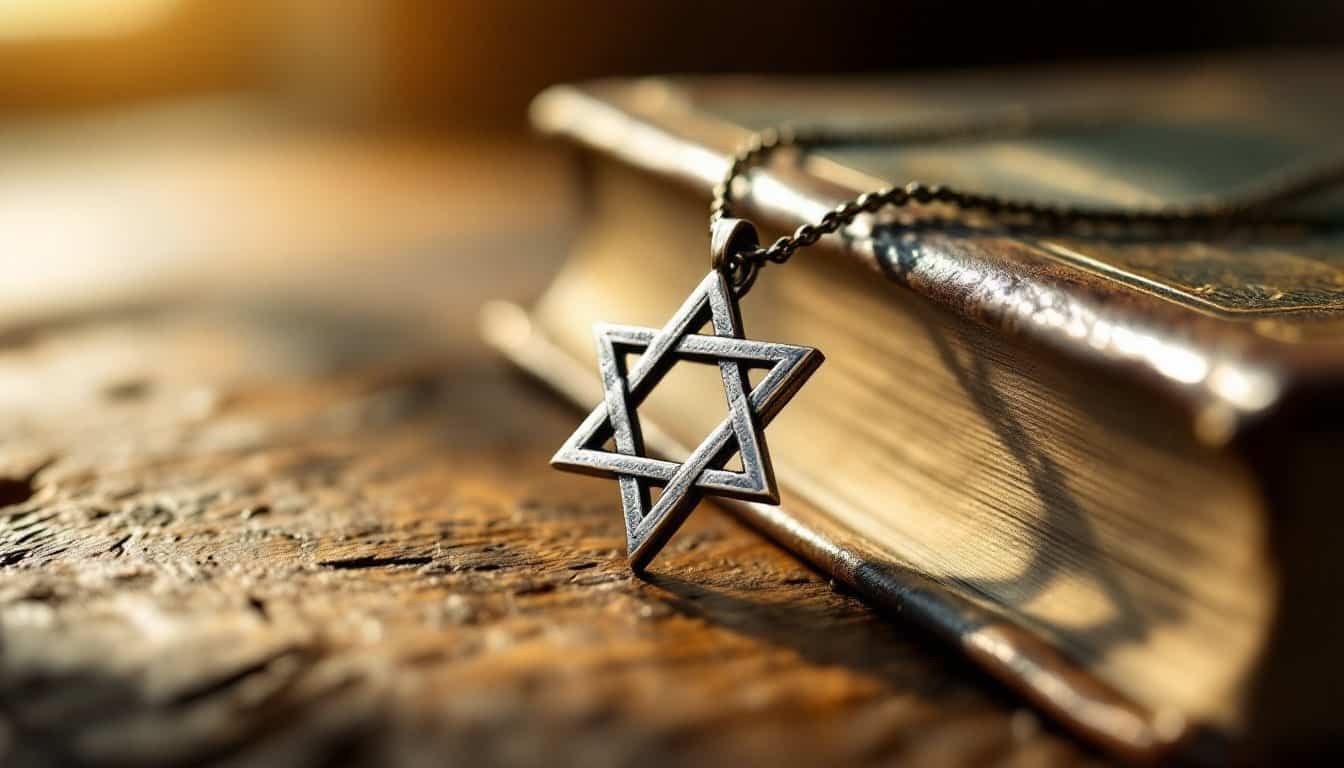
The Magen David, the "shield of David," has become the symbol of the Jewish people. Where does its name come from, what do the Talmud and history say, and what meaning does tradition give it?

Why is Hebrew called the "holy tongue"? Its twenty-two-letter alphabet, its history since the Bible, its survival in prayer and study, and its modern rebirth, explained from the Torah, the Talmud and the great commentators.

Heaven, hell, the soul, resurrection: Judaism says little about the afterlife, but it firmly believes in it. What the Torah, the Talmud and the Sages say about what awaits a person after death.

Why do Pesach and Yom Kippur never fall on the same civil date? The Jewish calendar, both lunar and solar, explained from the Torah to the nineteen-year cycle.