
Weekly Parasha : the Torah reading begins again with Bereshit on Shabbat, October 10, 2026, after Sukkot and Simchat Torah.
I want to set out to discover …

BERESHIT
Bereshit
The Beginning of Creation

Bereshit
The Foundations of the Human Being

Bereshit
The First Murder in History

Noach
Discovering Elokim

Noach
The Loosening of Morals
Noach
The Tower of Babel

Noach
The Three Creations of Man

Lech Lecha
The Third Attempt

Lech Lecha
Man’s Relationship with G-d

Lech Lecha
The War Against the Four Kings (Part Two)
Lech Lecha
The Dialogue of Revelation

Lech Lecha
Avraham versus Pharaoh

Lech Lecha
Lot, Our Neighbor

Lech Lecha
Faith in Motion

Lech Lecha
Avraham’s Journey

Lech Lecha
The War Against the Four Kings (Part One)

Vayera
The Promises to Avraham (Part 1)

Vayera
The Promises to Avraham (Part 2)

Chayei Sarah
The Source of Life

Chayei Sarah
The Death of Sarah (Part 2)

Chayei Sarah
The Family of Avraham

Chayei Sarah
The Death of Sarah (Part 1)

Toledot
The Two Feuding Brothers

Vayetze
The Flight to Haran

Vayetze
The Confrontations of the Patriarchs

Vayetze
The Journey into the Unknown

Vayetze
Rachel and Leah: The Two Faces of Israel

Vayishlach
From Yaakov to Israel

Vayishlach
How to Avoid the Confrontation with Esav

Vayishlach
The Tragedy of Dinah

Vayeshev
Yosef and His Brothers

Vayeshev
The Heritage of the Fathers and the Challenge of the Children

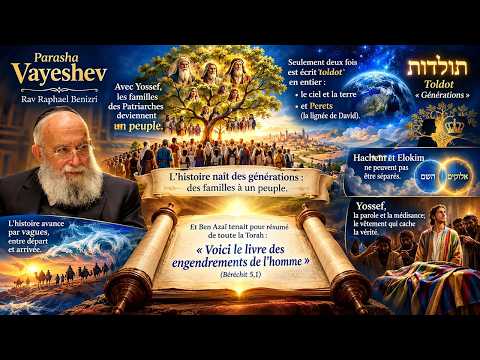
Vayeshev
The Book of Generations

Vayechi
The Instrument of the Family
SHEMOT

Shemot
Naming

Vaera
The Why of Suffering

Beshalach
Have We Really Left Egypt?

Yitro
Who Was Yitro?

Mishpatim
Social Inequalities

Tetzaveh
Elevating the Self

Vayakhel
The Tabernacle Beyond Space

Pekudei
The Inner Tabernacle
Every week, the Jewish people reads the same page. From one end of the world to the other, whether in a synagogue in Casablanca or in a living room in Paris or Jerusalem, the same section of the Torah is opened, read aloud, and discussed. It is one of the oldest and most tenacious habits in Jewish history: a reading that begins again without end and yet never says quite the same thing twice.
That is what the weekly parasha is. An appointment. And like every true appointment, it changes with the person who comes to it. The verse you read ten years ago is waiting for you in the same place; it is you who are no longer the same, and that is why it will tell you something else.
A Reading That Begins Again Every Year
The annual cycle leads from the creation of the world, at the opening of Bereshit, to the last words of Devarim, and then immediately starts over. Nothing is ever truly concluded. The scroll is rolled back and we set out again from the beginning, as if the Torah refused to let us believe we were finished with it.
The lectures gathered on this page follow that cycle. They start from the text itself — a verse, a difficulty, a word that catches the eye — and work back to the question that this detail raises. This is not a summary of the story: it is a way of learning how to read.
What You Will Find in These Lectures
Each study draws on the text and on the commentators who carried it before us: Rashi first, then the midrashim, the medieval masters, and the long, unbroken tradition of interpretation. But the goal is not erudition for its own sake. A parasha studied well always ends up speaking about us: about our hesitations, our family quarrels, our relationship to keeping our word, and what we pass on without knowing it.
The tone is deliberately accessible. One can study seriously without being solemn, and we often understand better once we have smiled. That is the spirit of these lectures: depth, humor, and love for a text we will never finish discovering.
Where to Begin
You can follow the parasha of the current week and join the cycle wherever it happens to be — that is the most natural way. You can also choose a parasha that speaks to you — Bereshit for creation, Lech Lecha for setting out, Shemot for the exodus from slavery — and begin there. There is no wrong point of entry: the reading will come back around in any case.
Continue studying
The Jewish holidays of the calendar and Jewish philosophy — Pirkei Avot (Ethics of the Fathers), Proverbs and the midrash Bereshit Rabbah.
The 54 Parashiot of the Torah
For each parasha: a summary, its themes, a question for the Shabbat table, and the Rav’s lectures where they exist.
Bereshit (Genesis) : Bereshit · Noach · Lech Lecha · Vayera · Chayei Sarah · Toledot · Vayetze · Vayishlach · Vayeshev · Miketz · Vayigash · Vayechi
Shemot (Exodus) : Shemot · Vaera · Bo · Beshalach · Yitro · Mishpatim · Terumah · Tetzaveh · Ki Tisa · Vayakhel · Pekudei
Vayikra (Leviticus) : Vayikra · Tzav · Shemini · Tazria · Metzora · Acharei Mot · Kedoshim · Emor · Behar · Bechukotai
Bamidbar (Numbers) : Bamidbar · Nasso · Behaalotecha · Shelach · Korach · Chukat · Balak · Pinchas · Matot · Masei
Devarim (Deuteronomy) : Devarim · Vaetchanan · Eikev · Re’eh · Shoftim · Ki Teitzei · Ki Tavo · Nitzavim · Vayelech · Haazinu · Vezot Haberachah