
Parasha Mishpatim (משפטים) — Shemot 21:1 – 24:18. Read on Shabbat, February 6, 2027.
Summary of Parasha Mishpatim
Immediately after the giving of the Ten Commandments, the Torah sets out a body of civil and social laws. It opens with the laws of the Hebrew servant, who goes free in the seventh year, and of the Hebrew maidservant. Then come the laws concerning homicide, intentional or unintentional, assault and injury, the respect owed to parents, damage caused by an ox, by a pit left open or by a fire, theft, and the liability of those who guard another person’s property. The Torah forbids mistreating the stranger, the widow and the orphan, and lending at interest; it requires that a garment taken as a pledge be returned before nightfall. It demands impartial justice: one must not follow the majority to do evil, nor accept gifts, nor pervert judgment, whether in favor of the poor or against him; one must return an enemy’s stray animal and help him lift up his donkey. Next come the sabbatical year, Shabbat, the three pilgrimage festivals and the prohibition of cooking a kid in its mother’s milk. G-d promises to send an angel before the people to lead them into the land. Moshe writes down these words, builds an altar and seals the covenant; the people declare: “We will do and we will hear.” Moshe then ascends the mountain, where he remains forty days and forty nights.
The Themes
- Justice in everyday life
- Protecting the stranger and the vulnerable
- “We will do and we will hear”
Rav Raphaël Benizri’s Lectures on Mishpatim
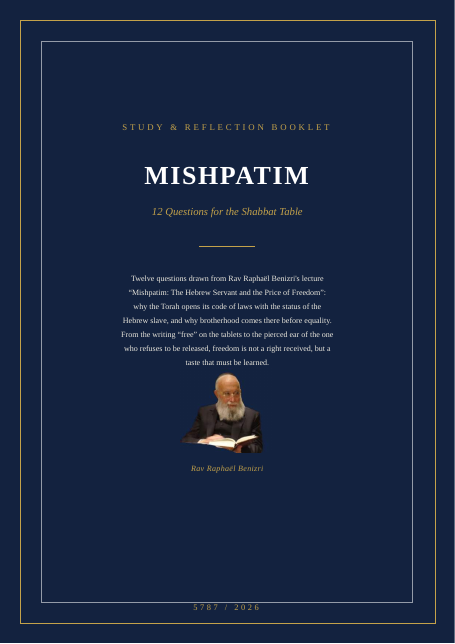
Study booklets for each lecture: questions for the Shabbat table
A Question for the Shabbat Table
Why does the Torah place very concrete laws, about damages or loans, right after the revelation at Sinai?
← Parasha Yitro · All the parashiot · Parasha Terumah →
Summary by the Pensées Juives editorial team. The Rav’s teachings are found in his lectures, linked above.