
Parasha Tetzaveh (תצוה) — Shemot 27:20 – 30:10. Read on Shabbat, February 20, 2027.
Summary of Parasha Tetzaveh
The parasha opens with the command to take pure, crushed olive oil to kindle the lamp of the Sanctuary continually, from evening until morning, under the responsibility of Aharon and his sons. G-d then commands that Aharon and his sons be brought near to serve as kohanim, and that sacred garments be made for them, for honor and for splendor. The Torah describes the garments of the High Priest in detail: the ephod, bearing on its shoulders two stones engraved with the names of the tribes; the breastplate of judgment, set with twelve precious stones, each bearing the name of a tribe, into which the Urim and Tummim are placed; the blue robe, whose hem is adorned with pomegranates and golden bells; the plate of pure gold, bearing the inscription “Holy to G-d,” fastened to the turban; as well as the tunic and the sash. Aharon’s sons receive linen tunics, sashes, headdresses and breeches. G-d then prescribes the seven-day inauguration ceremony of the kohanim: immersion, dressing, anointing and offerings. The parasha institutes the continual offering, one lamb in the morning and one lamb in the evening, and concludes with the description of the golden altar for the incense, which Aharon is to burn every morning and every evening.
The Themes
- The perpetual light
- The garments of the High Priest
- Bearing the names of the tribes
Rav Raphaël Benizri’s Lectures on Tetzaveh
Study booklets for each lecture: questions for the Shabbat table
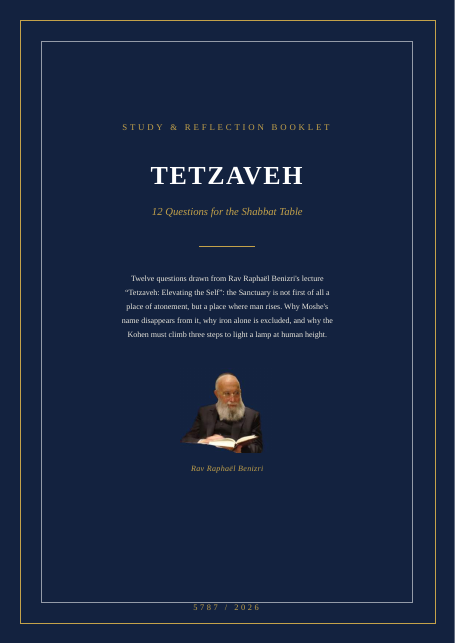
A Question for the Shabbat Table
The High Priest bears the names of all the tribes upon his heart: how can we carry others with us in our actions?
← Parasha Terumah · All the parashiot · Parasha Ki Tisa →
Summary by the Pensées Juives editorial team. The Rav’s teachings are found in his lectures, linked above.