
Parasha Pekudei (פקודי) — Shemot 38:21 – 40:38. Read on Shabbat, March 13, 2027.
Summary of Parasha Pekudei
The parasha opens with the accounts of the Mishkan, drawn up under the direction of Itamar, son of Aharon: the quantity of gold that was offered, the silver from the half-shekel of those counted in the census, which was used to cast the sockets, and the copper used for the altar and the courtyard. The parasha then describes the making of the sacred garments of the kohanim: the efod, the breastplate with its twelve stones, the robe, the tunics, and the golden plate bearing the inscription “Holy to G-d,” each stage concluding with the words “as G-d had commanded Moshe.” The artisans bring all the finished pieces to Moshe. Moshe sees that everything has been done according to G-d’s command, and he blesses them. G-d commands that the Mishkan be erected on the first day of the first month, that the ark be placed behind the curtain, and that the table, the menorah, the golden altar, the altar of sacrifices and the basin be set in place; then the whole is to be anointed and Aharon and his sons consecrated. Moshe carries out everything he has been commanded. Then the cloud covers the Tent of Meeting and the glory of G-d fills the Mishkan, so that Moshe cannot enter it. The book of Shemot ends by stating that, throughout all their journeys, the children of Israel would set out when the cloud rose, and would remain encamped as long as it stayed.
The Themes
- Being accountable
- The completion of the Mishkan
- The cloud of glory
Rav Raphaël Benizri’s Lectures on Pekudei
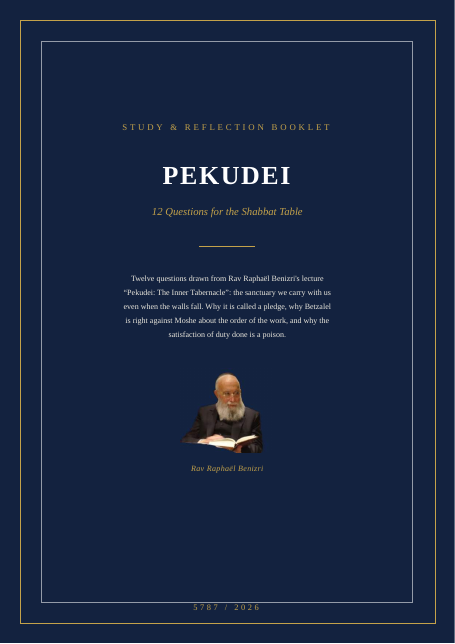
Study booklets for each lecture: questions for the Shabbat table
A Question for the Shabbat Table
Why is it important to give an account of oneself, even when everyone trusts us?
← Parasha Vayakhel · All the parashiot · Parasha Vayikra →
Summary by the Pensées Juives editorial team. The Rav’s teachings are found in his lectures, linked above.