
In the same synagogue in Paris, Jerusalem or New York, you can hear two ways of pronouncing Hebrew, two melodies for the same verse, and two different answers to the question “May I eat rice on Pesach?” Some worshippers are called Ashkenazi, others Sephardic. This article explains where these two names come from, what actually separates the two traditions and, above all, what does not separate them, drawing on the Torah, the Talmud, the Shulchan Aruch and history.
In short: Ashkenazim and Sephardim are one people, with the same Torah, the same Talmud and the same halakha (the law that is practiced). They differ in the history of their exiles: Ashkenazim are the descendants of the communities of Central and Eastern Europe (originally the Rhineland), while Sephardim are those of the Iberian Peninsula and, in the broad sense, of the North African and Middle Eastern communities that follow the same tradition of practice. This history produced different customs (liturgy, pronunciation, cooking, languages) and different halakhic rulings on specific points, based on two great sixteenth-century decisors: Rabbi Yosef Karo for the Sephardim and Rabbi Moshe Isserles (the Rema) for the Ashkenazim. These are two ways of practicing the same Torah, not two Judaisms.
1. Where do these two names come from?
Both words are biblical, but their meaning has traveled a long way.
Ashkenaz is first of all a personal name. In its list of the nations descended from Noah, the Torah names the eldest son of Gomer, a grandson of Yefet (Japheth):
“The sons of Gomer: Ashkenaz, Rifat and Togarmah.”
(Bereshit [Genesis] 10:3) — וּבְנֵי גֹּמֶר אַשְׁכְּנַז וְרִיפַת וְתֹגַרְמָה
Ashkenaz reappears in Yirmeyahu (Jeremiah), among the kingdoms that the L-rd summons against Babylon: “Ararat, Minni and Ashkenaz” (Yirmeyahu 51:27). Here it is a northern people, neighbors of present-day Armenia, not Germany. The application of the name to Europe came later, through reasoning by the Sages. When the Talmud identifies the sons of Yefet with countries known in its own day, it writes:
“‘Gomer’: this is Germamia.”
(Babylonian Talmud, Yoma 10a) — גּוֹמֶר — זֶה גֶּרְמַמְיָא
Germamia is generally understood as Germania, which makes Ashkenaz, the son of Gomer, the symbolic ancestor of the Germans. This reasoning explains why medieval Jews came to call the German lands “Ashkenaz,” and then the Jews who came from there. It is a traditional identification (a biblical name applied to a place), not a genealogy that could be established.
Sefarad is the name of a place of exile, in the prophecy of Ovadia (Obadiah):
“And the exile of this host of the children of Israel, who are among the Canaanites as far as Tzarfat, and the exile of Jerusalem, which is in Sefarad, shall possess the cities of the Negev.”
(Ovadia 1:20) — וְגָלֻת הַחֵל־הַזֶּה לִבְנֵי יִשְׂרָאֵל אֲשֶׁר־כְּנַעֲנִים עַד־צָרְפַת וְגָלֻת יְרוּשָׁלַ͏ִם אֲשֶׁר בִּסְפָרַד יִרְשׁוּ אֵת עָרֵי הַנֶּגֶב
Modern historians most often recognize in this Sefarad a city in Asia Minor, Sardis (Sfarda in the Persian inscriptions), not Spain. But Jewish tradition read it differently. Targum Yonatan (the Aramaic translation attributed to Yonatan ben Uziel) renders “Sefarad” as “Ispamya,” that is, Hispania, and Rashi reports it: “Sefarad: Yonatan translates: Aspamya.” Rashi adds that, according to the interpreters, Tzarfat is the kingdom “that is called France in the vernacular” (Rashi on Ovadia 1:20). This is why the Jews of France were long called “Tzarfatim,” and those of Spain “Sefaradim.” In turn, this verse of exile gave its name to the Iberian communities and then to their descendants.
A useful note: in current usage, “Sephardic” has a narrow meaning (the descendants of the Jews of Spain and Portugal) and a broad meaning, found above all in Israel, covering all non-Ashkenazi Jews who follow the Sephardic tradition of practice, including those of Morocco, Iraq, Persia or Yemen. Sociologists often call them “Mizrahim” (Easterners), a term that appeared with the State of Israel and that many of these communities did not apply to themselves before 1948.
2. Two histories, two exiles
Sefarad: Spain, then the Mediterranean world
Jews lived on the Iberian Peninsula from Roman antiquity. Under Muslim rule (the Umayyad conquest dates from 711), the communities of Al-Andalus enjoyed centuries of brilliant intellectual life: philosophy, Hebrew grammar, liturgical and secular poetry (Shmuel Hanagid, Shlomo Ibn Gabirol, Moshe Ibn Ezra, Yehuda Halevi), biblical commentary (Avraham Ibn Ezra), and finally Moshe ben Maimon, Maimonides (the Rambam, 1138-1204), born in Cordoba and died in Egypt, whose Mishneh Torah is the first complete code of halakha.
The end of this story is well known. On March 31, 1492, the Catholic Monarchs signed in Granada the edict expelling the Jews of Castile and Aragon; Portugal in turn imposed forced conversion in 1496-1497. The exiles scattered: the Ottoman Empire (Constantinople, Salonika, Smyrna, Safed), the Maghreb (Fez, Tetouan, Algiers, Tunis), the ports of Italy, then Amsterdam, Bordeaux and Bayonne, London, and later the Americas. Many of them joined Eastern communities already established, and the two worlds mingled. The “conversos” (Jews converted to Christianity who remained secretly faithful to their Judaism) form a chapter of their own in this history.
To understand the place of Morocco, for example, one must know that its great communities (Fez, Meknes, Marrakesh, Tetouan, Essaouira) include both families settled there since antiquity and exiles from Spain who arrived in 1492, and that they gave the Sephardic world respected scholars, as our article The Torah and the Judaism of Morocco recalls.
Ashkenaz: the Rhineland, then Eastern Europe
At the other end of Europe, Jewish communities settled on the banks of the Rhine (Cologne, Speyer, Worms, Mainz). From the tenth to the eleventh century, they became a leading center of Torah study. Rabbeinu Gershom (“the light of the exile,” died in the eleventh century) taught there; Rashi (Rabbi Shlomo Yitzchaki, of Troyes, 1040-1105) studied in the Rhenish academies before returning to Champagne to write his commentaries, now printed in almost every edition of the Torah and the Talmud. His grandsons and disciples, the Baalei Hatosafot (the “Tosafists”), carried on his work by discussing the Talmud line by line.
These communities lived under threat. In the spring of 1096, the Crusaders massacred the Jews of Speyer, Worms and Mainz; the episode left a deep mark on Ashkenazi memory, which turned it into poems of mourning and martyrologies. Jews were expelled from England (1290) and then from France (1306, and again in 1394), and a large part of the population moved east. In Poland, a charter of protection, the Privilege of Kalisz (1264), opened a new chapter: this is where the great yeshivot, the communities with their own autonomy, and the Yiddish language took shape (a Germanic tongue written in Hebrew letters, which emerged in the Rhenish communities as early as the Middle Ages). In the eighteenth century, it was from this area, Poland-Lithuania and Ukraine, that Hasidism (the Baal Shem Tov) and its opponent, the movement of the Mitnagdim (“opponents”), whose central figure is the Vilna Gaon (1720-1797), would be born.
The Shoah destroyed this world. Before the war, the great majority of the world’s Jews were Ashkenazi (demographic estimates speak of nine out of ten); six million Jews were murdered, and most of them were Ashkenazim of Central and Eastern Europe.
3. What does not change
Before setting out the differences, we must say clearly what is shared. Ashkenazim and Sephardim read the same written Torah, with the same text, word for word. They study the same Mishna and the same Babylonian Talmud. They recognize the same 613 mitzvot, the same principles of faith, and the same basic halakha on Shabbat, kashrut, family purity and the festivals. The Rambam is read and respected by both; so is Rashi. An Ashkenazi Jew and a Sephardic Jew can marry each other without any halakhic difficulty, and this is increasingly common.
The differences concern what halakha calls minhag, custom, and specific rulings on questions that were debated in the Talmud. Yet the Torah itself forbids dividing into opposing camps. The verse “You are the children of the L-rd your G-d; you shall not cut yourselves (lo titgodedu)” (Devarim [Deuteronomy] 14:1) is read by the Sages as a call to unity, according to Resh Lakish:
“‘Lo titgodedu’: do not form separate groups (agudot agudot).”
(Babylonian Talmud, Yevamot 13b) — לֹא תִתְגּוֹדְדוּ, לֹא תֵּעָשׂוּ אֲגוּדּוֹת אֲגוּדּוֹת
In the context of the Talmud, this call concerns courts of a single city that would judge by different rules; it cannot be extended without nuance to every difference of custom. But it points the way: one Torah, lived in communities that respect one another. And the Mishna sets down a principle that applies right away to Ashkenazim and Sephardim, that of the custom of the place:
“One who goes from a place where [such work] is done to a place where it is not done (…) we impose on him the stringencies of the place he left and the stringencies of the place he went to. And let no one change, because of dispute.”
(Mishna Pesachim 4:1) — נוֹתְנִין עָלָיו חֻמְרֵי מָקוֹם שֶׁיָּצָא מִשָּׁם וְחֻמְרֵי מָקוֹם שֶׁהָלַךְ לְשָׁם. וְאַל יְשַׁנֶּה אָדָם, מִפְּנֵי הַמַּחֲלֹקֶת
The Mishna speaks of a specific case (work on the eve of Pesach until midday), but the rule was generalized: one keeps the custom of one’s fathers, respects that of the place where one finds oneself, and does not change it in order to provoke conflict. This principle has allowed communities of different traditions to live together for centuries.
4. Two traditions of halakhic decision
Rabbi Yosef Karo, the Shulchan Aruch and the Rema
Halakha is transmitted through codes. In the sixteenth century, two great rabbis, each on his own side of Europe, fixed the form that practice would take.
Rabbi Yosef Karo (1488-1575), born in Toledo and driven out of Spain in childhood, finally settled in Safed, in the Galilee. There he wrote the Beit Yosef, an immense commentary on the code of the Arba’ah Turim by Rabbi Yaakov ben Asher, and then the Shulchan Aruch (the “Set Table,” written in Safed in 1563 and printed in Venice in 1565), a practical digest. In the introduction to the Beit Yosef, he explains his method:
“The three pillars of instruction, on which the House of Israel relies for its rulings, are the Rif, the Rambam and the Rosh. (…) Where two of them agree on an opinion, we rule the halakha according to them.”
(Beit Yosef, introduction) — שלשת עמודי ההוראה אשר הבית בית ישראל נשען עליהם בהוראותיהם הלא המה הרי”ף והרמב”ם והרא”ש ז”ל (…) שבמקום ששנים מהם מסכימים לדעת אחת נפסוק הלכה כמותם
The Rif (Rabbi Yitzchak Alfasi, who came from the Maghreb and settled in Spain), the Rambam (Maimonides) and the Rosh (Rabbi Asher ben Yechiel, born in Germany and settled in Toledo): two of these three pillars are Sephardic, and the third is an Ashkenazi who became Sephardic through exile. This method explains the weight of Maimonides in Sephardic practice.
In Krakow, Rabbi Moshe Isserles (the Rema, c. 1530-1572) read the Shulchan Aruch and found in it a practice that did not match that of the communities of Central and Eastern Europe. He therefore added to each passage his own notes (hagahot), which indicate the Ashkenazi custom: this is the Mapa, the “tablecloth,” spread over Rabbi Yosef Karo’s set table. Standard editions of the Shulchan Aruch print both: Karo’s text, then, in a different typeface, the Rema’s gloss. The general principle is therefore simple: Sephardim follow Rabbi Yosef Karo (the Maran, “our master”), and Ashkenazim follow Karo as the Rema completes or corrects him.
Later, other authorities carried each tradition forward: on the Ashkenazi side, the Vilna Gaon, then the Mishna Berura (Rabbi Yisrael Meir Hakohen, the Chafetz Chaim, nineteenth-twentieth century); on the Sephardic side, decisors such as the Ben Ish Chai (Baghdad, nineteenth century) or, in our day, Rav Ovadia Yosef (1920-2013), who was Israel’s Sephardic Chief Rabbi and wished to restore to the Sephardic communities the decision-making tradition of the Maran. The communities of Morocco or Yemen also have their own authorities, and each community has its nuances.

5. A few differences, sources in hand
Each of these examples points to a text in which the Shulchan Aruch and the Rema themselves note the gap. They also show that the divergences are generally limited.
Kitniyot: rice and legumes on Pesach
The Shulchan Aruch says that one can fulfill the mitzvah of matza with wheat, barley, spelt, oats and rye, but “not with rice or other kinds of legumes (kitniyot),” which do not ferment, and it permits cooking them. The Rema responds:
“Some forbid (…), and the custom in Ashkenaz is to be strict, and one must not change.”
(Shulchan Aruch, Orach Chaim 453:1, Rema) — ויש אוסרים (…) והמנהג באשכנז להחמיר ואין לשנות
This is why, on Pesach, many Ashkenazim avoid rice, corn, lentils and peas, while many Sephardim eat them. The rule of principle is the Rema’s: one does not change one’s custom.
The Selichot of Elul
The Shulchan Aruch says: “It is customary to rise at dawn to say selichot and supplications from Rosh Chodesh Elul until Yom Kippur.” The Rema specifies: “The custom of the sons of Ashkenaz is not so.” Ashkenazim blow the shofar after the morning service from Rosh Chodesh Elul, and begin selichot only on the Sunday before Rosh Hashana (or that of the preceding week, if Rosh Hashana falls on a Monday or Tuesday) (Orach Chaim 581:1). Sephardim and Ashkenazim thus arrive at Rosh Hashana after preparations of different lengths.
The Omer count and Lag BaOmer
The Shulchan Aruch holds that one does not cut one’s hair until the morning of the thirty-fourth day of the Omer (unless Lag BaOmer falls on a Friday); the Rema notes that “in these countries, his opinion is not followed: one cuts one’s hair on the thirty-third day, one increases joy a little on it, and Tachanun is not said” (Orach Chaim 493:2). The Rema also makes explicit the permission to marry from Lag BaOmer onward (Orach Chaim 493:1).
The blessing at the mikveh
Rabbi Yosef Karo prescribes that the woman say the blessing before immersion, whereas the Rema reports the custom of saying it afterward, once in the water (Yoreh Deah 200:1). See the article What Is a Mikveh and Why Do Jews Immerse in It?.
Polygamy
This is the most spectacular difference. Maimonides writes, following the Talmud:
“A man may marry several wives, even a hundred, at the same time or one after another, and his wife cannot object, provided that he can provide for each of them.”
(Rambam, Mishneh Torah, Hilchot Ishut 14:3) — נוֹשֵׂא אָדָם כַּמָּה נָשִׁים אֲפִלּוּ מֵאָה בֵּין בְּבַת אַחַת בֵּין בָּזוֹ אַחַר זוֹ
The halakha of principle therefore does not forbid polygamy. But Rabbeinu Gershom (around the year 1000) pronounced a cherem (a ban) against anyone who would marry a second wife. According to the Encyclopaedia Judaica, he limited it to the year 1240 (the end of the fifth millennium of the Jewish calendar), but later generations held it to be permanent. The Ashkenazi communities adopted it, and the Shulchan Aruch reports it:
“Rabbeinu Gershom pronounced a cherem against one who marries another woman in addition to his wife.”
(Shulchan Aruch, Even HaEzer 1:10) — ר”ג החרים על הנושא על אשתו
Sephardic communities and most Eastern communities did not adopt it as such: they often insert into the ketubah (marriage contract) a clause forbidding the husband to marry another woman without the first wife’s consent or the permission of the rabbinic court. In practice, polygamy was very rare. In 1950, a rabbinic conference convened by the Chief Rabbis of Israel made monogamy mandatory for all Jews, whatever their community, and Israeli criminal law now prohibits bigamy. The example shows that old differences can also be resolved by a joint decision.
The “Nine Days” before Tisha B’Av
The Shulchan Aruch reports the custom of not eating meat or drinking wine “the week” of the Ninth of Av, with some adding this from Rosh Chodesh, others from the Seventeenth of Tammuz (Orach Chaim 551:9). The common Ashkenazi custom, for its part, observes the nine days that begin on Rosh Chodesh Av, whereas many Sephardic families abstain mainly during the week of the fast. See Why Do We Fast on Tisha B’Av?.
6. Liturgy, languages and everyday customs
Prayer: three major rites
Ashkenazim and Sephardim say the same fundamental blessings, but not quite in the same words or the same order. One distinguishes the nusach Ashkenaz (the rite of the communities of Central and Eastern Europe), the nusach Sefarad and the rite of the Eastern communities (edot hamizrach), each with its local variants. Hasidim, of Ashkenazi origin, mostly pray according to a rite called “Sefarad,” adapted on the basis of the teaching of the Ari (Rabbi Yitzchak Luria, Safed, sixteenth century). The liturgical poems (piyutim) differ greatly: the famous Unetaneh Tokef of Rosh Hashana is said by Ashkenazim and by many communities, while Sephardim sing bakashot (supplications) and a large repertoire of their own.
Hebrew pronunciation and languages
The traditional Ashkenazi pronunciation of Hebrew (for example “Shabbos” for Shabbat, with the tav without a dot pronounced “s”) differs from the Sephardic pronunciation, on which the modern Hebrew spoken in Israel is based. The communities also used different Jewish languages: Yiddish among the Ashkenazim, Judeo-Spanish (Ladino) among the Sephardim of the Ottoman Empire and the Balkans, Judeo-Arabic in the Maghreb and the Near East. These languages have almost disappeared, but their proverbs, songs and cooking survive.
Objects and customs
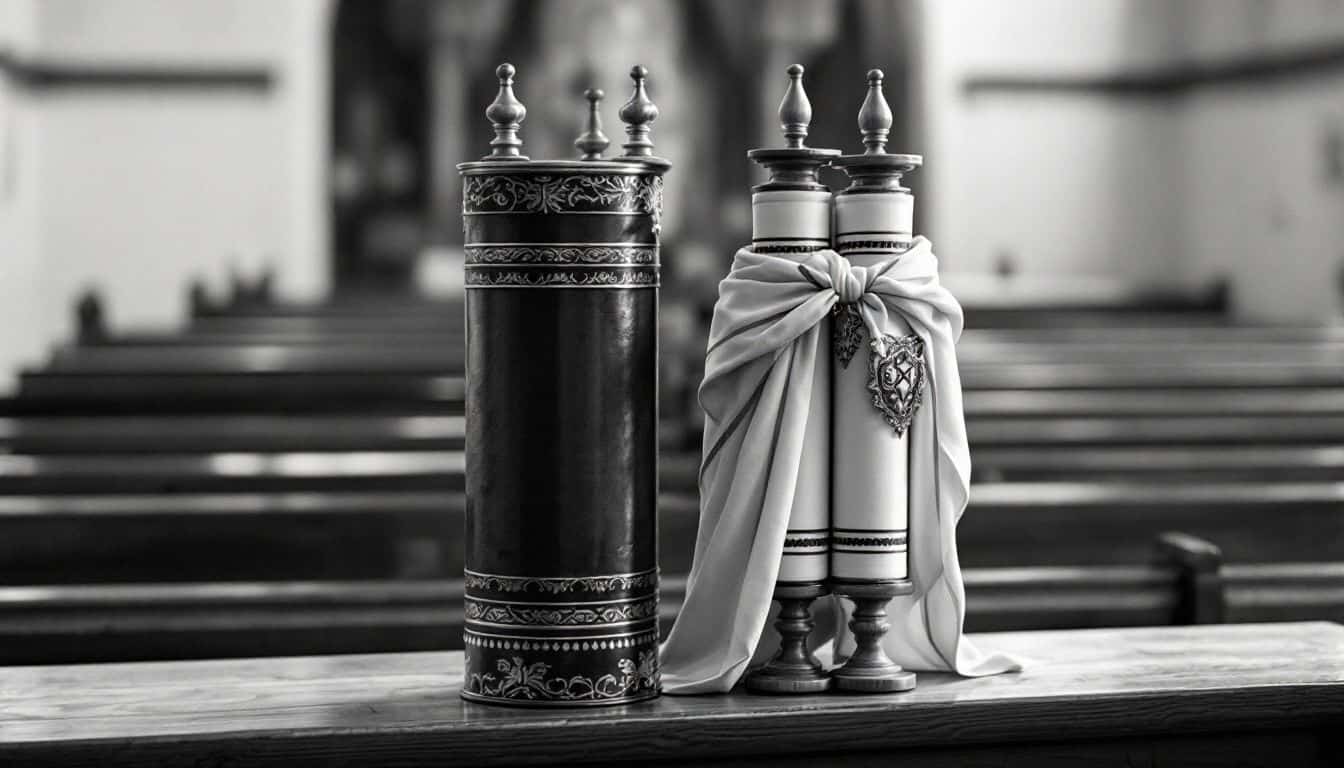
In many Sephardic and Eastern communities, the Torah scroll is kept in a rigid case of wood or metal (the tik), which is opened standing upright on the reading table; among Ashkenazim, it is wrapped in a cloth mantle. Within families, some customs concern names (Sephardim readily give a child the name of a living grandparent, whereas Ashkenazim usually avoid doing so, for reasons of custom that vary). These are community customs, which no one should mistake for laws.
7. The branches
The categories “Ashkenazi” and “Sephardic” group together varied worlds. On the Ashkenazi side, Lithuanian Jews (Litvaks), Hasidic Jews (with their many courts) and German Jews “of the Western rite” have distinct habits of study and prayer. On the Sephardic side, in the broad sense, the Jews of Morocco, Algeria, Tunisia, Libya, Egypt, Syria, Iraq, Persia, Bukhara, Yemen (with its two traditions, Baladi and Shami), Georgia, India or Ethiopia, as well as the Romaniote communities of Greece and the Italian communities, preserve rites of their own, often older than the split between the two great poles. The Jews of Yemen, for example, long preserved a tradition of Torah reading and practice closely tied to Maimonides.
8. Today: one house
In the twentieth century, the Shoah, then the creation of the State of Israel and the exodus of the Jews of the Arab countries (about 850,000 people between 1948 and the early 1980s, according to the usual estimates) shuffled these populations together. In Israel, Jews of Sephardic and Eastern origin make up about half of the Jewish population, according to identification surveys. In France, the community, at first Ashkenazi and partly of old Sephardic stock (Bordeaux, Bayonne, the Comtat Venaissin), became mostly of North African origin after tens of thousands of Jews from Morocco, Algeria and Tunisia arrived in the 1950s and 1960s.
The Chief Rabbinate of Israel, founded in 1921 under the British Mandate, has two Chief Rabbis, one Ashkenazi (the first was Rav Avraham Yitzchak Kook) and one Sephardic (the first was Rav Yaakov Meir; the Sephardic Chief Rabbi bears the title “Rishon LeTzion”), who together embody the duality of the tradition. In the schools, synagogues and yeshivot of Israel, families mix. Population genetics studies (Atzmon and colleagues, 2010) also find a common Near Eastern ancestry among the major Jewish communities, even though their histories later diverged, with varying degrees of admixture with local populations.
What Rav Raphaël Benizri teaches
Rav Benizri has not devoted a lecture to the distinction between Ashkenazim and Sephardim, but two of his lectures touch on it.
- In his lecture on the time of reckoning in Elul, he recalls the difference in custom regarding selichot: “Among the Sephardim, selichot begin on Rosh Chodesh, which makes forty days. Among the Ashkenazim, they begin only four or five days before Rosh Hashana, and a week earlier when days are lacking.” His conclusion shifts the question: “The custom does not matter: it is these daily selichot that condition and surround the movement of return toward G-d.” This is exactly the Shulchan Aruch and the Rema seen above (Orach Chaim 581:1). See the lecture: Elul: The Year’s Reckoning.
- In his lecture on Toledot, the Rav speaks of the ingathering of the exiles (kibbutz galuyot) and of the “different identities” that the people has fused into itself over the course of history, since Egypt. In the transcript of the lecture, he mentions two poles, East and West, symbolized by the figures of Yishmael and Esav, and then he cites Sefarad and Ashkenaz; he sees in this a task for the people: to unite what it has brought back from each. Since the transcript of this passage is imperfect, we cannot go beyond this reminder. See the lecture: Toledot: The Two Enemy Brothers.
Common misconceptions about Ashkenazim and Sephardim
“Sephardic means Eastern, and Ashkenazi means European”
Not exactly. In the strict sense, “Sephardic” designates the Iberian Peninsula; in the broad sense, it is the tradition of practice of communities that did not all pass through Spain. As for Ashkenazim, many live today in the Middle East, America or South Africa: the word designates a lineage and a tradition, not an address.
“Ashkenazim are stricter than Sephardim”
This is a misleading generalization. On kitniyot or polygamy, Ashkenazim are more rigorous; on other points (certain laws of Shabbat, of kashrut, of separation between men and women in traditional Eastern communities), the opposite is sometimes true. Each tradition is strict on some points and lenient on others, and what counts is the point-by-point comparison, sources in hand.
“They are two religions, or two different peoples”
No. The same Torah, the same Talmud, the same mitzvot. Genetic studies of the major Jewish communities find a common Near Eastern ancestry. The differences are comparable to those that exist between regions of a single country.
“A Sephardic Jew cannot pray in an Ashkenazi synagogue”
Nothing forbids praying in the synagogue of another rite, and many people do. One keeps one’s own custom, in principle, for what personally binds one (this is the spirit of Mishna Pesachim 4:1), and one asks the rabbi in case of doubt about a specific custom.
“The Shulchan Aruch is a Sephardic book”
It is a book by Rabbi Yosef Karo, a Sephardi, but it is also the basic book of the Ashkenazim, who add to it the glosses of the Rema. No observant community, whatever its origin, can do without it.
Frequently asked questions about Ashkenazim and Sephardim
What is the main difference between Ashkenazim and Sephardim?
The history of their exiles, which produced different customs (prayers, pronunciation, languages) and different halakhic rulings, with Ashkenazim following the Shulchan Aruch with the glosses of the Rema, and Sephardim the Shulchan Aruch of Rabbi Yosef Karo.
Can a Sephardic man marry an Ashkenazi woman?
Yes. From the standpoint of Jewish law, there is no difference of status. Couples simply need to decide, with their rabbi, which customs they follow at home, and which their children will follow.
What does “Mizrahi” mean?
The word means “Eastern.” In Israel it designates Jews who came from the Muslim countries of Asia and North Africa. From the religious standpoint, many follow the tradition of practice called Sephardic in the broad sense.
What is the practice in Morocco?
Moroccan communities are Sephardic in the broad sense: they combine old local families and exiles from Spain, and in principle follow the Shulchan Aruch of Rabbi Yosef Karo, with strong local customs. For any specific question, consult the rabbi of your community.
Are Hasidim Ashkenazi or Sephardic?
Hasidism was born in the Ashkenazi world, in Poland-Lithuania and Ukraine, in the eighteenth century; but many Hasidic communities pray in the “Sefarad” rite, following the Ari. For halakha, they generally follow Ashkenazi decisors.
What should a Jew do who changes communities?
The Mishna (Pesachim 4:1) invites one to respect the custom of the place where one is without changing that of the place one comes from. In practice, many authorities advise keeping one’s original custom while respecting that of others in public. For a lasting change (marriage, relocation), seek the advice of a rabbi.
Further reading
- Who Is a Jew? And How Does One Become Jewish?
- What Is Hasidism?
- What Is the Talmud?
- What Is a Mikveh and Why Do Jews Immerse in It?
- What Are the Origins of Judaism?
- The Torah and the Judaism of Morocco: Study and Culture
- Elul: The Year’s Reckoning, a Lecture by Rav Benizri
- Glossary of Hebrew Words in Judaism
Sources and references (13)
- Bereshit [Genesis] 10:3
- Devarim [Deuteronomy] 14:1
- Yirmeyahu [Jeremiah] 51:27
- Ovadia [Obadiah] 1:20; Targum Yonatan on Ovadia 1:20; Rashi on Ovadia 1:20
- Mishna Pesachim 4:1
- Babylonian Talmud, Yoma 10a; Yevamot 13b
- Rabbi Yosef Karo, Beit Yosef, introduction
- Rambam, Mishneh Torah, Hilchot Ishut 14:3
- Shulchan Aruch, Orach Chaim 453:1; 493:1-2; 551:9; 581:1; Even HaEzer 1:10; Yoreh Deah 200:1 (with the glosses of the Rema)
- Encyclopaedia Judaica, article “Bigamy and Polygamy” (cherem of Rabbeinu Gershom; rabbinic decision of 1950)
- Historical landmarks: Alhambra Decree (March 31, 1492); forced conversion in Portugal (1496-1497); Rhineland massacres of 1096; Privilege of Kalisz (1264); founding of the Chief Rabbinate of Israel (1921); Rav Ovadia Yosef (1920-2013), Rishon LeTzion from 1972 to 1983
- Gil Atzmon et al., “Abraham’s Children in the Genome Era: Major Jewish Diaspora Populations Comprise Distinct Genetic Clusters with Shared Middle Eastern Ancestry,” American Journal of Human Genetics 86 (2010), pp. 850-859
- Lectures by Rav Raphaël Benizri: Elul: The Year’s Reckoning; Toledot: The Two Enemy Brothers
Article by the Pensées Juives editorial team. Passages attributed to Rav Raphaël Benizri are taken from his lectures published on this site.