
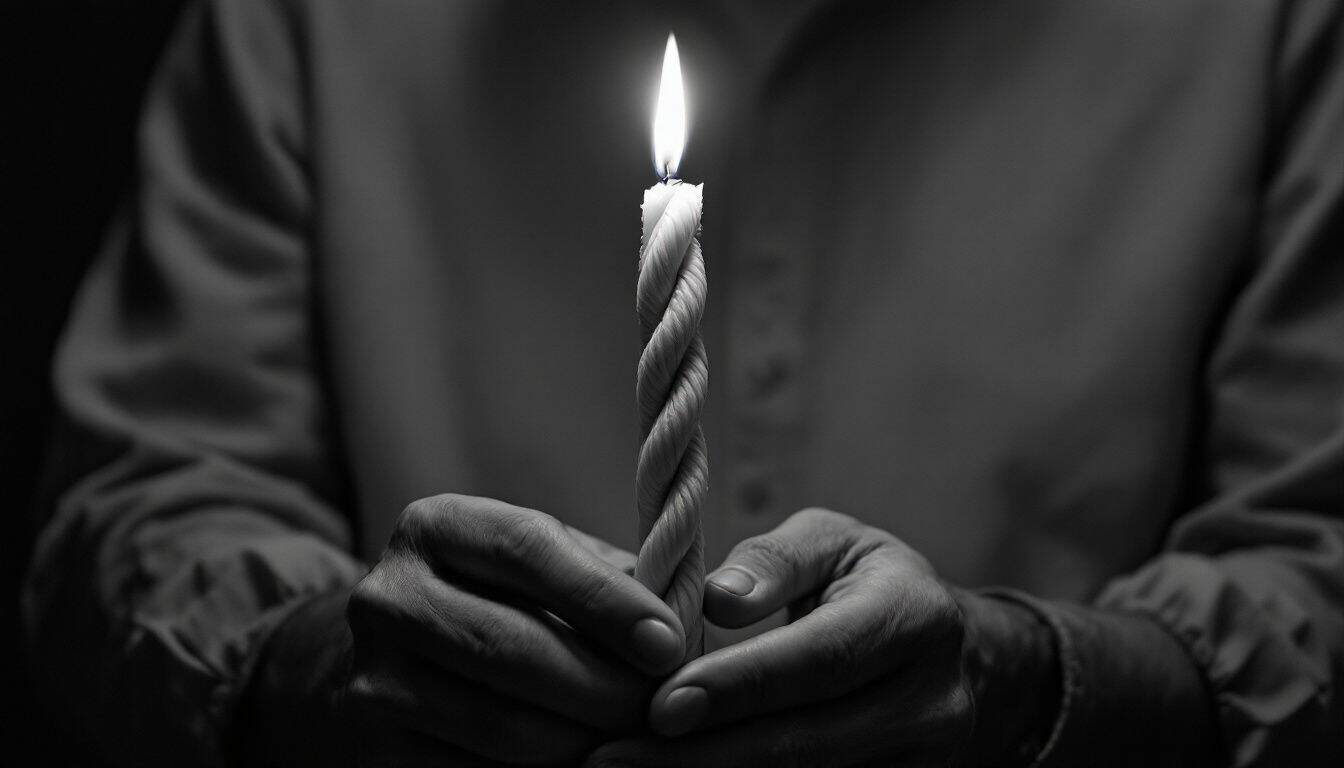
On Saturday night, once three stars have appeared, a braided candle is lit, a cup of wine is raised, a little box of spices passes from hand to hand, and a short blessing separates Shabbat from the week. This ritual is called havdalah, “separation”. Why wine, why spices, why a flame, and what exactly does this blessing separate? This article answers from the Torah, the Mishna, the Talmud, Maimonides and the Shulchan Arukh, distinguishing what is halakha (practical law) from what belongs to moral or mystical reading, and pointing out where customs differ between communities.
In short: havdalah is the blessing that marks the departure of Shabbat, just as Kiddush (the sanctification) marks its arrival. It is said at the synagogue in the Saturday-night prayer, then at home over a cup of wine, with three preliminary blessings: over the wine, over the spices and over the flame (mnemonic order “YaBNeH”: yayin, besamim, ner, havdalah). It concludes with the blessing “who separates between the sacred and the profane, between light and darkness, between Israel and the nations, between the seventh day and the six days of labor”. One neither eats nor drinks (except water) before saying it, and, if it was forgotten, it can be said until the end of Tuesday. Men and women are both obligated.
1. One word, one idea: to separate
The word havdalah comes from the root _bdl_, “to separate, to distinguish”. It is the very verb of Creation: “And G-d saw that the light was good, and G-d separated the light from the darkness” (Bereshit [Genesis] 1:4); “He made the firmament and separated the waters that are below the firmament from the waters that are above the firmament” (Bereshit 1:7). The world is built by drawing boundaries.
The Torah takes up this verb for moral and ritual life: the priests must “distinguish between the sacred and the profane, between the impure and the pure” (Vayikra [Leviticus] 10:10; see also Vayikra 11:47); the Levites are “set apart” from among the children of Israel (Bamidbar [Numbers] 8:14); and Israel itself is “separated from the peoples”: “I am the L-rd your G-d, who have separated you from the peoples” (Vayikra 20:24; Vayikra 20:26). The havdalah of Saturday night condenses these separations.
The Talmud makes it a rule of wording. Rabbi Yehoshua ben Levi teaches that whoever makes havdalah must state separations “like those the Torah states”, and a baraita (a tannaitic teaching external to the Mishna) gives the list:
“What is the order of the separations? One says: ‘He who separates between the sacred and the profane, between light and darkness, between Israel and the nations, between the seventh day and the six days of work; between the impure and the pure, between the sea and the dry land, between the upper waters and the lower waters, between the priests and the Levites and the Israelites.'”
(Pesachim 104a) — הַמַּבְדִּיל בֵּין קוֹדֶשׁ לְחוֹל, בֵּין אוֹר לְחוֹשֶׁךְ, בֵּין יִשְׂרָאֵל לָעַמִּים, וּבֵין יוֹם הַשְּׁבִיעִי לְשֵׁשֶׁת יְמֵי הַמַּעֲשֶׂה, בֵּין טָמֵא לְטָהוֹר, בֵּין הַיָּם לֶחָרָבָה, בֵּין מַיִם הָעֶלְיוֹנִים לְמַיִם הַתַּחְתּוֹנִים, בֵּין כֹּהֲנִים לִלְוִיִּם וְיִשְׂרְאֵלִים
The text recited today retains only four: sacred and profane, light and darkness, Israel and the nations, the seventh day and the six days of labor (the formula given by the Rambam, Mishneh Torah, Hilchot Shabbat 29:3, and by the Tur, Orach Chaim 299).
2. What the Torah says: “Remember the day of Shabbat”
The Torah contains no verse that commands havdalah by name. The foundation is the first word of the fourth commandment:
“Remember (zachor) the day of Shabbat to sanctify it.”
(Shemot [Exodus] 20:8) — זָכוֹר אֶת־יוֹם הַשַּׁבָּת לְקַדְּשֽׁוֹ׃
The Talmud reads this verse as a twofold obligation to “mention” Shabbat aloud, at its entrance and at its departure:
“Our Sages taught: ‘Remember the day of Shabbat to sanctify it’: remember it over wine.”
(Pesachim 106a) — תָּנוּ רַבָּנַן: ״זָכוֹר אֶת יוֹם הַשַּׁבָּת לְקַדְּשׁוֹ״ — זוֹכְרֵהוּ עַל הַיַּיִן
The Rambam draws from it the clearest formulation of the halakha:
“It is a positive mitzvah of the Torah to sanctify the day of Shabbat with words, as it is said: ‘Remember the day of Shabbat to sanctify it’; that is: remember it with a remembrance of praise and sanctification. And one must remember it at its entrance and at its departure: at its entrance by the Kiddush of the day, and at its departure by havdalah.”
(Rambam, Mishneh Torah, Hilchot Shabbat 29:1) — מִצְוַת עֲשֵׂה מִן הַתּוֹרָה לְקַדֵּשׁ אֶת יוֹם הַשַּׁבָּת בִּדְבָרִים שֶׁנֶּאֱמַר (שמות כ ח) “זָכוֹר אֶת יוֹם הַשַּׁבָּת לְקַדְּשׁוֹ”. כְּלוֹמַר זָכְרֵהוּ זְכִירַת שֶׁבַח וְקִדּוּשׁ. וְצָרִיךְ לְזָכְרֵהוּ בִּכְנִיסָתוֹ וּבִיצִיאָתוֹ. בִּכְנִיסָתוֹ בְּקִדּוּשׁ הַיּוֹם וּבִיצִיאָתוֹ בְּהַבְדָּלָה
Let us distinguish two levels. At the level of the Torah, according to the Rambam, the obligation is to sanctify Shabbat by speech, at its entrance and at its departure; the evening prayer and the havdalah blessing within the prayer suffice to fulfill it. At the level of the Sages, the framework is that of the cup of wine: the Rambam specifies that “it is a matter of the words of the scribes (divrei soferim) to sanctify over wine and to make havdalah over wine”, and that, even if one has already made havdalah in the prayer, one must make it again over the cup (Hilchot Shabbat 29:6). The exact status of havdalah (from the Torah or from the Sages) has been discussed among halakhic authorities; here we follow the Rambam’s presentation, and we flag it as a point to be double-checked.
The verse of Shemot 20:8 has a counterpart: “Observe (shamor) the day of Shabbat to sanctify it” (Devarim [Deuteronomy] 5:12). Zachor, “to remember”, and shamor, “to keep”, are the basis of all the laws of Shabbat. Zachor is the mitzvah of speech: Kiddush on Friday night, havdalah on Saturday night.
3. History: from the prayer to the cup
The prayer first
The oldest form of havdalah is an insertion in the prayer. The Mishna (Seder Zeraim, tractate Berakhot) fixes its place: “and the havdalah in [the blessing] chonen hadaat” (Mishna Berakhot 5:2): this is the fourth blessing of the weekday prayer, that of understanding (“You grant man knowledge”) which is said at the Saturday-night service (Ata chonantanu). Rabbi Akiva wanted to say it as a fourth blessing in its own right, Rabbi Eliezer in the blessing of thanksgiving (Mishna Berakhot 5:2).
Why in this blessing? The Talmud gives two reasons:
“Rav Yosef said: since it is wisdom, it was fixed in the blessing of wisdom. And the Sages say: since it is of the order of the profane (chol), it was fixed in a blessing of the profane.”
(Berakhot 33a) — מִתּוֹךְ שֶׁהִיא חָכְמָה, קְבָעוּהָ בְּבִרְכַּת חָכְמָה. וְרַבָּנַן אָמְרִי: מִתּוֹךְ שֶׁהִיא חוֹל, לְפִיכָךְ קְבָעוּהָ בְּבִרְכַּת חוֹל
The separation between sacred and profane is an act of intelligence: knowing how to distinguish is the first form of wisdom. That is why the first of the “profane” blessings of the daily prayer, that of daat (knowledge), welcomes havdalah.
Then the cup
The Talmud tells how the move was made from the prayer to the cup of wine:
“The men of the Great Assembly instituted for Israel blessings and prayers, sanctifications (kedushot) and havdalot. At first they fixed them in the prayer. When they grew rich, they fixed them over the cup. When they grew poor again, they fixed them again in the prayer. And they said: whoever makes havdalah in the prayer must [also] make havdalah over the cup.”
(Berakhot 33a) — אַנְשֵׁי כְּנֶסֶת הַגְּדוֹלָה תִּקְּנוּ לָהֶם לְיִשְׂרָאֵל בְּרָכוֹת וּתְפִלּוֹת, קְדוּשּׁוֹת וְהַבְדָּלוֹת. בַּתְּחִלָּה קְבָעוּהָ בַּתְּפִלָּה. הֶעֱשִׁירוּ — קְבָעוּהָ עַל הַכּוֹס. חָזְרוּ וְהֶעֱנוּ — קְבָעוּהָ בַּתְּפִלָּה. וְהֵם אָמְרוּ: הַמַּבְדִּיל בַּתְּפִלָּה — צָרִיךְ שֶׁיַּבְדִּיל עַל הַכּוֹס
Tradition thus reports that the institution goes back to the “men of the Great Assembly” (Anshei Knesset HaGedolah), the generation of sages at the beginning of the Second Temple, according to tradition. The account, very sober, ties havdalah to the fortunes of the people: when one is rich, one consecrates wine; when one is poor, one makes do with speech. The final result is cumulative: prayer and cup (Shulchan Arukh, Orach Chaim 294:1).
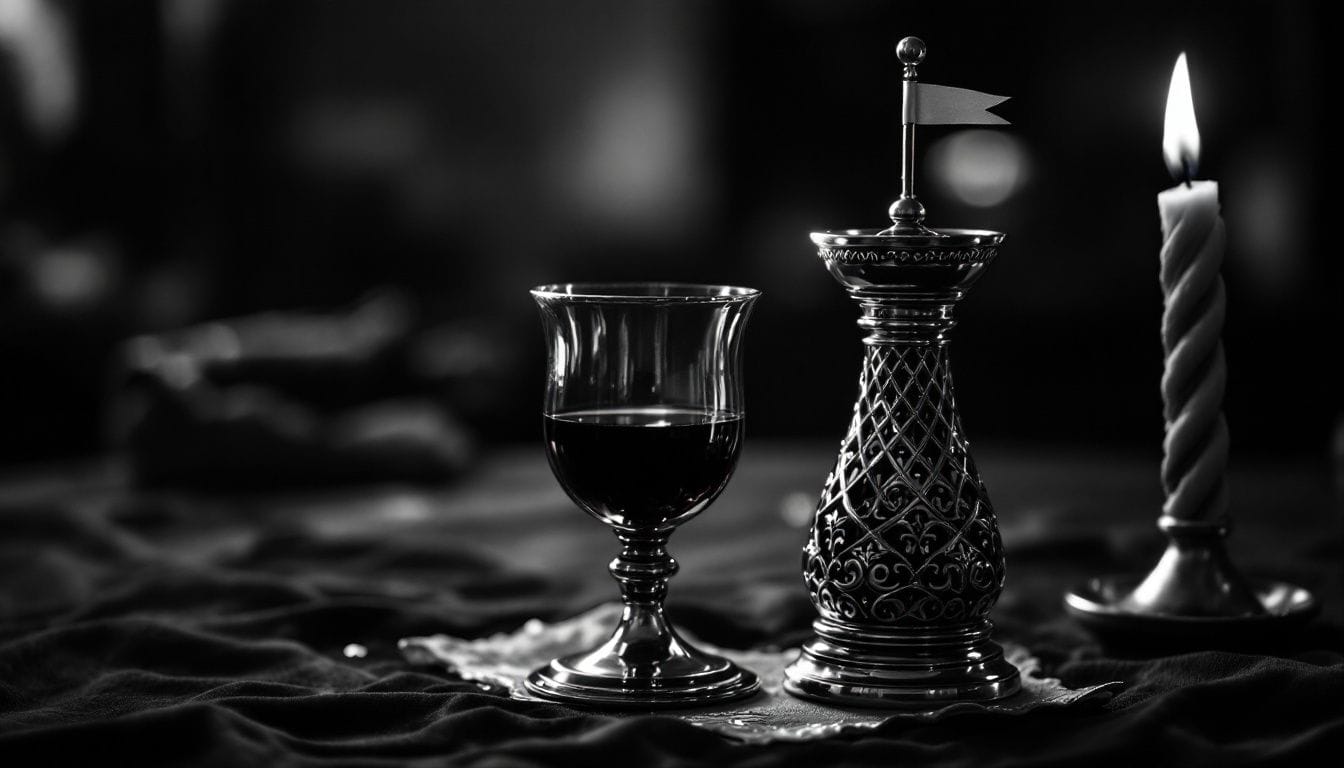
On the historical level, there is no archaeological remnant specific to the havdalah of Shabbat that can be spoken of with certainty; what can be dated are the ritual objects. The spice box (besamim), which became an art object, appears in documented references between the 11th and 13th centuries and spreads widely in the 16th and 17th centuries; the Ashkenazi communities of Poland and Germany favored silver filigree “towers”, often adorned with small bells and little flags, while Sephardi communities made more use of fruit shapes (according to syntheses by Judaica museum specialists; to be confirmed for any reader who wishes to cite these dates).
4. How havdalah proceeds at home
The order: YaBNeH
The Mishna (Berakhot 8:5) records a dispute between the school of Shammai and the school of Hillel about the order of the blessings when a meal extends until the end of Shabbat:
“The school of Shammai says: the flame, the meal, the spices, the havdalah. The school of Hillel says: the flame, the spices, the meal, the havdalah. The school of Shammai says: ‘who created (bara) the light of the fire’; and the school of Hillel says: ‘who creates (borei) the lights of the fire’.”
(Mishna Berakhot 8:5) — בֵּית שַׁמַּאי אוֹמְרִים, נֵר וּמָזוֹן וּבְשָׂמִים וְהַבְדָּלָה. וּבֵית הִלֵּל אוֹמְרִים, נֵר וּבְשָׂמִים וּמָזוֹן וְהַבְדָּלָה. בֵּית שַׁמַּאי אוֹמְרִים, שֶׁבָּרָא מְאוֹר הָאֵשׁ. וּבֵית הִלֵּל אוֹמְרִים, בּוֹרֵא מְאוֹרֵי הָאֵש
The practical halakha, as fixed by the Rambam (Hilchot Shabbat 29:24) and the Shulchan Arukh, is this: wine, spices, flame, then havdalah:
“The order of havdalah at the departure of Shabbat: one blesses over the wine, then over the spices, then over the flame. And how does one bless over the flame? ‘Borei meorei ha’esh’ (who creates the lights of the fire). Then one makes havdalah.”
(Rambam, Hilchot Shabbat 29:24) — סֵדֶר הַבְדָּלָה בְּמוֹצָאֵי שַׁבָּת. מְבָרֵךְ עַל הַיַּיִן וְאַחַר כָּךְ עַל הַבְּשָׂמִים וְאַחַר כָּךְ עַל הַנֵּר. וְכֵיצַד מְבָרֵךְ עַל הַנֵּר, בּוֹרֵא מְאוֹרֵי הָאֵשׁ. וְאַחַר כָּךְ מַבְדִּיל
The Shulchan Arukh (Orach Chaim 296:1) expresses it thus: “סדר הבדלה יין בשמים נר הבדלה וסימנך יבנ״ה” (“the order of havdalah: wine, spices, flame, havdalah; and your mnemonic: YaBNeH”). The Shulchan Arukh adds that one takes care that the cup is not “chipped” (pagum), that is, damaged. The Talmudic echo is found: Rav Ashi explains that “a cup of blessing requires a minimum measure” (Pesachim 106a), and some sages avoided even a pitcher that had already been started.
Note that when a festival falls on Saturday night, the order becomes YaKNeHaZ (yayin, Kiddush, ner, havdalah, zman, the shehecheyanu blessing “of the season”), according to Pesachim 102b-103a, where the halakha is fixed according to the opinion of Rava (Pesachim 103a).
The wine
Havdalah is made over a cup of wine (“cup of blessing”, kos shel bracha). The Rambam specifies (Hilchot Shabbat 29:6) that one blesses over the wine and then sanctifies. If one has no wine, the Shulchan Arukh admits widely consumed local beverages, called chamar medina (literally “the wine of the country”), on the precedent of the Talmud: the sage Ameimar, passing through a place where there was no wine, had at first refused beer, then, learning that wine was rare there, made havdalah over beer (Pesachim 107a). The Shulchan Arukh (Orach Chaim 296:2) takes up the rule: one does not make havdalah over bread, but one may make it over a beverage that is the “wine of the country”, to the exclusion of water. The Rema adds that it is better to make havdalah over wine from a cup that has been started than over beer.
A classic case of conscience: a man who does not have the means to buy wine both for Friday-night Kiddush and for havdalah must buy it for havdalah, “for Kiddush can be made over bread” (Shulchan Arukh, Orach Chaim 296:4). Buying oil for the Chanukah lamp, moreover, takes precedence over buying wine for havdalah (Orach Chaim 296:5).
The spices
Why spices? The Rambam gives the simplest reason:
“Why does one bless over spices at the departure of Shabbat? Because the soul grieves at the departure of Shabbat: one gladdens it and comforts it with a pleasant fragrance.”
(Rambam, Hilchot Shabbat 29:29) — וְלָמָּה מְבָרְכִים עַל הַבְּשָׂמִים בְּמוֹצָאֵי שַׁבָּת מִפְּנֵי שֶׁהַנֶּפֶשׁ דּוֹאֶבֶת לִיצִיאַת שַׁבָּת מְשַׂמְּחִין אוֹתָהּ וּמְיַשְּׁבִין אוֹתָהּ בְּרֵיחַ טוֹב:
This explanation refers back to two Talmudic teachings. First, that of Rabbi Shimon ben Lakish (Resh Lakish): G-d gives man an “additional soul” (neshama yeteira) on the eve of Shabbat and takes it back from him at its departure:
“Resh Lakish said: the Holy One, blessed be He, gives man an additional soul on the eve of Shabbat, and at the departure of Shabbat He takes it back from him, as it is said: ‘He ceased and rested (vayinafash)’ (Shemot 31:17): as soon as he ceased [from work], woe (vai) for the lost soul (nefesh).”
(Beitzah 16a) — רַבִּי שִׁמְעוֹן בֶּן לָקִישׁ: נְשָׁמָה יְתֵירָה נוֹתֵן הַקָּדוֹשׁ בָּרוּךְ הוּא בָּאָדָם עֶרֶב שַׁבָּת, וּלְמוֹצָאֵי שַׁבָּת נוֹטְלִין אוֹתָהּ הֵימֶנּוּ, שֶׁנֶּאֱמַר: ״שָׁבַת וַיִּנָּפַשׁ״, כֵּיוָן שֶׁשָּׁבַת וַוי אָבְדָה נֶפֶש
Then, the principle that the blessing over scents concerns that from which “the soul benefits and not the body”:
“Rav Zutra bar Tuviya said in the name of Rav: from where do we know that one blesses over scent? It is said: ‘Let every soul praise Yah’ (Tehillim [Psalms] 150:6). What is it that the soul benefits from and the body does not benefit from? It is scent.”
(Berakhot 43b) — אָמַר רַב זוּטְרָא בַּר טוֹבִיָּה אָמַר רַב: מִנַּיִן שֶׁמְּבָרְכִין עַל הָרֵיחַ? — שֶׁנֶּאֱמַר: ״כֹּל הַנְּשָׁמָה תְּהַלֵּל יָהּ״. אֵיזֶהוּ דָּבָר שֶׁהַנְּשָׁמָה נֶהֱנֵית מִמֶּנּוּ וְאֵין הַגּוּף נֶהֱנֶה מִמֶּנּוּ? — הֱוֵי אוֹמֵר: זֶה הָרֵיח
The Shulchan Arukh specifies that one blesses over spices “if one has them” and that one need not seek them out at all costs (Orach Chaim 297:1); it excludes spices from a bathhouse, those used for the dead and those of an idolatrous banquet (Orach Chaim 297:2, following Mishna Berakhot 8:6). The Rema notes the Ashkenazi custom of holding the wine in the right hand and the myrtle (hadas) in the left, then switching for the blessing (Orach Chaim 296:6).
Spiritual reading (mussar and kabbalah). The notion of an “additional soul” is the basis of kabbalistic readings: Shabbat elevates man, and the departure of Shabbat is a light mourning, softened by fragrance. This is a reading, not an obligation; halakha simply asks that one bless over a pleasant scent.
The flame
The flame of havdalah has a particular origin, which the Talmud ties to the first man:
“At the departure of Shabbat, the Holy One, blessed be He, gave Adam, the first man, knowledge resembling that on high: he brought two stones, rubbed them against each other, and fire came out of them.”
(Pesachim 54a) — וּבְמוֹצָאֵי שַׁבָּת נָתַן הַקָּדוֹשׁ בָּרוּךְ הוּא דֵּיעָה בְּאָדָם הָרִאשׁוֹן מֵעֵין דּוּגְמָא שֶׁל מַעְלָה, וְהֵבִיא שְׁנֵי אֲבָנִים וּטְחָנָן זוֹ בָּזוֹ, וְיָצָא מֵהֶן אוּר
According to this tradition, fire, conceived on the eve of Shabbat, was in fact “created” only on Saturday night, by the hand of man. The Rambam draws a rule from it: one blesses even over a fire drawn from stones or wood at the departure of Shabbat “because it is the beginning of its creation by people”, whereas at the departure of Yom Kippur one blesses only over a fire that “has rested” (Hilchot Shabbat 29:27).
Several practical rules follow:
- One blesses over the flame only if one can benefit from it (Mishna Berakhot 8:6: “one does not bless over the flame until one has benefited from its light”), that is, if one is close enough to distinguish one coin from another (Rambam, Hilchot Shabbat 29:25; Shulchan Arukh, Orach Chaim 298:4).
- The preferred flame is a torch (avukah), hence the candle with several braided wicks; the Rema specifies that a candle with two wicks counts as a torch (Orach Chaim 298:2).
- The custom of looking at one’s fingernails and the palm of one’s hands by the light of the flame is reported by the Shulchan Arukh, and the Rema gives its form, with a reference to the Zohar (Orach Chaim 298:3). It is a custom of kabbalistic origin; everyone recognizes in it the gesture of “benefiting” from the light by using it.
- One does not bless over a flame belonging to an idolater or lit for the dead (Mishna Berakhot 8:6).
The blessing of separation and the rite
The basic formula is given by the Rambam:
“Blessed are You, L-rd our G-d, King of the universe, who separates between the sacred and the profane, between light and darkness, between Israel and the nations, between the seventh day and the six days of labor. Blessed are You, L-rd, who separates between the sacred and the profane.”
(Rambam, Hilchot Shabbat 29:3) — וְזֶה הוּא נֹסַח הַהַבְדָּלָה. בָּרוּךְ אַתָּה ה’ אֱלֹהֵינוּ מֶלֶךְ הָעוֹלָם הַמַּבְדִּיל בֵּין קֹדֶשׁ לְחל וּבֵין אוֹר לְחשֶׁךְ בֵּין יִשְׂרָאֵל לָעַמִּים וּבֵין יוֹם הַשְּׁבִיעִי לְשֵׁשֶׁת יְמֵי הַמַּעֲשֶׂה בָּרוּךְ אַתָּה ה’ הַמַּבְדִּיל בֵּין קֹדֶשׁ לְחל:
Differences of custom. The Rema reports the Ashkenazi custom of reciting before havdalah verses of salvation and blessing, which open with “Behold, G-d is my salvation” (Yeshayahu [Isaiah] 12:2-3), “I will raise the cup of salvations” (Tehillim 116:13) and “For the Jews there was light and joy” (Esther 8:16), and of looking at the cup and the flame during the blessing. He also reports the custom of letting a little wine overflow onto the table before concluding (“a sign of blessing”) and of using it afterwards to extinguish the flame and, for some, to rub it on their eyes “out of affection for the mitzvah” (Orach Chaim 296:1). The Rema also indicates that havdalah is made standing “in these countries” whereas the Shulchan Arukh wants it made sitting (Orach Chaim 296:6).
The contrast between the Shulchan Arukh’s reading (sitting) and the Rema’s (standing) illustrates a frequent rule: the Mechaber (R. Yosef Karo) reflects Sephardi practice, the Rema Ashkenazi practice.
5. Who, when, and what to do if it was forgotten
When?
Havdalah is said at nightfall, when three “medium” stars have appeared (Rambam, Hilchot Shabbat 5:4). The exact time varies according to the place and the custom of the community: one consults the local calendar. At the synagogue, the cantor says it for those who have no wine (Rema, Orach Chaim 295:1). Even if one heard havdalah at the synagogue, one makes it at home if one had the intention of not fulfilling the obligation through that (Shulchan Arukh, Orach Chaim 296:7).
Prohibitions before havdalah
“Likewise, once the day has ended, it is forbidden to begin eating, drinking, doing work or tasting anything before having made havdalah. Drinking water is permitted.”
(Rambam, Hilchot Shabbat 29:5) — וְכֵן מִשֶּׁיָּצָא הַיּוֹם אָסוּר לוֹ לְהַתְחִיל לֶאֱכל וְלִשְׁתּוֹת וְלַעֲשׂוֹת מְלָאכָה אוֹ לִטְעֹם כְּלוּם עַד שֶׁיַּבְדִּיל. וְלִשְׁתּוֹת מַיִם מֻתָּר
The Shulchan Arukh (Orach Chaim 299:1) takes up the rule, with a nuance: someone who was already at the table before nightfall does not have to interrupt himself. In practice, this is the most frequent subject of questions: one should consult a rabbi for concrete cases (illness, travel, a prolonged meal).
If it was forgotten
“Whoever forgot to make havdalah at the departure of Shabbat makes it until the end of Tuesday (yom shlishi).”
(Shulchan Arukh, Orach Chaim 299:6) — שכח ולא הבדיל במוצאי שבת מבדיל עד סוף יום ג׳
The origin is Talmudic: “the sons of Rabbi Chiya” said that whoever has not made havdalah can make it throughout the week, and Rabbi Zeira set the limit at Wednesday (Pesachim 106a). The Rambam (Hilchot Shabbat 29:4) and the Shulchan Arukh retain “until the end of Tuesday”, with a minority opinion that limits it to Sunday, which the Rema rejects. In this case one says the blessing over wine and “who separates between the sacred and the profane”, but not the blessings over the flame and the spices, which are said only on Saturday night.
Who is obligated?
Men and women are obligated. The Shulchan Arukh writes:
“Women are obligated in havdalah, just as they are in Kiddush; but there is a dissenting opinion.”
(Shulchan Arukh, Orach Chaim 296:8) — נשים חייבות בהבדלה כשם שחייבות בקידוש ויש מי שחולק
The Rema concludes that, as a precaution, women do not make havdalah for themselves but hear it from a man. Depending on the community, the custom varies on this point: one should follow the opinion of one’s rabbi, especially in the case of a woman who lives alone.
6. After havdalah: Eliyahu, Hamavdil, Melaveh Malkah
Eliyahu HaNavi
“Eliyahu HaNavi” is sung at the departure of Shabbat. The Tur (Orach Chaim 295) gives the reason, following an earlier author:
“It is customary to mention Eliyahu the prophet, and [the author abbreviated ‘B”H’] explains the reason: because he is destined to announce the redemption; and it is stated in Eruvin (43b) that it is promised to Israel that Eliyahu does not come on the eves of Shabbatot or on the eves of festivals. Therefore we pray: since Shabbat has passed and he can come, may he come and announce [the redemption] to us.”
(Tur, Orach Chaim 295) — ורגילין להזכיר אליהו הנביא ופירש ב”ה הטעם לפי שהוא עתיד לבשר הגאולה ואיתא בעירובין (מג:) מובטח להן לישראל שאין אליהו בא לא בערבי שבתות ולא בערבי י”ט וע”כ אנו מתפללין כיון שעבר השבת ויכול לבא שיבא ויבשרנו
The promise invoked comes from the Talmud:
“It is already promised to Israel that Eliyahu does not come on the eves of Shabbat or on the eves of festivals, because of the toil [of the preparations].”
(Eruvin 43b) — כְּבָר מוּבְטָח לָהֶן לְיִשְׂרָאֵל שֶׁאֵין אֵלִיָּהוּ בָּא לֹא בְּעַרְבֵי שַׁבָּתוֹת וְלֹא בְּעַרְבֵי יָמִים טוֹבִים, מִפְּנֵי הַטּוֹרַח.
The verse that grounds the expectation is that of Malachi: “Behold, I am sending you Eliyahu the prophet before the great and awesome day of the L-rd comes” (Malachi 3:23). Saturday night is therefore the first moment when one can hope for his arrival; hence the song, which also expresses messianic hope.
The song “Hamavdil”
The song “Hamavdil bein kodesh lechol” is attributed to Yitzchak ibn Ghayat (Spain, 11th century; roughly 1030-1089), originally composed for the Neilah service of Yom Kippur; it became established in the Saturday-night liturgy. The attribution to Ibn Ghayat is a traditional attribution, not established with certainty.
The Melaveh Malkah
The Talmud encourages prolonging Shabbat at the table:
“Rabbi Chanina said: one should always set one’s table at the departure of Shabbat, even if one needs only an olive’s worth.”
(Shabbat 119b) — וְאָמַר רַבִּי חֲנִינָא: לְעוֹלָם יְסַדֵּר אָדָם שֻׁלְחָנוֹ בְּמוֹצָאֵי שַׁבָּת, אַף עַל פִּי שֶׁאֵינוֹ צָרִיךְ אֶלָּא לִכְזַיִת
The Rambam states it as a rule: “to honor it at its entrance and at its departure” (Hilchot Shabbat 30:5), and the Shulchan Arukh (Orach Chaim 300:1) specifies the expression: “to accompany Shabbat” (lelavot et haShabbat). The Mishnah Berurah (300:1) comments: it is a matter of placing a tablecloth on the table, according to the custom of respect, without being obliged to cook more than what one needs to eat. This “escort of the queen” (Melaveh Malkah) is thus the last step of Shabbat.
7. What does havdalah mean? Several levels of reading
Halakha. Havdalah fulfills the obligation to sanctify Shabbat by speech at its departure. Its structure (wine, spices, flame, formula of separation) is fixed by the sources we have read; what is forbidden before it (eating, drinking, working) is defined by the Rambam and the Shulchan Arukh.
Aggada and mussar. Havdalah teaches the art of distinguishing. A day of sacred life does not end with a fall but with a blessing; one does not pass from Shabbat to the week without becoming aware of it. The Talmud even makes it the criterion of intelligence: havdalah is inserted in the blessing of daat (Berakhot 33a).
Kabbalah and Hasidism. The reading of the “additional soul” (Beitzah 16a); the fingernails and the Zohar (Rema on Orach Chaim 298:3); the return of the “wicked” to Gehinnom after Shabbat, the reason, according to the Tur, why the Saturday-night prayer is lengthened (“Vihi noam”, “Ve’ata kadosh”) in order to delay this return (Tur, Orach Chaim 295; Rema, Orach Chaim 295:1). The Tur specifies that in Sepharad this custom is not followed and that one begins directly with “Orech yamim” (Tur, ibid.). These are aggadic and kabbalistic readings, not rules of halakha.
History and archaeology. See above: no archaeological trace of havdalah as such; objects (spice boxes) since the Middle Ages; an institution attributed by the Talmud to the men of the Great Assembly.
Common misconceptions about havdalah
“Havdalah is only a custom.” No: it is an obligation, whose basis the Rambam traces back to the Torah (zachor) and whose framework of the cup is an institution of the Sages (Hilchot Shabbat 29:1 and 29:6).
“Only men say it.” The Shulchan Arukh writes that women are obligated in it (Orach Chaim 296:8); the question is whether they say it themselves or listen to it (see above).
“If you missed it on Saturday night, it is too late.” It can be said until the end of Tuesday (Orach Chaim 299:6).
“Eliyahu HaNavi is mere folklore.” The custom is reported by the Tur (Orach Chaim 295) and relies on Eruvin 43b and Malachi 3:23-24.
“Any candle will do.” The Shulchan Arukh asks preferably for a torch, that is, a flame of several wicks joined together, and it recognizes that a two-wick candle is a torch (Orach Chaim 298:2, Rema).
Frequently asked questions about havdalah
At what time is havdalah made?
At the departure of Shabbat, that is, at nightfall, when three medium stars are visible (Rambam, Hilchot Shabbat 5:4). The exact time depends on the place and the custom of the community, and is found in local calendars.
Can one drink or eat before havdalah?
No, except water (Rambam, Hilchot Shabbat 29:5; Shulchan Arukh, Orach Chaim 299:1). Someone who was already at the table before nightfall may continue his meal according to the prevailing opinion.
What should one do if there is no wine?
The Shulchan Arukh admits a beverage that is the “wine of the country” (chamar medina) (Orach Chaim 296:2), to the exclusion of water; the opinion that nevertheless prefers wine from a started cup over beer is that of the Rema. In other cases, one should consult a rabbi.
Do women have to make havdalah?
The Shulchan Arukh writes that women are obligated in it as in Kiddush, with a dissenting opinion; the Rema advises that they hear it from a man (Orach Chaim 296:8). One follows the custom of one’s community.
Why is the flame extinguished with the wine?
The Rema reports the custom of pouring a little wine from the cup after havdalah, extinguishing the flame with it and, for some, washing their eyes with it, “out of affection for the mitzvah” (chiuv mitzvah) (Orach Chaim 296:1). It is an Ashkenazi custom, not an obligation.
Can it be said late, on Monday or Tuesday?
Yes, until the end of Tuesday, with the blessing over wine and the formula of separation only (Orach Chaim 299:6).
What is the difference from Kiddush?
Kiddush opens Shabbat over a cup of wine and sanctifies the day; havdalah closes it. Both are based on “Remember the day of Shabbat” (Shemot 20:8; Rambam, Hilchot Shabbat 29:1).
Further reading
- The Jewish festivals: the meaning of each festival in video lectures
- “Parfums de Shabbat”: Rav Benizri’s book
- “Les Arômes d’une bénédiction”: the berakhot
- Glossary of Hebrew words of Judaism
- Free booklets: questions to ask at the Shabbat table
- Why eight candles on Chanukah? The meaning of the 8 lights
- What is Shabbat?
- Why do women light the Shabbat candles?
- What is a mikveh?
Sources and references (18)
- Bereshit (Genesis) 1:4; 1:7
- Shemot (Exodus) 20:8; 31:17
- Vayikra (Leviticus) 10:10; 11:47; 20:24; 20:26
- Bamidbar (Numbers) 8:14
- Devarim (Deuteronomy) 5:12
- Yeshayahu (Isaiah) 12:2-3; Tehillim (Psalms) 116:13; 150:6; Esther 8:16; Malachi 3:23-24
- Mishna Berakhot 5:2; 8:5; 8:6
- Babylonian Talmud, Berakhot 33a; 43b
- Babylonian Talmud, Pesachim 54a; 102b-103a; 104a; 106a; 107a
- Babylonian Talmud, Beitzah 16a
- Babylonian Talmud, Shabbat 119b
- Babylonian Talmud, Eruvin 43b
- Rambam, Mishneh Torah, Hilchot Shabbat 5:4; 29:1; 29:3-6; 29:24-25; 29:27; 29:29; 30:5
- Tur, Orach Chaim 295; 299
- Shulchan Arukh, Orach Chaim 294:1; 295:1; 296:1-8; 297:1-2; 298:2-4; 299:1; 299:6; 300:1 (with the glosses of the Rema)
- Mishnah Berurah, Orach Chaim 300:1
- Piyut “Hamavdil bein kodesh lechol”, attributed to Yitzchak ibn Ghayat (11th century)
- Syntheses on the history of spice boxes (besamim): Forgotten Judaica, “Understanding the Besamim Box”
Article by the Pensées Juives editorial team.