

A carefully tied headscarf, a beret, a hat, sometimes a wig so natural that you would never notice it: in the traditional Jewish world, a married woman does not go out with her hair uncovered. Why only after marriage? Why a wig, which seems to show the very thing it is supposed to hide? And what does the word tzniut, “modesty”, mean, a word also heard in connection with skirts and long sleeves? Here is a complete answer, from the verses of the Torah to the customs of today.
In short: a married Jewish woman covers her hair because the Torah, in the passage about the woman suspected of infidelity (Bamidbar 5:18), implies that a covered head is the norm for a married woman, and the Talmud derived an obligation from it (Ketubot 72a). A married woman’s hair is regarded as an intimate part of her beauty, reserved for her marriage (Berachot 24a). The Rambam and the Shulchan Aruch codify it as law (Hilchot Issurei Bi’ah 21:17; Even HaEzer 21:2). The way of covering varies from community to community: headscarf (tichel), hat, beret or wig (sheitel). The practice belongs to a broader value, tzniut, which applies to men and women alike: discretion, the refusal to reduce a person to their appearance.
What the Torah says: the woman “with her head uncovered”
Nowhere does the Torah state explicitly: “a married woman shall cover her head.” The source is indirect, and that is precisely what makes it interesting. It is found in the passage of the sotah, the woman whose husband suspects her of infidelity, in the book of Bamidbar (Numbers). During the procedure, which took place in the Temple, the kohen (the priest) had to perform a specific gesture: “The kohen shall stand the woman before the L-rd and uncover the woman’s head (ufara et rosh ha’ishah)” (Bamidbar 5:18).
The Sages reasoned as follows: if, in order to shame a suspected woman publicly, her head is uncovered, then under normal circumstances a married woman’s head is covered. The Sifrei, the Sages’ classic commentary on the book of Bamidbar, records this inference: the gesture “teaches that the daughters of Israel cover their heads” (Sifrei Bamidbar 11). The Talmud repeats it in the name of the school of Rabbi Yishmael, as “a warning to the daughters of Israel not to go out with their heads uncovered” (Ketubot 72a).
The Written Torah also offers images that nourished this idea. When Rivka sees Yitzchak for the first time, as she is about to become his wife, “she took the veil and covered herself” (Bereshit [Genesis] 24:65). From the time of the patriarchs, the act of covering oneself marks the entry into a marital relationship. And when the angels ask Avraham, “Where is Sarah your wife?”, he answers: “Here, in the tent” (Bereshit 18:9). Rashi, drawing on the Talmud (Bava Metzia 87a), reads this as praise: Sarah was tzenu’ah, discreet, and her greatness did not put itself on display.
The Mishnah and the Talmud: “the law of Moshe” and “Jewish law”
The Mishnah, the first codification of the Oral Torah (around the year 200), takes up the subject in tractate Ketubot, which deals with the marriage contract. It lists the behaviours by which a woman “transgresses the law of Moshe and Jewish law” (dat Moshe vihudit). Among them: “going out with her head uncovered” (Mishnah Ketubot 7:6).
The Gemara (Ketubot 72a-b) immediately raises a question: if the obligation comes from the Torah itself, as was deduced from the verse about the sotah, why classify it under “Jewish law”, that is, among the customs adopted by the women of Israel? It answers by distinguishing two levels:
- Dat Moshe, the “law of Moshe”, which comes from the Torah: not to go out with one’s hair completely uncovered. At this level a minimal covering is enough; the Talmud speaks of a kalta, a kind of small basket or cap placed on the head.
- Dat yehudit, “Jewish law”, meaning the standard of modesty set by Jewish women themselves and endorsed by the Sages: a fuller covering that goes beyond that minimum.
This distinction is crucial: the principle of the covered head is considered biblical in origin, but its concrete form has always depended partly on the customs of each community. Hence different practices, all grounded in the same text.
The Talmud also records the teaching of Rav Sheshet: “a woman’s hair is ervah” (Berachot 24a), that is, an intimate part of her person. He bases it on a verse from the Song of Songs, in which the bridegroom describes the beauty of his beloved: “Your hair is like a flock of goats” (Shir HaShirim 4:1). Hair is thus identified as an element of beauty that touches on the intimacy of the couple. The practical consequence, discussed in that passage, is that a man does not recite the Shema facing the uncovered hair of a married woman.
The law: the Rambam and the Shulchan Aruch
The great codes of Jewish law adopted this teaching. The Rambam (Maimonides, 12th century) writes in his Laws of Forbidden Relations: “The daughters of Israel shall not go about in the marketplace with their heads uncovered, whether unmarried or married” (Mishneh Torah, Hilchot Issurei Bi’ah 21:17). In his Laws of Marriage, he defines “Jewish law” as “the customs of modesty practised by the daughters of Israel” and lists first going out without one’s head fully covered (Hilchot Ishut 24:12).
The Shulchan Aruch, the standard code written by Rabbi Yosef Karo in the 16th century, restates the same rule in the same words (Even HaEzer 21:2). It also draws the consequences for prayer: one does not recite the Shema facing the hair of a woman who is required to cover it (Orach Chaim 75:2). Finally, it notes that a woman who publicly transgresses these rules of modesty may, under the law of marriage, forfeit the rights of her ketubah, the marriage contract (Even HaEzer 115:4). This shows how seriously the tradition takes this commitment: it is part of the marital covenant itself.
Why only married women?
Yet the Rambam and the Shulchan Aruch also mention the “unmarried” woman. The commentators explain this in different ways: it may refer to a woman who has already been married (a widow or divorcee), or simply to a standard of grooming for young women, who should not go out with their hair loose and dishevelled. In practice, the established custom is clear: the obligation to cover the hair applies to a woman who has been married, and a young woman who has never married may leave her hair uncovered (Rema on Orach Chaim 75:2). The Mishnah offers a striking clue: at her wedding, a young bride was led to the chuppah (the wedding canopy) “with her head uncovered”, her hair loose, and this was even the proof that she was marrying for the first time (Mishnah Ketubot 2:1).
Loose hair is the mark of the young girl, covered hair that of the wife: from the wedding onward, what was visible to all becomes reserved for the home. A widow or a divorcee continues to cover her head, since she has been married.
The reasons: why cover the hair?
Jewish tradition did not merely state the rule; it sought to understand its meaning. Several levels of explanation exist side by side, and they complement one another.
A beauty reserved for the couple
The first meaning is the Talmud’s: hair is a part of feminine beauty that touches on intimacy (Berachot 24a). By covering it, a married woman affirms that this part of her allure now belongs to the marriage. This is not a negative judgement on beauty, which the Bible often celebrates; it is a way of giving it an address.
A visible sign of marriage
In the ancient world as today, a head covering says something about the woman who wears it. Like a wedding ring on the finger, a headscarf or hat shows that a woman is committed to a marriage. But this sign is lived from within: every morning, the woman who covers her head renews, through a single gesture, the choice of her home.
Tzniut: being present without being on display
The word tzniut, often translated as “modesty” or “humility”, comes from the root tzana, found in the prophet Michah: “What does the L-rd require of you? Only to do justice, to love kindness and to walk humbly (hatzne’a lechet) with your G-d” (Michah 6:8). Tzniut is therefore not first and foremost a matter of clothing: it is an attitude of discretion, a refusal to make a spectacle of oneself. It applies to men and women alike. The Sages even read in Bilam’s blessing, “How goodly are your tents, O Yaakov” (Bamidbar 24:5), praise for the people of Israel, whose tents did not open facing one another, so as to preserve everyone’s privacy (Bava Batra 60a, cited by Rashi).
The psalmist sums it up: “All the glory of the king’s daughter is within” (Tehillim [Psalms] 45:14). From this perspective, covering one’s hair is not self-effacement; it is shifting the centre of gravity from appearance to the person.
The mystical dimension
The Zohar, the foundational book of Kabbalah, places strong emphasis on this mitzvah. Commenting on the passage of the sotah, it states that a woman who takes care that her hair is not uncovered, even inside her home, draws blessing upon her household: her children will rise above others and her husband will be blessed (Zohar III, 125b-126a, parashat Nasso). The Talmud also tells the story of Kimchit, a woman who had seven sons who all became high priests. When the Sages asked her what had earned her this merit, she replied: “In all my days, the beams of my house never saw the braids of my hair” (Yoma 47a).
For the kabbalists, what one covers, one protects and sanctifies, just as the Holy of Holies in the Temple was veiled by a curtain.
Headscarf, hat or wig: the ways of covering
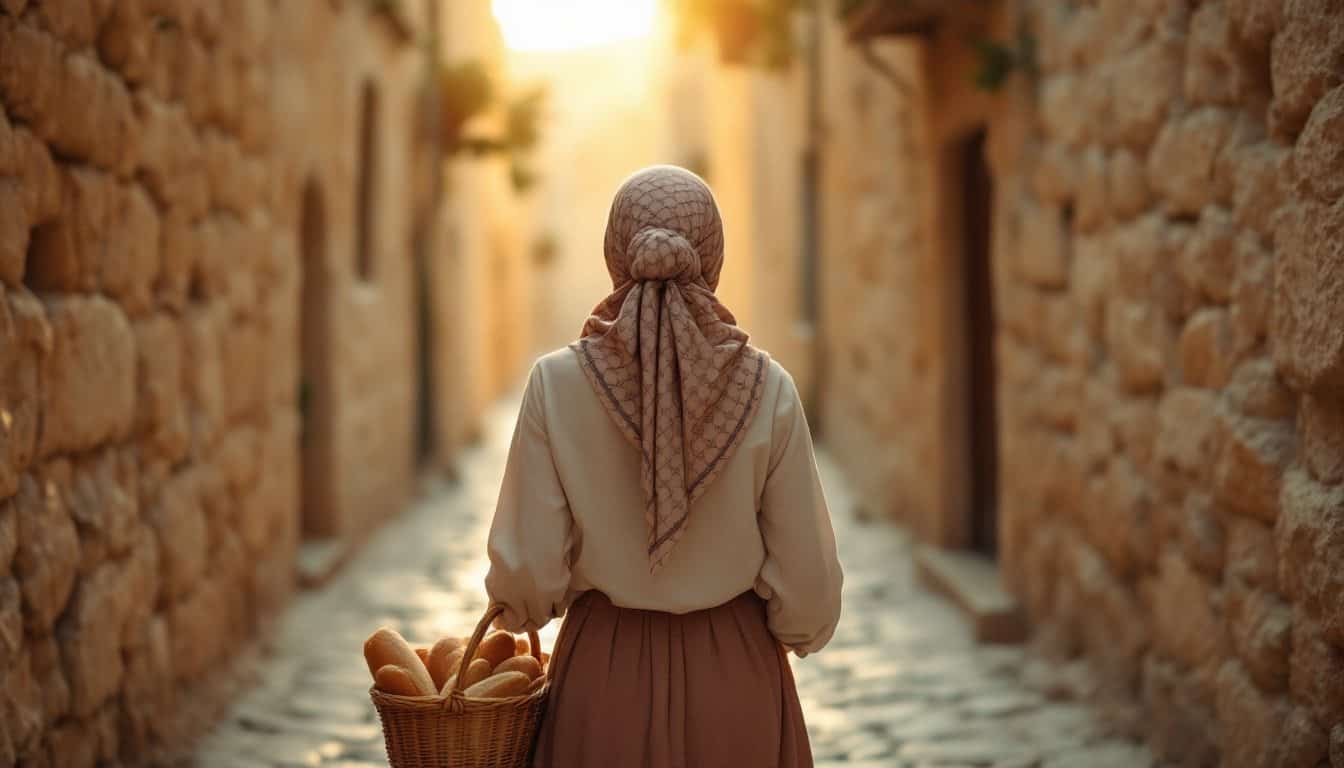
In practice, each community developed its own customs. Today one mainly finds:
- The headscarf or tichel (a Yiddish word), tied in countless ways, often colourful and elegant. It is the most widespread custom in Sephardi communities and among many women in Israel.
- The beret, hat or turban, worn alone or over a snood.
- The wig, called a sheitel (in Yiddish) or pe’ah nochrit (“foreign hair” in Hebrew), especially common among Ashkenazim and in the Chassidic world.
- In some Chassidic communities of Hungarian origin, the custom is even to shave the head after marriage and wear a headscarf, to be sure that no hair shows.
How much of the hair must be covered has been debated by the halachic authorities. Many allow a few hairs to show at the forehead or near the temples, while others are stricter (see in particular Rav Moshe Feinstein, Igrot Moshe, Even HaEzer 1:58). For personal practice, each woman should consult a rabbi of her community.
The wig controversy
The wig is what puzzles people most: why would a woman who has to hide her hair wear false hair, sometimes more beautiful than her own? The rabbis themselves debated it.
Those who permit it rely on the Mishnah, which already mentions the pe’ah nochrit, the hairpiece worn by women of that time (Mishnah Shabbat 6:5). In the 16th century, the Shiltei HaGiborim, an Italian commentator, concluded that the obligation concerns the woman’s own hair, which is bound up with her intimacy, and not hair that is not part of her body. This position was adopted by the Magen Avraham (on Orach Chaim 75), the Mishnah Berurah and Rav Moshe Feinstein (Igrot Moshe, Even HaEzer 2:12). The Lubavitcher Rebbe strongly encouraged the wig, which a woman keeps on more easily in all circumstances than a headscarf.
Other authorities opposed it, fearing that the wig would empty the mitzvah of its very meaning: if a married woman can no longer be told apart from a young unmarried girl, and if the wig is more attractive than natural hair, what is left of modesty? In the Sephardi world, Rav Ovadia Yosef, former Sephardi Chief Rabbi of Israel, advised against the wig in his responsa and recommended a headscarf or hat, while acknowledging that other authorities permit it.
Both positions share the same goal and differ on the means; practice generally follows the tradition of the community. One point is unanimous: a provocative wig would run counter to the spirit of the law.
Skirts, sleeves and necklines: tzniut in daily life
Covering the hair is part of a broader set of rules of dress, which in their broad outlines apply to all women, married or not, from the age of mitzvot.
The Talmud teaches that a tefach (a handbreadth) uncovered of a part of the body that is normally covered is considered a breach of modesty (Berachot 24a), a rule restated by the Shulchan Aruch in connection with prayer (Orach Chaim 75:1). Building on this notion of “normally covered areas”, more recent authorities set the rules commonly followed in the Orthodox world: the neckline covered up to the collarbones, the arms covered at least to the elbows, and the legs covered to the knees and beyond, including when seated.
Why a skirt rather than trousers? Two reasons are usually given. The first is modesty: trousers outline the shape of the body. The second comes from a verse in the Torah: “A woman shall not wear a man’s garment, nor shall a man put on a woman’s garment” (Devarim [Deuteronomy] 22:5). Since trousers were long a man’s garment, many authorities advised women against them. On this point, opinions and customs vary from one community to another.
Tzniut does not stop at clothing: it concerns the way one speaks and behaves, and it binds men just as much. The Talmud thus records Rabbi Yossi’s praise of his own modesty: “the beams of my house have never seen the hem of my tunic” (Shabbat 118b), a phrase very close to Kimchit’s.
A bit of history
The custom of covering a married woman’s head is not unique to the Jewish people; it was widespread throughout the ancient Near East. A collection of Assyrian laws dating from around 1100 BCE (the “Middle Assyrian Laws”, article 40) already requires married women to veil themselves in public and forbids it to certain other women.
What sets the Jewish tradition apart is the meaning it gave to this custom and its faithfulness to it across the centuries. In the Middle Ages, in Muslim lands as in Europe, married Jewish women wore caps, bonnets or headscarves, often richly embroidered; in Morocco, Yemen or Eastern Europe, these head coverings were genuine family treasures, and the Israel Museum in Jerusalem holds fine examples of them.
The wig appeared among Jewish women at the time it became fashionable in Europe, in the 17th and 18th centuries, and, as we have seen, sparked rabbinic debate. In the 19th and early 20th centuries, with emancipation and assimilation, many Jewish women in Western Europe gave up covering their hair. Since the second half of the 20th century, by contrast, the practice has seen a major revival, in Israel and the Diaspora alike, led by many women who choose it with full knowledge and see it as an expression of their identity.
What Rav Raphaël Benizri teaches
Rav Benizri did not devote a specific lecture to hair covering, but several of his lectures shed light on the heart of the question: the relationship between outer beauty and inner values, and the place of discretion in the feminine.
The beauty that does not wear out
In his lecture on Bereshit Rabbah (chapter 40, part 1), devoted to Sarah’s beauty at the moment Avraham goes down to Egypt, the Rav comments on Avraham’s observation: “We are entering a land that judges only by appearances.” In that society, he explains, things are valued only for their exterior, their surface, their usefulness, and a woman risks becoming an “object of desire” there. Yet, he says, “every outward appearance eventually wears out”: that kind of beauty is bound to wrinkle and lose its lustre, “whereas the beauty that reflects inner values stands up to every trial.” The midrash, he stresses, does not say that Sarah was “beautiful” but “pleasing”: her beauty was the harmony of her values.
“Charm is deceptive and beauty is vain”
In the lecture Eshet Chayil, part 4, devoted to the last verse of the hymn to the woman of valour, “Charm is deceptive and beauty is vain; a woman who fears the L-rd, she shall be praised” (Mishlei [Proverbs] 31:30), the Rav points out that the Bible does not despise beauty: it acknowledges it in Sarah, Rivka, Rachel, Yosef and David. But grace and beauty “are worth nothing when they are independent of the fear of G-d.” Taken on their own, they are no more than an “outward flash”, and the relationship becomes “dependent on conditioning from without rather than from within”; they can even make the woman “the object of the desire she projects outward.” Which, he immediately adds, “does not mean that she should not assert her worth in society and make her mark there.”
This is exactly the balance tzniut seeks: neither self-effacement nor exhibition, but a presence that refuses to be reduced to appearance.
Restraint and discretion
In Eshet Chayil, part 1, the Rav answers a question about the place of women with regard to the commandments. The Torah, he explains, came to “condition” the brazenness and pride that threaten man; woman needs this less, because she “does not seek to push herself forward” and has “a restraint and discretion of her own.” For the Rav, this discretion is not a weakness but a strength: it is through it that woman becomes “the inspiration of man”, and he concludes with the verse from Mishlei that the woman of valour is “the crown of her husband.”
The image speaks for itself: a crown is worn on the head. A married woman’s headscarf or hat can be read in this spirit, not as a veil that erases, but as a crown that proclaims the dignity and worth of the one who wears it.
Frequently asked questions about Jewish women and hair covering
Do unmarried Jewish girls have to cover their hair?
No. According to Jewish law, the obligation begins with marriage; a young woman who has never married may leave her hair uncovered (Rema on Orach Chaim 75:2). In Yemen, however, by local custom, girls did cover their heads.
Does a woman have to cover her hair at home?
The law requires covering in public. At home, in front of her husband and close family, most authorities allow the hair to be left uncovered. Some women, following the Zohar and the story of Kimchit, always keep a small scarf on. For the precise rule, consult a rabbi.
Is it a religious obligation or a custom?
Both. The principle of the covered head is derived from the Torah itself (Bamidbar 5:18; Ketubot 72a): this is the “law of Moshe”. The precise way of covering belongs to “Jewish law”, that is, the modesty customs of the women of Israel, which vary from community to community.
Does a Jewish woman have to wear a skirt?
In the Orthodox world, yes: a skirt or dress covering the knees is the norm, for reasons of modesty and because of the verse forbidding the wearing of the other sex’s clothing (Devarim 22:5). Customs vary on the exact length and on whether trousers are accepted in some circles.
Is it a sign that women are inferior?
That is not how Jewish tradition understands it. Tzniut applies to men too, who cover their heads with a kippah and must also dress and behave with discretion. For many women, it is a choice of identity and dignity.
When does a woman start covering her hair?
On the wedding day. Depending on custom, the woman covers her head either at the end of the ceremony or from the following morning.
Further reading
A married woman’s headscarf does not hide a shame; it guards a treasure. It is a reminder that what matters most in a person is not what one sees first, and that a couple needs a space that the eyes of others do not enter.
- Bereshit Rabbah 40, part 1: Sarah’s beauty
- Eshet Chayil, part 1: the status of the feminine
- Eshet Chayil, part 4: the fear of G-d
- Vayetze: Rachel and Leah, two faces
- Why do Jews wear a kippah?
- The Jewish wedding: chuppah, ketubah and the broken glass
- Why do some Jews dress in black and white, with a hat?
- Glossary of Hebrew words in Judaism
Sources and references
- Bereshit (Genesis) 18:9; Rashi on this verse
- Bereshit (Genesis) 24:65
- Bamidbar (Numbers) 5:18
- Bamidbar (Numbers) 24:5; Rashi on this verse
- Devarim (Deuteronomy) 22:5
- Michah (Micah) 6:8
- Tehillim (Psalms) 45:14
- Mishlei (Proverbs) 31:30
- Shir HaShirim (Song of Songs) 4:1
- Sifrei Bamidbar 11 (on Bamidbar 5:18)
- Mishnah Ketubot 2:1
- Mishnah Ketubot 7:6
- Mishnah Shabbat 6:5
- Babylonian Talmud, Ketubot 72a-b
- Babylonian Talmud, Berachot 24a
- Babylonian Talmud, Yoma 47a
- Babylonian Talmud, Bava Metzia 87a
- Babylonian Talmud, Bava Batra 60a
- Babylonian Talmud, Shabbat 118b
- Rambam, Mishneh Torah, Hilchot Issurei Bi’ah 21:17
- Rambam, Mishneh Torah, Hilchot Ishut 24:12
- Shulchan Aruch, Even HaEzer 21:2
- Shulchan Aruch, Even HaEzer 115:4
- Shulchan Aruch, Orach Chaim 75:1-2, with the Rema, the Magen Avraham and the Mishnah Berurah on this chapter
- Shiltei HaGiborim on the Rif, tractate Shabbat
- Zohar III, 125b-126a (parashat Nasso)
- Rav Moshe Feinstein, Igrot Moshe, Even HaEzer 1:58 and 2:12
- Rav Ovadia Yosef, responsa Yabia Omer
- Middle Assyrian Laws, article 40 (around 1100 BCE)
- Rav Raphaël Benizri, Bereshit Rabbah 40, part 1: Sarah’s beauty
- Rav Raphaël Benizri, Eshet Chayil, part 1: the status of the feminine
- Rav Raphaël Benizri, Eshet Chayil, part 4: the fear of G-d
Article by the Pensées Juives editorial team. Passages attributed to Rav Raphaël Benizri are taken from his lectures published on this site.