


Tisha be-Av: The Destruction of the First Temple
The account of the fall of Jerusalem in 586, the breaking of the Tablets of the Law, and the reading of Eikha before King Yehoyakim. Watch the lecture and read its transcript →

Tisha BeAv: Rising Above Oneself
An introduction to the Book of Iyov: faith without knowledge, and the Mashiach born on the day of Tisha BeAv. Watch the lecture and read its transcript →

Tisha BeAv: At the Root of the Destruction
The sin of the spies, the aggadah of Kamtza and Bar Kamtza, and the baseless hatred that delivered up the city. Watch the lecture and read its transcript →

Tisha BeAv: The Book of Iyov (Job)
The suffering of the righteous, the role of the Satan, the arguments of the three friends, and G-d’s answer to Iyov. Watch the lecture and read its transcript →

Tisha beAv: The Book of Eikha
The first chapter of Eikha explained verse by verse: the city that has become a widow, and the enemy within. Watch the lecture and read its transcript →
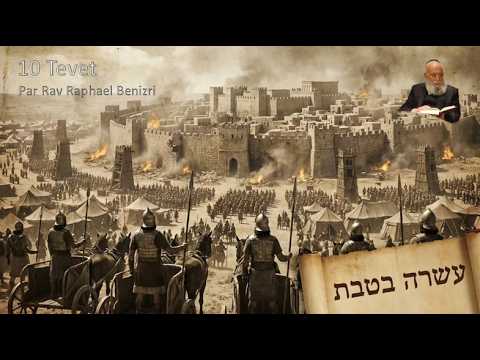
The Tenth of Tevet: The Fast That Opens the Destruction
Nebuchadnezzar’s siege of Jerusalem, the fast that Zechariah mentions last, and the only fast that would be kept even on Shabbat. Watch the lecture and read its transcript →
Study booklets for each lecture: questions to reflect on as a family
The Jewish calendar includes several fast days, and nearly all of them revolve around one and the same wound: the destruction of the Temple in Jerusalem — twice, centuries apart.
Why keep fasting
It is a fair question. These events are two thousand years old; Jerusalem has been rebuilt. What is the point of keeping up so ancient a mourning?
Tradition answers that what is at stake is not a building. What was lost with the Temple was a certain way of being together and a certain closeness. As long as whatever caused the fall has not disappeared, the fall does not wholly belong to the past.
Tisha BeAv
The ninth day of the month of Av is the most solemn. Tradition gathers onto it a whole series of catastrophes, as if a date could become porous and draw misfortunes to itself. On it we read Lamentations, sit low to the ground, and fast for an entire day.
The Sages offered an explanation for the Second Temple that has lost none of its force: it did not fall for lack of study or piety, but because of baseless hatred between people. A learned and observant people can come apart through nothing more than the way its members treat one another.
The other fasts
The 17th of Tammuz opens the Three Weeks that lead to Tisha BeAv. The 10th of Tevet recalls the beginning of the siege. The Fast of Gedaliah, the day after Rosh Hashanah, commemorates a political assassination that finished scattering what remained. The Fast of Esther, for its part, comes before Purim and has a different tone, since it leads to deliverance.
Fasting as memory
To fast is to inscribe a memory in the body rather than in words. A community can forget what it has read; it forgets less easily what it has lived through physically. These days are not meant to cultivate sadness — they are meant to keep a costly lesson from being lost.
Continue studying
The Jewish holidays throughout the calendar, and Hanukkah, which recalls the reclaiming of the Temple.