
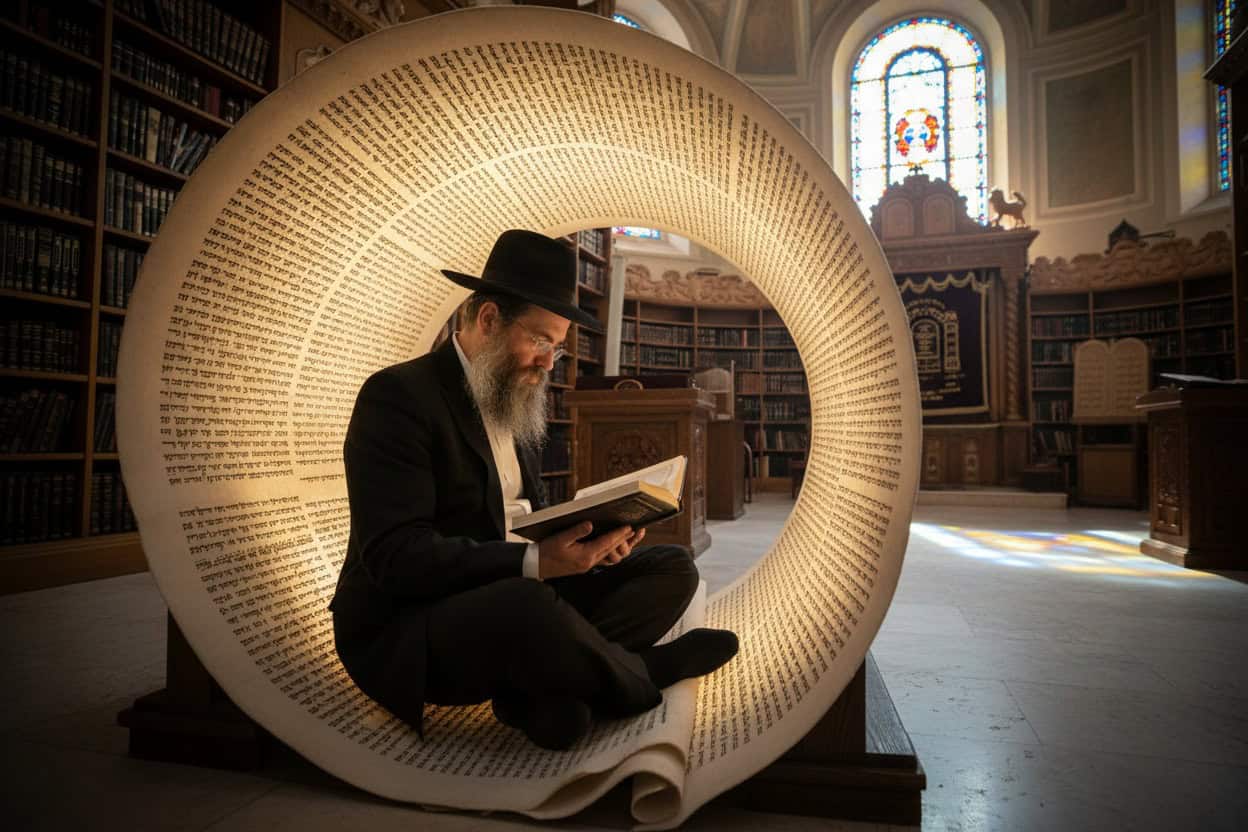
The importance of studying the weekly parashah according to halakhah
The study of the weekly parashah — the section of the Torah read each week in synagogues — is not merely a beautiful custom; it is a genuine halakhic obligation, deeply rooted in Jewish tradition. It connects every Jew to the Torah, to the community, and to the spiritual rhythm of the people of Israel.
A mitzvah grounded in halakhah
The Shulchan Aruch (Orach Chaim 285:1) teaches that every Jew is obligated to complete the reading of the Torah each year according to the formula “Shenayim Mikra ve-Echad Targum”: reading each verse twice in Hebrew and once in translation or with an explanation. This obligation derives from the Gemara (Berachot 8a), which states:
“Whoever reviews the parashah each week together with the community will be granted length of days and years.”
It is therefore not merely an intellectual study, but a mitzvah whose purpose is to maintain a constant connection with the Torah. Through this reading, one joins spiritually in the public reading held in the synagogue every Shabbat.
The spiritual meaning of this study
To study the weekly parashah is also to live in the rhythm of the Torah. Each week brings a unique message, tied to the calendar, to the spiritual needs of the moment, and to the universal themes of Judaism — faith, justice, ethics, holiness.
The masters of Mussar and of Hasidism emphasize that the parashah is a “moral compass”: it guides individual and collective conduct, just as it sheds light on the events of daily life.
A communal and educational dimension
The study of the parashah brings together Jews of every background: it creates a common language throughout the world. In every synagogue and every family, the discussions and commentaries on the weekly Torah portion weave a bond between the generations and strengthen the spiritual identity of the Jewish people.
Moreover, teaching the parashah to children, or discussing it as a family on Friday night or after the Shabbat service, transforms the home into a small Beit Midrash — a place of study and of light.
In summary
According to halakhah, studying the parashah every week with seriousness and regularity is both an obligation and a source of blessing. It nourishes knowledge, purifies the heart, and strengthens one’s belonging to the people of Israel and its living tradition. As the Zohar says:
“The Torah and Israel are one; whoever cleaves to the Torah cleaves to life.”
The beauty of this practice is that it links past, present and future: every reading, every word, is an invitation to renew our covenant with the eternal wisdom of the Torah.
An enriching way to deepen this study is to pair each parashah with a classic commentary (Rashi, Ramban, Sforno) or with a more introspective reading (Sefat Emet, Netivot Shalom). Each illuminates the same Torah from a different angle — and it is in this diversity that its full depth is revealed.